Thursday, March 09, 2023

What is mentality, and where do we get it from?

by Rabbi Pinchas Winston

Friday Night
IT ALL COMES down to mentality. I look at someone in wonderment and ask, “How can they do that?” He looks at me in wonderment and asks, “How can they not do that?” Both of us assume that because we both believe in the same God, follow the same Torah, and live by the same Shulchan Aruch, the differences between us should be minimal. And yet there are some very fundamental dissimilarities in our approach to certain halachos and matters of derech eretz.

Some differences are understandable and perfectly acceptable. Sephardim are very different from Ashkenazim. Chassidim are very different from both. But as long as each group is doing its best to fulfill the 613 mitzvos and spirit of Torah, there is nothing to complain about. As long as a Jew is doing their best to love and fear God, which should show up in the way they act, especially towards others, there is nothing to complain about, only to praise.

Where it gets tricky is when someone thinks they are doing all of this, but really they are not. They are taking liberties they should not, and perhaps think too highly of themselves to self-criticize. In their eyes they are doing just fine by God, but not in your eyes. That’s when someone asks, “How can they do that?” That’s when mentality can play too major a role in the way a person approaches Torah, and life in general.

True, Torah is called Aitz Chaim—Tree of Life. But it is also called “water,” and though water helps things to grow it does not necessarily guarantee that what grows will be all good. If you water a good seed, you get a good tree. If you water a bad seed, you get a bad tree.

With one major difference, though. Actual water is really quite neutral, teaching us nothing (obvious) about morality. Torah may be compared to water, but it is only about morality. When you learn it, you “drink” laws about life and social behavior, which ought to guarantee that a good “tree,” to which man is compared, grows. How can a person learn Torah and still be corrupt, even just a little? The answer once again: mentality.

What is mentality, and where do we get it from?

There are a few contributors to a person’s mentality, some they cannot control, some they can partially control, and some they can completely control, if they choose to. A person’s soul, which they do not choose, sets a person on a certain path in life before they are even born. Once born, they are impacted by family and peers that they can choose, somewhat, to reject. And then, once out in the larger world, they are bombarded by extraneous sources like social media that they can accept or reject outright.

The truth is, by the time a person is usually much older and better prepared intellectually and emotionally to deal with the third category of influence, they have already been so affected by the first two categories that they are unaware of their biases because of them. One they were born with and one they were too young to understand its potential future effects. It had already shaped their mentality before their first day in Cheder.

Shabbos Day
THIS IS WHY even children who once promised themselves to not be like their parents later end up being more like them than they wanted to be. This is also why some friends remain a part of our way of thinking even long after they stopped being a part of our lives. This is the reason why so many years later we can still recall our best and worst teachers. All of them didn’t just get under our skins. They got into our heads and way of thinking.

And this is also why, as Rashi points out in Bereishis, that God sacrificed some important clarity about His unity to teach us derech eretz:

And God said, “Let us make man in our image, after our likeness…” (Bereishis 1:26)

Let us make…Even though they [the angels] did not assist Him in His creation, and there is an opportunity for heretics to rebel, the Torah did not hesitate to teach proper conduct and the trait of humility… (Rashi)

Hence the motto: Derech eretz kadmah l’Torah—proper conduct before Torah. In this brief and seemingly side point of Rashi is one of the most instructive lessons in all of Torah. Technically-speaking, not being able to teach new “tricks” to old “dogs” refers to at least middle-aged people. Psychologically, it is actually true from 12 years old and up, and in some respects, even earlier.

Thus, while many parents in the world gloss over those very early and formative years, less so but somewhat also in the Torah world, it turns out that they are the ones that may seal the fate of their children for the rest of the lives! Everything a person will ever learn and understand will always be through the eyes of the mentality that they began to develop even before they ever opened a Chumash.

There are always exceptions to just about any rule, but who knows how to be one? And miracles do happen, especially for people looking to do teshuvah, but who wants to rely upon them? You can be sure that the 3,000 Jews who joined the Erev Rav in their celebration of the golden calf were somewhat destined to ever since their childhood. You could draw a straight line from what they were doing at the base of Har Sinai to their early upbringing.

Similarly, there is a clash of mentalities happening here in Israel today. The truth is, they have been at odds ever since the Zionist Conferences at the end of the 1800s, the secular and the religious. Make no mistake about it. There is no threat to democracy because of the proposed reforms, and certainly no human rights abuse here. This is why so many Israeli academics publicly support the reforms.

What there is instead is a fear within the very secular community to allow democracy to work when the people who block their initiative to lose the Jewish soul of the country are in power. They didn’t complain before because the Supreme Court is mostly left-thinking, which is why they are so against surrendering their current power status.

The Left saw in the last election how, even in this day and age of Woke culture, the religious parties can still take control of the country away from them. The Interim Prime Minister and his followers were humiliated in defeat, and they worry going forward that the power they lost will only make it more difficult to go the way of Europe and America.

While the Right tends to think independently of world opinion and is concerned about the Jewish integrity of the state, the Left wants to finally just leave all that behind and become another Western nation. One trip to Tel Aviv and Haifa makes that clear. Reading left wing newspapers makes that clear. It’s their mentality, born and bred on leftist kibbutzim, and carried over into the secular educational system.

While a two-state solution is not the way to resolve the Arab conflict, it might be the way to solve the religious-secular one. Give them Tel Aviv (less Bnei Brak). Let them run it autonomously. Let them turn it into the Sdom they want it to be, and America has already become. Then God will have to take care of it as He sees fit. We have a history of golden calves, and this one is alive and well and bleating.

Liberalism has its place in society and history, but a bleating-heart liberal is not only not a Jewish thing, but a dangerous thing. What to do?

Shalosh Seudot
THE TORAH IS a template for life. Some would like to believe that the past was the past, and therefore you can read Torah and perhaps even enjoy it, but there isn’t much to learn from it in terms of life today. Orthodox Jews obviously disagree, but is that because they’re just hanging on to the familiar, or because they truly think differently.

By the way some Torah Jews live, it is not always so clear. But certainly, in principle we believe that Torah is eternal, meaning that it is always relevant regardless of how irrelevant people try to make it. If God wrote it, and He also made the world, then it can be assumed He took all of history into account.

Besides, has man really changed that much since thousands of years ago? His yetzer hara is the same yetzer hara it has always been. Just the ways to be trapped by it have changed over time, and thanks to technology. For all of modern man’s material sophistication, he is actually less sophisticated today spiritually. But does he care so long as God keeps to Himself in the meantime?

They tell the story of Rav Shimon Schwab (1908-1995) who, as a young man, spent a Shabbos with the Chofetz Chaim (1838-1933). The Chofetz Chaim at some point asked his young guest if he was a kohen or a levi. He answered that he was neither.

The Chofetz Chaim, who was a kohen, told his guest that it was a pity. He said that Moshiach would come soon, and that only the kohanim and levi’im would serve in the Temple, not the rest of the Jewish people.

Then he asked the future Rabbi Schwab:

“Why aren’t you a kohen?”

The young man answered the obvious: “Because my father was not a kohen.”

But the Chofetz Chaim pressed him, “Why wasn’t your father a kohen?”

By that time, Rabbi Schwab realized that the Chofetz Chaim was teaching him something that had nothing to do with his lineage, so he waited for the real answer, and it came.

“Do you know why your father was not a kohen and my father was?” the Chofetz Chaim asked. “Because when our teacher Moshe called out, ‘Who is for God—let him come to me,’ my great-great grandfather came, and your great-great grandfather did not. That is why my father was a kohen and your father was not a kohen.

The message was clear: Next time the call goes out to fight on behalf of God, in whatever form it may take, answer it. Don’t hesitate, even for a moment, because moments come and go quickly, and with them, eternal opportunities. A person has to have already developed the right mentality to make truth more important than anything else. That way, when a crisis comes that tests our resolve, we can make the correct choice decisively.

Ain Od Milvado, Part 42
HISTORY IS A lot more sophisticated than most people know, because for some it can seem so simple. There are plans being actualized that are older than Creation itself, souls being rectified in ways we can’t imagine, and opportunities being thrown at us that many do not recognize. It’s all rather kabbalistic, which compelled me to write a book about it called, “Highest Knowledge Ever.”

History is about either exile or redemption. The Jewish people in particular are always going in one direction or the other, in our case, in the direction of redemption. We’ve been in this fourth and final exile for thousands of years now, so it’s about time it ended.

But the end of anything important is rarely a case of just picking up and walking away. There are things to do and processes to complete, and exile is no different. Exile could transition smoothly to redemption, but it rarely has. Just not enough people do teshuvah to make that happen.

Hence the following dialogue in the Gemora:

Rebi Eliezer said: “If the Jewish people repent, they will be redeemed, and if not they will not redeemed.”

Rebi Yehoshua said to him: “If they do not repent, will they not be redeemed at all? Rather, the Holy One, Blessed be He, will raise up a king for them whose decrees are as harsh as those issued by Haman, and the Jewish people will repent, and this will restore them to the right path.” (Sanhedrin 97a)

Does this mean that Haman, and all the other enemies of the Jewish people, will be able to argue before God, “Why blame me? I was minding my own business when you involved me in Your plan to push the Jewish people to teshuvah!” The Gemora answers that question by saying that Haman’s original name was Memuchan because he was muchan—ready—for the job. God just had to plug him in at the right moment and in the right way.

We’re all a bunch of plug-ins. History was scripted long before we came onto the scene but for our sake. Different things have to happen at different times to bring the master plan for Creation to fruition, and each of us has been given potential to participate in that process in one way or another, for good or for “bad,” for right or for “wrong.”

At the end of the day, it seems, the world’s population comes down to three groups. The vast majority that seem to live their lives like extras on a set, necessary but very secondary. They help Creation reach its goal, but significantly on an individual basis.

The other two groups are opposites. These are the people who make a difference, either in the direction of Torah or against it. They’re either allies of God or against Him. They may have never made the choice consciously, but that is how they have ended up for one reason or another. They have either been blessed or cursed with a specific mentality, and it is difficult, if not impossible to know at this time why. How can we, if we don’t fully understand how God works or why?

To which group do you belong. That will depend on if you are blessed enough to hear the call, “Who is for God—let him come to me,” and if you’re even more blessed to respond to correctly. This close to the final redemption it is all that matters and what is going on. The media will focus on the events and the people making them happen. But the maskilim, the truly spiritually astute people will look past all of that and see God making and shaking history to allow us to prove what kind of mentality we truly have.

Wednesday, March 08, 2023

Rav Kook's Ein Ayah: The Intersection of the Intellect and Emotion

(based on Ein Ayah, Berachot 1:127)

Gemara: Rabbi Yochanan said in the name of Rabbi Shimon Bar Yochai: that which the pasuk says: “Her mouth opened with wisdom, and the teachings of kindness were on her tongue” - corresponding to whom did Shlomo say this? He said this specifically corresponding to his father, David, who lived in five “worlds” and said shira (sang) to Hashem: He lived in his mother’s stomach and said shira … He came out to this world and looked at the constellations and said shira … He nursed from his mother’s breasts and looked at them and said shira … He looked at the downfall of the wicked and said shira … He looked at the day of death and said shira …[For each idea a Biblical source is cited.]

Ein Ayah: There are two things that are needed for a person to reach shleimut (completeness): intellectual knowledge and emotion. The source of intellectual knowledge is empirical knowledge, acquired wisdom and experience, all of which have nothing in common with the feelings of the heart.

Emotion emanates from the power of imagination and the growth of the poetic side of the human spirit. When it senses the Divine loftiness, it can reach an ideal level of love of Hashem, may He be blessed.

Usually, these two wonderful powers interact in a not fully harmonious manner. When the intellect is preoccupied with gathering cold information to understand what and why everything is happening, the emotion is not aroused to yearn with the depth of pouring out the soul to the Holy and Elevated. Similarly, when the heart is excited with feelings of holiness, the power of rational intellectual judgment is not capable of functioning.

However, there are exceptional people who are able to reach shleimut in both of these powers. They can recognize the truth based on the intellect’s various elements and based on experience, and, specifically through this, they can develop the shleimut of feeling the grandeur of Hashem’s actions. This is the basis of the love of Hashem that comes from the wonderful recognition of His love and kindness.

It is in regard to this phenomenon that the pasuk of “Her mouth opened with wisdom” was said. The beginning [of the relationship with Hashem] always has to be with wisdom, with the ability to judge and with the rigor of arriving at true knowledge and the fruit of wisdom. The pasuk continues: “and the teachings of kindness were on her tongue,” referring to the emotions of Divine pleasantness and the emotions of holiness.

By whom did we find the strength of the accumulation of knowledge and recognition that actually brought on lofty emotions? It was David, the pleasant psalmist of Israel. He did not settle for basing his psalms on superficial feelings regarding things that are apparent from the first look. Rather, he lived in “five worlds,” contemplating with great wisdom about all of Hashem’s actions. He focused on the way He leads man, from the day of his birth up to and including the day of his death, until he becomes elevated to the goal of having an elevated human soul, which remains when the body dies. This type of emotion does not come from a simple natural emotional base, but can come about only after much work and deep knowledge. This is the connection between the study of kindness which is related to feeling and song, with the source of wisdom, to know and understand the calculations of the whole of Divine actions, which can serve as a basis of proper emotion.

Monday, March 06, 2023

A Mysterious Sin

by Rabbi Dov Berel Wein

The sin of the Golden Calf remains one of the great mysteries in the story of the Jewish people throughout the ages. Flooded with miracles on all sides, unbelievably redeemed from Egyptian bondage, and being sustained daily in a desert, the Jewish people somehow revert to idolatry and paganism. As illogical as this is, it is, nevertheless, not as surprising as later generations may assess the events.

Human beings are not only influenced, but, to a greater extent, are limited and bound by the norms of the general society in which they exist. How can millions of North Koreans weep at the death of someone who was a tyrant and a murderer over them? Yet that is exactly what happened when the two previous Kingdoms finally passed from this earth. It is exceedingly difficult to maintain one's individual beliefs, no matter how correct and logical they may be, in the face of contrary opinion held by the majority general society.

There was a phrase in Yiddish and translates as "the general society is malleable and foolish". Even the most outlandish of ideas – such as paganism itself – somehow will gain traction, even amongst intelligent people, if it is somehow the prevailing attitude that permeates the general society. In a world of belief and sacrifice for paganism, it is not that difficult to understand that this should affect the Jewish people as well, in spite of their own personal and national history of monotheism, miracles and Godly deliverance.

The Talmud records that one of the great rabbis of the time saw the wicked king Achov in one of his dreams. The Rabbi asked the tyrant for his help in answering a question in Jewish law, over which the rabbis of the study hall were struggling. The king answered promptly and correctly, as to what the law is according to Jewish tradition. The rabbi in wonderment asked the king that if he is such a scholar, how could he follow idolatry and allow it to be rampant in the Jewish kingdom that he ruled? Achov answered: "If you would have lived in my generation, you would have picked up the hem of your robe in order to run more quickly to serve that false idol."

We look back at so many false idols and beliefs that litter the landscape of human history, and especially those of Western civilization. We wonder how people could have been so naïve and foolish and so wrong about such basic matters of faith and perspective? Yet we ourselves live in a society dominated by what we realize to be false ideas, bad policies and the foolish denial of facts and realities, let alone the obvious lessons of history and tradition. We know, for instance, that cancel culture is wrong, evil, and counterproductive to the human spirit and belief. Nevertheless, we are all careful not to say and certainly not to publish what we know to be true, because of our trepidation that we will somehow be canceled because of it.

To be a Jew requires a great moral strength and fortitude. We have not always been able to swim against the current tide, and, tragically, we always pay a price for that failing.

The Breaking of the Luchot

by HaRav Mordechai Greenberg
Nasi HaYeshiva, Kerem B'Yavneh


The question of why Moshe broke the luchot was the basis for many drashot over the generations. Indeed, Moshe certainly would not have dared to shatter the luchotengraved by Hashem Himself if the benefit of doing so did not outweigh the cost. The Meshech Chochma wrote about this question at length and emphasized that Moshe’s actions reflect an important principle of Judaism.

On the pasuk, “And my Mikdash you shall fear” (Vayikra 19:30), the midrash comments: “It is not the Mikdash that you fear, but rather the One who warns about the Mikdash.” The principle reflected in this drasha is that there is no object in this world that is inherently holy. All things that we consider to be holy are objects that are used to fulfill the will of Hashem; that is the only meaning of santity. It is only the mitzva performed with the item that grants it the status of kadosh. The Mikdash is a holy place because Hashem wanted to have a “residence” in this world – “And I will dwell among them” (Shemot 25:8). When Bnei Yisrael sinned and the Shechina departed, the place itself no longer possessed any sanctity. At that point, Titus was able to enter the Kodesh HaKodoshim with a harlot without being harmed; the building of the Mikdash was then only a structure of wood and stone, nothing more.

Bnei Yisrael erred in thinking that Moshe possessed inherent kedusha, and it was for that reason that they were so concerned when he appeared to be delayed in returning. Hashem told Moshe: “Go down, for your nation has sinned.” What was there sin? “That you took out of the land of Egypt” (Shemot 32:7) – they attributed divinity to Moshe and thought that he was the one who had taken them out of Egypt.

The Pelishtim made the same mistake when the aron was brought to their camp, leading to devastation: “Who will save us from the hand of this mighty god?” (Shmuel I 3:8). And this was the mistake of Bnei Yisraelwhen they created the egel; they thought that there are physical things that have divine powers. Moshe realized that if he were to give them the luchot, they would think that they were inherently holy and divine. They would then simply replace the egel with the luchot. In order to clearly uproot this mistaken belief, Moshe shattered the luchot, demonstrating that even objects that are imprinted by divine action – “And the writing was the writing of God” (Shemot 32:7) – have no inherent value. Hashem concurred with Moshe’s shattering of the luchot; in the words of Chazal, He told Moshe, “Yasher koach sheshibarta,” “ Yasher Koach for breaking them!”

The aron contained both the complete set of luchot, as well as the shattered set of luchot. This was a constant reminder that the first set, the luchot made by HashemHimself, were the ones that were now broken, while it was specifically the luchot made by Moshe that were shattered.

The nevi’im reiterated this message in warning Bnei Yisrael not to rely on the Mikdash and korbanot to save them “when their mouths and tongues deceive Him, and their hearts are not complete with Him.” As Yirmiyahustates (7:3-11): “So says Hashem Tzevakot, the God of Yisrael: Improve your ways and your deeds, and I shall dwell with you in this place. Do not rely on the words of falsehood, saying, ‘The sanctuary of Hashem, the sanctuary of Hashem, the sanctuary of Hashem are these.’… He steals, murders, and commits adultery… and you come and you stand before Me in this house, upon which my name is called, and you say, ‘We are saved’… Is this house then a den of thieves?”

The converse is also true; objects used for sin are not inherently profane. “The corpse does not defile and water does not purify; rather, Hashem said: I have made a law, I have made a decree…” Certain foods were not forbidden because they are inherently bad, but rather “because they are not appropriate for man according to the order instated by Hashem.” As the Maharal writes, “All of the mitzvot reflect divine wisdom. Therefore, man, who possesses a divine soul but who is entrenched in physicality, cleaves to Him through his divine traits.”

Rav Kook on Ki Tisa and Purim: All For One

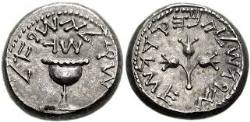
“When you take a census of the Israelites [to determine] their numbers, each one will be counted by giving an atonement offering for his life.... Everyone included in the census must give a half-shekel.” (Shemot 30:12-13)

Why were the Israelites commanded to give a half-shekel coin, and not a whole shekel? And why is this donation required when counting the people?

The Unity of Israel
All societies require a degree of harmony and goodwill. Social cohesion is critical to attain prosperity and success. For the Jewish people, however, unity is not just a means to achieve worldly objectives. Social unity is a far greater value, a goal unto itself. Our highest aspiration is to merit closeness to God, and God’s Presence dwells in Israel only when they live in peace and harmony. As the Sages taught: “When is My Name called upon Israel? When they are united” (Sifre VeZot HaBrachah 346).

There is a second difference between the unity sought by the Jewish people and that of the other nations. A society may be unified in two ways: in deed and in thought. ‘Unity in deed’ refers to practical actions to assist one’s neighbors or to contribute to the nation as a whole. ‘Unity in thought’ means concern for fellow citizens and love for one’s people.

While all nations need both forms of unity, only practical cooperation is essential for a nation to realize its material objectives. For the Jewish people, however, peace is a prerequisite for God’s Presence and special providence, and this peace depends primarily on unity in the heart. Thus, for Israel ‘unity in thought’ is the ultimate goal, while ‘unity in deed’ is a means to bolster and strengthen it.


The Mitzvah of Shekalim
What does this have to do with the yearly donation of half-shekels? The collection of half-shekels is a vehicle for uniting the Jewish people in deed and action. The money was used to provide for the nation’s spiritual needs - to supply the daily Temple offerings — as well as its material needs — funds left over were used to maintain the city walls and towers (Shekalim 4:1–2).

When other nations unite for some public objective, such as raising an army or collecting taxes, they arrange a census in order to determine how much each individual must contribute toward the collective effort. This census does not contradict the purpose of their unified efforts, since the ultimate goal is to benefit each individual. For the Jewish people, however, the purpose of joining together is to benefit and elevate the nation as a whole. A census negates the ultimate objective, as it emphasizes the portion of the individual. For this reason, the Torah requires that we do not count the people directly, but use half-shekel coins donated for national needs, thereby stressing that this count is for the benefit of the nation.

The half-shekel coins collected in the time of Moshe were used to make the adanim, the silver sockets that formed the Mishkan's foundation. This act established the connection between each individual’s service of God and the spiritual accomplishments of the nation. Even without a spiritual center in Jerusalem, the unity of Israel protects the Jewish people, as the service of each individual contributes to elevate the nation as a whole.

Directing this benefit to the nation requires some unifying act. This was initially accomplished through the donations to build the Mishkan. Later it was the half-shekels donated for the daily Temple service. And nowadays it is performed through our communal reading of ParashatShekalim each year.

Haman’s Shekels
Now we may understand what the Chachamim wrote in Megillah 13b:

“God knew that Haman would pay shekel coins for [permission to destroy] the Jews. Therefore God anticipated the shekel coins of the Jewish people to those of Haman, as we learned, ‘The collection of shekalim is announced on the first day of Adar’ [thus preceding Haman’s plot to annihilate the Jews on the thirteenth of Adar].”

What is the connection between our donations and Haman’s bribe?

The nations were aware of the special Divine providence protecting the Jewish people and were reluctant to harm them. Haman, however, felt that this protection was only in force when the Jewish people lived together as one people in their own land. But once they were exiled from their land, they were no longer a nation, just a group of individuals — “dispersed and separated among the nations” (Esther 3:8). Stripped of their Divine protection, he reasoned that it was now possible to annihilate them. Therefore he weighed out his silver shekels to purchase the right “to destroy them” (Esther 3:9). Not “to destroy it” — the nation — but them — these dispersed individuals.

God, however, thwarted his plot, as the Jewish people are united even when they are in exile. By preceding Haman’s shekels with our shekel donation, we demonstrate the unity and collective holiness of Israel at all times.

The Second Half-Shekel
Each individual was commanded to give a half-shekel in the census. Why a half-shekel? They would have certainly donated a full shekel were it not for the specific instruction that “the wealthy shall not add more.” The two halves of the shekel correspond to the two forms of unity. The half-shekel that was given reflects their unity in deed, their practical cooperation; and the second half that they wanted to give corresponds to their unity in thought.

The Midrash states that Moshe had difficulty understanding which coin to collect, so God showed him a half-shekel coin made out of fire from beneath His Throne of Glory (Bemidbar Rabbah 12:3). What did Moshe have difficulty understanding? And why does the Midrash speak of a fire-coin that came from beneath God’s throne?

Moshe did not understand why the Israelites needed to donate a half-shekel and not a full shekel. Therefore God showed him a fire-coin from a very elevated place, from under His throne, the source of the souls of Israel. In other words, God showed Moshe the second half of the shekel — not the metal coin that was collected, a sign of their practical cooperation, but a coin of fire, representing their unity in thought, a burning love emanating from the very root of their souls.

(Silver from the Land of Israel, pp. 129-132. Adapted from Midbar Shur, pp. 127-136 by Rav Chanan Morrison.)

Purim’s Message for Us Today

BS”D
Parashat Ki Tisa-Purim 5783
by HaRav Nachman Kahana


During the many years when I had the unique zechut (privilege) to serve as the rav of the Chazon Yechezkel bet knesset in the northern quarter (Moslem) of the Old City, I had the opportunity to meet and help people who were being challenged in their personal lives. I would like to bring two incidents from which all of us can glean a bit of understanding.
Incident 1: Can you murder your soul?

An acquaintance turned to me with a serious problem. He had an 18-year-old daughter who was normative in every way, a good student with a wide circle of friends, a good daughter and sister to her siblings. Suddenly every changed. She became introverted, left her studies and stopped meeting with her friends. The father took her to psychologists, to no avail. But a few days previous to his call to me she broke down and told her father that, in her words, she “killed her neshama” (soul). At this point the father understood that she had to speak to a rabbi, not only to a medical person. He requested that I speak to her. I agreed but admitted that I couldn’t promise results.

The young lady and I met a few days later. After several moments of trying to gain her confidence, she stated that she had “murdered her soul”.

I listened quietly trying to gain more information, but she was not forthcoming.

So, my time came to speak. I told her that there is nothing that she could ever do to touch her God given holy soul. That even if she perpetrated all of the sins in the Torah it would not influence, afflict, disfigure, injure, mar, harm, weaken or blemish her holy Jewish soul.

I explained to her by way of the example of an electric power plant that produces electrical power measured in megawatts (one million watts). A power plant with 10 megawatts of capacity produces 10MW of electricity at any given moment. The average family in Israel uses about 25-30 kilowatts in 24 hours.

I asked the young lady if there was anything that could go wrong with the electric circuits in her home to reduce the energy put out by the main plant? Not even one watt! It’s like lowering the sea level by displacing a single drop of water. So, there is nothing you can do, even the worst of sins, that would reach the power plant of your soul.

She listened attentively without saying a word. I then produced a piece of paper and wrote in Ivrit a sentence taken from the daily morning prayers (Shacharit):

א-לוהי נשמה שנתת בי טהורה היא
My Lord, the soul that you have given me is pure.

I told her to use this profound sentence as a mantra and repeat it often during the day.

After a while, her father called to say that she had returned to her former self, and thanked me; as if I had anything to do with the outcome.

Incident 2: Can a Kohen remove his Kohanic status?

A man came to me with an interesting request: that I remove his Kohanic status. He explained that he wanted to marry a woman whom a Kohen is prohibited from marrying.

I told the gentleman two things:

1) That there is no one in the world who can relieve you from the high pedestal of your Kahuna. Furthermore , Kahuna is in your DNA; to remove it is to turn you into thin air.

2) The laws of the Torah are not random decrees that the Creator decided to impose upon us. Indeed, we do not know the spiritual implications of any mitzva in the next world, but what we do know is that the mitzvot are the guidelines of how to have a happier and more quality life in this world. Your life with that woman would be a disaster for you both. If only for the experience we have in these matters, that after the initial period of marriage, the wife realizes that her new husband is weak of character, and then the feuding begins.

Purim’s Message
Why am I writing the above now?

The two days of Purim (14th of Adar for Am Yisrael and the 15th for the residents of Yerushalayim) are celebrated as days of a great military victory over the Persians, when we “got up from the ropes” to defeat the overwhelming numbers of Persians who wanted to obey the decrees of their “beloved and wise” King to murder all the Jews in the 127 regions of his kingdom.

True! These were days of a great military miracle; however, their greater importance is as a time of widespread teshuva of the many Jews who were assimilated into Persian society. The pending catastrophe which was intended to eradicate all the Jews under the rule of Achashverosh aroused the Jews to understand that their fate was sealed because they had turned their backs on the holy way of life that HaShem had commanded of them.

The situation in today’s galuyot is not far different from the situation that existed in ancient Persia. Assimilation is rampant today. Chances are that the children in a family named Riley are Jewish because Mr. Riley married Shirley Goldstein from Miami, and the children in a family called Goldstein are goyim because Mr. Goldstein married Beverly Riley.

The two incidents at the beginning of this essay come to illustrate the difficulties the Jewish nation is facing.

1) There are many assimilated Jews who feel that their disconnect from Judaism is irreversible; that they have “murdered their Jewish souls” and will never be able to undo the irreparable spiritual damage that has been done. They are wrong! Once a Jew; always a Jew, no matter how far one strays there is always a path of return. Parents can dissolve their marriage by divorce because the husband-wife relationship, as emotionally strong as it is, is a judicial relationship, but not blood one. But a parent cannot divorce a child because the child’s chromosomes are shared between abba and imma. HaShem Avinu Malkainu (our father and king) is always prepared to receive a Jew who wishes to return.

2) The initial departure of a Jew from under the proverbial “stretcher” (basic training in Tzahal’s infantry units includes back-breaking forced marches carrying heavy stretchers; so the term used for one who shirks his obligation is to “escape from under the stretcher”), is to deny the relevance of the Torah and its mitzvot in our worldly existence. That Kohen who wanted to “shed his skin” without appreciating the fact that it is that very skin that is keeping him alive, seeks his satisfaction in the thin ice of just above freezing waters.

Thus, it was with the assimilated Jews in Persia of Achashverosh and Haman and so it is today with the assimilated Jews in the “land of the stars and stripes”, and others .

Purim is the emancipation of the Jews from the black chains of ancient Persia, and it is our fervent hope that today, our “lost” brothers and sisters will see the light as well. (Megilkat Esther 8,16):

ליהודים היתה אורה ושמח וששון ויקר
For the Jews there was light and gladness, joy and honor.


Have a meaningful and joyous Purim.
Shabbat Shalom
Nachman Kahana

Copyright © 5783/2023 Nachman Kahana

Israel Under Attack: Biden's Coup to Get Iran the Bomb

by Guy Millière
  • "U.S. support for demonstrations in Tel Aviv isn't about the future of Israel's judiciary. It's about handcuffing Israel while Iran gets the bomb." — Lee Smith, Tablet Magazine, March 2, 2023.
  • In reality, Iran's mullahs will most likely blackmail the Biden Administration for billions of dollars not to use their new bombs "on my watch", as then President Barack Obama put it in 2015. With a new administration, there can be a new blackmail.
  • The Palestinian Authority's "pay-for-slay" jobs-program, paid for by "over $200 million" fungible U.S. taxpayer dollars in funding reinstated by President Joe Biden, incentivizes and rewards the murder of Jews.
  • Abbas' Fatah faction boasted of carrying out 7,200 terror attacks in 2022 against Israel, while criticizing Hamas for not attacking Israel.
  • Many Israelis have no illusions anymore. They see that the Palestinian Authority incites Jew-hate, whips up terrorism and tells Arab children and adults that to be a martyr for Islam allows them direct access not only to paradise, but also to generous funds for the terrorists and their families.
  • Israelis can also see that the Biden Administration has continually made decisions hostile to Israel, including once again funding the Palestinian Authority without even requiring that it renounce terrorism. The Administration also brought back the goal of a "two-state solution": if a Palestinian state were to emerge, it could -- and most likely would -- be used as a launching pad from which to attack Israel, as promoted in the Palestinian "Phased Plan": Get whatever land you can, then use that to get the rest.
  • Mainly, Israelis saw that the Biden administration never gave up trying to enable to enable the mullahs' regime in Iran to have unlimited nuclear weapons -- all while the mullahs have made the genocidal destruction of Israel their overriding goal.
  • Accordingly, on November 1, 2022, millions of Israelis elected Benjamin Netanyahu as Israel's Prime Minister, heading a broad coalition government. The coalition also pledged to restore the balance between the Knesset and the Supreme Court.
  • In the United Kingdom, Parliament has the final say -- not the High Court. For the last 30 years, this has not been the situation in Israel.
  • In the 1990s, Israeli Supreme Court President Aharon Barak, declaring that "everything is justiciable," executed a "judicial revolution," through which the Court has arrogated virtually all political power, including the ability to override laws and even operational decisions by the Ministry of Defense and the IDF.
  • The government's proposed reforms would simply restore the checks and balances and the separation of powers that Israel had before Barak's "revolution.
  • Since Barak's tenure, Israel's Supreme Court and the Attorney General have become a self-selecting group, unelected by the public or their representatives. Their decisions, lacking a constitution, were increasingly based not on law but on their invented doctrine of "reasonableness" -- often resulting in "whatever I think is reasonable".
  • At present, Israel's Supreme Court, among other freewheeling entitlements, may overrule a quasi-constitutional Basic Law based on 'reasonableness"; accept petitions from anyone regardless of standing (even if the petitioner would not be directly affected by the outcome -- a provision that has resulted in a firehose of lawsuits by "concerned" non-governmental-organizations); and veto political appointments.
  • For years, many Israelis had gotten used to turning to the Supreme Court for favorable "final say" decisions that they were not able to obtain through the elected parliament, the Knesset. Overnight, they now find themselves losing their perch.
  • The new Israeli government has not violated any of the rules of Israeli democracy. In a democratic country that held a free and fair election, the one thing that does not seem democratic is to demand that the decision of the voters be overthrown.
  • Demonstrations continue, but even if 100,000 protestors turn out, it is still only a small number compared to the 2.4 million citizens who voted for Israel's new government.
  • Behind this subversion, it turns out, is none other than the U.S. State Department, which for years has reportedly been channeling funding to a "far left", "anti-Netanyahu" non-profit organization, the Movement for Quality Government (MQG) .
  • "Never mind that the justices have a conflict of interest since it is their powers the government's proposed reforms would check. Never mind that in a bid to prevent politicized judges and prosecutors from overturning the will of the voters, the law explicitly permits prime ministers to serve not only while standing trial, but even if convicted. And never mind that the charges against Netanyahu have fallen apart in Jerusalem District Court.... Since MQG's primary activity is subverting democracy in Israel by waging lawfare and sowing chaos in a bid to block democratically elected right-wing governments from fulfilling their pledges to voters, it's fairly clear that when MQG refers to 'democracy education,' it doesn't mean majority rule". — Caroline Glick, JNS, January 17, 2023.
  • Ironically, in Washington D.C., a "January 6th Committee", without due process -- no cross examination, no independent selection of members, no right to counsel, no exculpatory evidence -- pretended to "investigate" as criminal the very same activity that the Biden Administration is backing in Israel: trying to change the outcome of a free and fair election
  • Israel is and will remain a very much a democracy – just as it was before Justice Aharon Barak arrogated virtually unlimited powers to its Supreme Court. Calls for uprisings and civil disobedience, combined with false accusations of "fascism" -- and the whole focus-group supermarket of pejoratives -- appear to be just sore-loser propaganda.
  • The demonstrations -- despite what the Biden Administration might wish -- are just the loud last gasp of upper-class "elites" who have been entrenched in powerful unelected positions for decades.
  • That all this undemocratic disruption being done in the name of "defending democracy" just makes matters worse. The reality, sadly, is quite the opposite.
  • At a time when terrorism has struck and with a U.S. administration unfriendly to Israel, it is revealing that professed friends of Israel can talk in such an irresponsible way. They speak of a threat to Israeli democracy? They are a threat to Israeli democracy.
  • Secretary of State Antony Blinken, in Israel at the time of two of the Jerusalem terror attacks, rather than condemn them clearly and unambiguously, spoke mushily of a "horrifying surge in violence... we will be encouraging the parties to take steps to calm things down", as if Israel had been the one promoting violence.... He was giving a lesson in democracy to Prime Minister Netanyahu -- not Palestinian Authority President Mahmoud Abbas, who openly calls for Palestinians to murder Israelis. How thoughtful.
  • The Israeli government is trying to restore the democratic institutions that it used to have, of which it has been stripped.
  • The Israeli government is trying to prevent the murder of innocent Jews and to stop terrorist attacks. Those, however, do not appear to be the goals that everyone has.
  • What endangers the State of Israel or any nation is not a government dedicated to the safety of its citizens, but people who seem blind to the real dangers: whether from the Palestinian Authority, Hamas, Palestinian Islamic Jihad, the Iranian regime, the Chinese Communist Party.
  • The greatest danger comes from those who cling to the illusion that diplomacy without the credible threat of military consequences will have any effect. These irresponsible individuals seem to prefer avoiding conversation about such dangers, or else try to downplay them. It is much less frightening to talk about gender pronouns than China's preparations for war.
  • Iran must not be allowed to get the bomb -- "or maybe just a few".


Pictured: Anti-government protesters try to break through a police line, in an attempt to block a road in Tel Aviv, Israel on March 4, 2023. (Photo by Jack Guez/AFP via Getty Images)

"U.S. support for demonstrations in Tel Aviv isn't about the future of Israel's judiciary. It's about handcuffing Israel while Iran gets the bomb," writes Lee Smith in Tablet Magazine.

The world has learned a lot watching America's Middle East freedom agenda.... The first of these lessons is that when U.S. policymakers selectively deploy the rhetoric of democracy and human rights against target governments, their words are typically accompanied by practical measures to destabilize those governments, including U.S. allies....

"In reality, the maritime agreement was just the latest in a series of initiatives to realign U.S. interests with those of the terror regime in Tehran while alternately sweet-talking and threatening traditional U.S. allies like Israel and Saudi Arabia to fall into line...

Continue Reading Article

Friday, March 03, 2023

Igrot Hare’aya – Letters of Rav Kook: How to Counter the Secular Trend of the New Yishuv

#144

Date and Place: 13 Sivan 5668 (1908), Yafo

Recipient: Mr. Yehoshua Shachnovitz, Editor of “Israelite” in Frankfurt, a follower of the teachings of Rav Shimshon Rephael Hirsch.

Body: We need now to expend great effort immediately so that the stream of life will increase in Eretz Yisrael, which will make everyone who loves the nation and the Land happy. At the same time, broken foundations and damaging matters are gathering in the Holy Land. The only remedy is to strengthen the hands of the community of believers regarding all practical matters of settling the Land and raising the stature of the Torah and Jewish knowledge. This should be done in a way that crowns the emerging life in Eretz Yisrael with a crown of sanctity and grandeur, which rest upon the feelings of reliable sanctity.

[Rav Kook shared his vision of the yeshiva and schools he was working on founding in Yafo (discussed in several other letters).]

If we truly succeed with this foundation, to raise the stature of Klal Yisrael, in Eretz Yisrael and the whole world, [we will see important improvements]. The [nation’s] good parts are being ruined now because of the lack of broad life skills among the devotees of Torah and Hashem’s righteous statutes. This causes a tendency to cling to the destroyers of holy things. [If we broaden ourselves,] they will join us to work with great strength and skill for the true soul of the nation, which is deeply connected to belief in Hashem and the laws of the Torah of truth. The sight of the bright light of enhancing Jewish settlement in the Land in truth will make the shadows disappear; those who sow impurity will cover their head in great embarrassment.

I tell you proudly that for quite some time, since I evaluated my approach, I have known clearly that the hope of the settlement of Eretz Yisrael and for liberating the stature of Israel by means of Zion depends on this critical point. That is, we must gather proper forces to be involved in the spiritual and physical building of Eretz Yisrael. This can be done specifically based on the foundation of “culture” (a movement that religious parties staunchly opposed because it gave inroads to secularism), which are progressing rapidly in Eretz Yisrael and the world. Everyone for whom true fear of Heaven burns in his heart must heed the imperative to help Hashem and His nation; do not delay! We must not let people trample the “young plants” sprouting on holy soil.

We turn to dear brothers, believers from the German Jewish community, who follow the footsteps of the great thinker, the lofty prince of G-d, Rav Shimshon Rephael Hirsch, zt”l, who bravely saved the remnant of the Western European Jewry by teaching to use all available weapons of a full life to give reliable Judaism a strong basis. We need to do the same thing in today’s Eretz Yisrael, using the same spirit in different and changing conditions. If we will not seize the moment when the Jewish community of Eretz Yisrael is forming, and Jews dedicated to Torah will be physically and spiritually weak, without “weapons,” then the dominant people will be those well-armed with lack of dedication to Hashem and the gentiles’ approach, without real mention of that which is holy in Israel. These people cover their destruction with bits and pieces of forged nationalism, nuggets of Jewish history, and a love of the language. This is cloaking national life with an exterior of Judaism and an interior that is totally not Jewish, ready to turn into a destructive monster and hatred of the Jewish People and the Land of Israel, as we have learned by experience. If the impure hand will prevail, the tragedy is indescribable.

However, I have trust in Hashem that our legs will not collapse. All who fear the word of G-d and desire the salvation of His nation and Land will flock to our flag. We will succeed in building in the New Yishuv a special place, which will give it life based on pure belief and great joy. Hashem will be with us as we rebuild the ruins of generations. Respected editor, be in the forefront of our helpers.

Rabbi Ari Kahn on Parashat Titzaveh-Zachor: Follow The Threads (video)

The Rav and the Rebbe

by Rav Binny Freedman

Seven years ago, on 5 Adar I, 5776, one of modern Israel’s greatest war heroes, Yanosh ben Gal, A”H, was laid to rest in the military cemetery in Givat Shaul. To honor his memory, this story is reprinted from a previous article:

As the summer of nineteen seventy three wound down, the seventh armored brigade was stationed on the Bar Lev line, on the border with Egypt along the Suez Canal.

On the eve of Rosh Hashanah, the brigade was given a week’s leave for the holidays. As the men of the seventh headed off for some R&R all over the country, Yanosh, the brigade commander, stopped off on his way home at the General Staff base in Tel Aviv; an ingrained habit to keep abreast of the intelligence reports.

What he saw alarmed him: Egyptian and Syrian troop buildups along the Canal and in the Golan Heights, a high increase of Arab military radio traffic, and an unusual amount of activity in the Arab airfields. Two weeks before that fateful Yom Kippur, Yanosh became convinced the country was headed for war. He immediately went to the Central Command radio room and put in a call to his Division Commander, advising him of his opinion, and asking for a first-stage general call up of critical reserves, and the recall of all the troops that had been given leave that very afternoon.

But that is a lot of work, and intelligence reports can be interpreted in different ways, so the Division Commander disagreed. Yanosh had somewhat of a reputation as an impulsive firebrand, and didn’t give up easily. Convinced as he was that his country was in grave danger, and going over his Commander’s head, he eventually appealed to the Chief of General Staff himself, Commander of the entire Israeli army at the time, Dado Elazar.

But no one wanted to listen; flushed with the success of the 67’ war, when Israeli forces had wiped out the much larger Arab armies facing them, no one seemed capable of imagining that these same Arab armies might be poised to destroy the State of Israel, and so the phone calls were not made, the highways remained silent, and Israeli troops going on leave continued to depart for the holidays.

In retrospect, one opinion in the intelligence community was that the Arabs wanted to see over the Rosh Hashanah holiday, whether a major troop buildup would cause the Israelis to keep more troops on alert. The results were the last stage of the Arab decision to go to war, and the Israelis were still sleeping….

Yanosh finally concluded no one was listening, but the continued reports of major troop buildups would not allow him to let it go. Finally, he decided that at the very least he commanded his own Brigade and that was better than nothing. The situation in the North, along the Golan Heights was in one respect, much more tenuous than in the South, as there was no buffer zone in the North. If Yanosh was right, and Egyptian troops came pouring across the Suez Canal, at least they would still have hundreds of kilometers of desert to negotiate before arriving at Israeli cities and towns. In the Golan, a couple of hours on tank treads from Haifa, Israel had no such luxury.

So Yanosh decided to rotate his brigade up North to the Golan Heights, and eventually, figuring it would be easier for them, the High Command acquiesced.

Recalling an entire Brigade, spread out on holiday leave all over the country, getting them all the way down to the southern tip of the Sinai, and then transferring an entire armored Brigade the length of the country north up into the Golan heights was no easy task. Everyone thought Yanosh was mad, and the move did not bolster his image in the eyes of his men, who had just lost a week’s leave. But this single Brigade Commander’s determination and conviction brought an entire Brigade on line in the North, three days before the outbreak of the Yom Kippur war. And when two thousand Syrian tanks poured across the border on the afternoon of October sixth, 1973, instead of seventy-five tanks (of the 188th), there were one hundred and fifty on line, something that made all the difference.

This week’s portion Tetzaveh, introduces one of Judaism’s central roles: that of the Kohein.

“Ve’atah hakrev eilecha et Aharon Achicha, ve’et banav ito, mitoch B’nei Yisrael, le’chahano’ li; Aharon, Nadav ve’Avihu, Elazar ve’Itamar, b’nei Aharon.”

“And you (Moshe) shall bring close to you Aaron your brother, and his sons, from amongst the Children of Israel to serve as Priests to Me: Aharon, Nadav, Avihu, Elazar and Itamar, the sons of Aharon.” (Shemot 28:1)

Interestingly, as is well known, this is the only portion in the entire Torah (since his birth) that sees no mention of Moshe’s name. Yet Aharon’s name is mentioned no less than three times in just this one verse.

This is the portion of the introduction of the role of the Kohein, the Priest, and the ascendency of Moshe’s brother Aharon.

It would not have been surprising to sense some sibling rivalry or even healthy competition hidden between the lines, as Moshe, sole arbiter of power and dispenser of justice will now have to share the leadership of the Jewish people with his immensely popular brother. (Note that Moshe is commanded to bring his brother close “from amongst the Children of Israel” …)

Indeed, Rashi on the verse notes that Aharon and his sons are only introduced as Kohanim (Priests) once Moshe had concluded overseeing the project of the building of the Mishkan (the Tabernacle). So Moshe has to build it, but his brother Aharon will run it. Further, Aharon’s sons will become Priests as well, introducing the exclusive priestly lineage, whereas Moshe’s sons will never attain any similar status, disappearing into the anonymity reserved for great leader’s sons.

In fact, once Aharon is conscripted as the High Priest and the Mishkan is dedicated, Moshe will no longer even be allowed to enter the holiest place in Judaism! Surely, this is the stuff jealousy and sibling rivalries are made of, and yet nothing could be further from the truth. Throughout the forty years in the desert, Hashem (G-d) will speak sometimes to Moshe and sometimes to Aharon, and sometimes to both of them, yet one will never sense tension between the brothers.

Even when Moshe descends from Sinai and finds Aharon right in the middle of the sin of the Golden Calf (Shemot 32:21-22 ) , a golden opportunity to ascribe blame and disempower Aharon if ever there was one , he asks Aharon what the people have done, never ascribing any blame to Aharon himself.

And when Moshe eighty days later returns with the second tablets (ibid. 34:30) the Torah describes Aharon and the entire Jewish people seeing Moshe’s radiant face, without a hint of angst or jealousy.

Rav Yoshe Ber Soleveitchik (in a magnificent article reprinted in English in Rav Moshe Besdin’s Reflections of the Rav) suggests that Moshe and Aharon represent the two primary educational leadership roles in Judaism, and while they do not compete with each other, they are in fact very different.

Moshe finds himself atop Mount Sinai; speaking directly to G-d and far away from the people when the Sin of the Golden calf occurs. Aharon on the other hand is below, right in the thick of it all. When Moshe comes down from the mountain his face glows and he needs to wear a veil; he removes himself from the camp and has a somewhat distant, and even authoritarian relationship with the people. Aharon on the other hand, even at the beginning of his journey into the priesthood is always ‘amongst the people’. Indeed, the Mishna in Pirkei Avot (Ethics of the Fathers) exhorts us to ‘be of the students of Aharon: Ohev Shalom ve’rodef shalom’: he who loves and pursues peace.’ And Jewish tradition tells us he would make great efforts to resolve arguments by befriending both of the conflicting sides and encouraging their rapprochement.

The people were in awe of Moshe, who represented a direct connection to G-d. But they loved Aharon, who represented the intimate connection and brotherly love of the Jewish people. Indeed, Moshe brought the Torah down from Heaven, which represents the eternal and irreplaceable tradition from G-d, while Aharon taught the Jews how to live with a Torah life of love, meaning and harmony.

Suggests Rav Soleveitchik: Moshe represented the Rav, or Posek; the Torah authority who shares an uncompromising fealty and obedience to the word of G-d and the laws and Mitzvot of the Torah.

And Aharon represented the Rebbe whose love for every Jew inspired a love for Judaism and Hashem and for a Jewish way of life.

When you weren’t sure how to build an Eiruv, or whether the chicken was kosher, you asked the Rav. But when you needed advice on how to make peace with your business partner, you came to theRebbe.

The Rav was able to help define clinical death within the context of medical ethics or explore the halachic solutions for Agunot, women whose often recalcitrant husbands refused to give them a get(divorce document).

The Rebbe would sit by the bereaved family or broken Agunah, and share their tears.

To be sure, Judaism needs both of these leaders, and obviously every Rav needs to be a little bit of a Rebbe, while every Rebbe needs to have enough Torah knowledge to function as a Rav when necessary. Sometimes in Jewish history personalities have succeeded in being both Rav and Rebbe. (As an example, the last Lubavitcher Rebbe, who was a towering authority of Jewish knowledge and sources, but also felt the pain of every Jew and every person; was both a Rav and a Rebbe but I do not believe it was an accident that he was known as the Rebbe …).

We are living in an orphaned generation, and with all of our blessings including the privilege of seeing the State of Israel reborn, and the return of the Jewish people to their homeland, we do not seem to have the towering personalities we once had.

I grew up in the shadows of Rav Moshe Feinstein, the Lubavitcher Rebbe, Rav Yoshe Ber Soleveitchick (The Rov) Rav Aharon Kotler, among other great Torah giants.

And I was privileged to study under the tutelage of Rav Aharon Lichtenstein (who for me was the ultimate Rav) and Rav Amital (who became my Rebbe) both towering Torah giants.

And as a boy our shul Rav and my Rosh Yeshiva, Rav Shlomo Tzvi HaKohein Riskin was both Rav and Rebbe, and in my parent’s home, his halachic decisions were final, and his advice was sacrosanct.

Today, in our Modern Orthodox Dati Leumi ask someone whom he or she relies on for psak (halachic rulings) and they will often respond: ‘it depends…’ Ask someone if there is anyone they truly consider their Rebbe and you will often get a blank look. And maybe that is because a real Rebbe, just like a true Rav, should be someone who like Moshe and Aharon is purely invested in the mission. For a true leader and educator, what matters is the bigger picture; what does Hashem want? Is this good for the Jewish people?

So when Hashem thinks Aharon is the man for the job, Moshe naturally understands that as well.

Fifty years ago, Yanosh Ben Gal’s willingness to risk his reputation for the sake of the country and people he loved, were also the seeds of conviction that had one man in the right place, at the right time. It was probably the same reason he never really made it in politics; because what mattered to him most was never Yanosh ben Gal; which is the stuff true leaders are made. Today more than ever, we need more such leaders.

Shabbat Shalom, from Jerusalem.

Thursday, March 02, 2023

The Yishai Fleisher Israel Podcast: Pre Purim Prep

SEASON 2023 EPISODE 9:  Yishai and Malkah Fleisher are on Route 60 thinking about Hawara murder and subsequent violence. Ben Bresky on Purim miracles throughout history. Advocate Tehila Gimpel gives a deep dive on judicial reform in Israel. Rabbi Kenny Cohen on a system for Jewish historical dating. And Table Torah on Megillat and Jewish unity.

Yeshivat Machon Meir - Tetzaveh (video)

Purim -- As of Now

by HaRav Dov Begon
Rosh HaYeshiva, Machon Meir

“Go gather together all the Jews” (Esther 4:16)

Esther asks Mordechai, “Go gather together all the Jews.” On the surface, Mordechai’s mission seems to be to gather together and unify all of the Jews, who appear to Haman as “a people scattered and dispersed among the nations” (Esther 3:8). This task seems impossible. Is it really possible to gather together and unify all the Jews? After all, there are so many differences and so many opinions, so many streams, and parties. How is it possible to gather together and unite them all? What is the secret of unity?

Where does one find the strength to gather together and unite the Jewish People? Is it only our fear of Haman’s decrees in the past, or threats to the Jewish People in the present, that can unite us all? The secret of uniting all of the Jews is to return to ourselves, to return to our roots. The root of a tree is where all the divergent branches unite, and so, too, in the roots of the Jewish People, we can find what unites and binds us. Surely we all possess one Father, and our whole nation has one destiny. It is just that the tree’s root is hiding in the ground, and only the branches are visible to the eye.

This is alluded to by the expression “Megilat Esther.” On the one hand, the word “megilah” is linked to the word “gilui,” meaning “revelation.” On the other hand, the word “Esther” is linked to the word “hester,” meaning “concealment.” It is the same with the human body, whose many limbs and organs are visible to the naked eye, whereas the soul, which is hidden, unites all the limbs and organs together. It is likewise the same with the Jewish People. All of us together possess one soul, down through the generations.

Right now, the more we delve and ponder and study, to clarify and know our roots, going back to our forefathers, Avraham, Yitzchak, and Yaakov, the more we will find what unites us. We will find ourselves and our private and universal destiny, and we will march together up the winding path to complete redemption, as G-d promised Abraham, “I will make you into a great nation... You shall become a blessing.... All the families of the earth will be blessed through you” (Bereisheet 12:2). Then, all together, we will merit the “new light that will shine upon Tzion.”

Longing for redemption,
With the Love of Israel,
Shabbat Shalom,
Purim Sameach.

It’s Time for a Heart-to-Heart Talk

BS”D
Parashat Tetzaveh 5783
By HaRav Nachman Kahana

King Shlomo, son of King David, states in Kohelet (chap. 3) that every human act and emotion, as opposite as they might be, has its proper and befitting time.

People rarely have time for a good heart-to-heart talk with themselves, and just live according to the flow of their lives; but now the time has come for each conscious Jew to have a frank talk with him or herself, for two reasons.

1– If you haven’t yet noticed, the 8 billion people in today’s world, including the Jewish nation, are living on a seam in history; a seam that joins or, if you wish, divides between the tectonic plates of mankind: the past and the future. It is not the result of human malice or stupidity, but the handiwork of HaShem, with the proof being the reality that no intelligent person would gamble on his credibility by predicting where humanity is heading.

Will Europe erupt again into another world war, possibly a nuclear one? Will the nations lose their minds and every country will be at war with its neighbor? Will there be a breakup of the United States as it rips itself apart by shedding every bit of morality still left there? Will the “haves” financially enslave the “have nots”? And will the future of mankind be in the hands of a few powerful bankers? In our Jewish universe the dilemmas are:
  • Will the United Nations lose its patience with the nuisance country called Israel and vote that we no longer exist?
  • Will the number of Jews worldwide dwindle from millions into the thousands as assimilation decays and destroys Jewish communities in the galut?
  • Will the Moslems attempt to gain their god’s love by killing Jews in the manner suggested by Haman and nearly implemented in our time by the son of Alois Schicklgruber (Hitler’s father)?
These are but a few of life’s probabilities, but the possibilities go beyond human imagination.

2– We are repeating the sins of our fathers in the Persia of Achashverosh where there was widespread assimilation that brought on the nearly fatal heavenly decrees. Even after over 78 years since the end of World War II, our nation has not returned to the 17 to 18 million Jews who lived at the outbreak of the war. Assimilation is the second Shoah to have befallen the Jewish nation within the past 90 years. So, it is time for every thinking Jew to have a frank conversation with himself to clarify ‘who am I” by asking the following questions:

Question number 1: How can I know if HaShem loves me, is indifferent towards me or, God forbid, bears negative feelings towards me?

This is a complex question when taking into account that if life is very good to you it could be an indication that HaShem is indeed satisfied with you. Or it could be just the opposite; that HaShem rewards a rasha (evil person) in this world for the few mitzvot that he has performed rather than rewarding him in the next world, the treatment that is reserved for tzadikim (the righteous). On the other hand, if life is very demanding, it could be a sign that HaShem is punishing you, or that He really loves you and is punishing you in this world rather than in the next.

But happily, the illustrious Rabbeinu Tam (Rabbi Yaakov ben Meir, grandson of Rashi and a leader of the Tosafot school of Talmudic commentators) taught that there is a sign that proves HaShem’s love for an individual Jew. When he or she is privileged to perform an unusual or uncommon mitzva, like saving a Jewish life, or helping a disabled person, or any one of the uncommon mitzvot in the Torah.

Like the privilege of living in Eretz Yisrael in today’s challenging times. This is a sign that HaShem wants you to be by His side.

An example: In the days preceding the Six Day War many people left the country out of fear, including some from the Chassidic community where we were living at the time . A neighbor, Mr. Moshe Parnes z”l, told us of his resolve to remain – no matter what. The war broke out on the 26th of Iyar and on the 28th we became the sovereign possessors of Yerushalayim, for the first time in over 2000 years! The following week Mr. Parnes returned from a visit to Yerushalayim and told us of the greatest joy he had ever experienced. He was walking on Rechov Yafo when a truck filled with young paratroopers stopped nearby. The soldiers exited from the truck and began dancing and singing songs of Yerushalayim. A group of soldiers approached the elderly Mr. Parnes and drew him into their circle where he found new strength to go round and round with paratroopers 60 years younger than him. Hashem had shown his love to this old-young Moshe Parnes.

Question number 2: If 200 years ago all Jews in the world would have been on your spiritual level would there be any Jews alive today?

An authentic, serious God-fearing Torah-observing man or woman could proudly answer today in the affirmative, because their spirituality would most likely have been steady enough to sustain the necessary spiritual energy to entrust to future generations.

But, if all the Jews 200 years ago were non-observant, there is little reason to believe that there would be a single Jew alive today. Something to think about!!

Question number 3: On the premise that when HaShem created the world, for reasons known only to Himself, and filled it with races and nations, and He chose a particular family that later expanded into a nation that He commanded to abide by His Torah, He did not intend for the Jews to be “one more” Norway or Sudan (whose greatest achievement is to have their national flag hanging before the UN building in New York), He wanted a God-orientated nation whose level of righteousness and sanctity begins where the gentile level ends; a nation sanctified by HaShem.

Now, look objectively into yourself. Is your life one of obedience to the Torah and loyal affiliation with the tens of millions of Jews who for 3500 years have observed the Judaism which we received at Mount Sinai?

The future of the Jews as a nation will depend on the combined spiritual level of each of its individual parts. Every Jew makes a difference!

Shabbat Shalom
Nachman Kahana
Copyright © 5783/2023 Nachman Kahana

Democracy Dies in Demonstrations

by Rabbi Steven Pruzansky

Yes, you read that headline correctly, notwithstanding that it is countercultural, even counterintuitive.

Civil disobedience is a cherished right in democracies and dictatorships, although the stakes in expressing that right in dictatorships are riskier and graver. It allows a citizen to proclaim his or her dissatisfaction with a governmental policy that so offends the conscience that he cannot sit idly by. Instead, the dedicated denizen takes to the streets, breaks the law and is willing to suffer the consequences for doing so. Thus, we are witness in Israel to demonstrations (relatively small in comparison to the population, and even the number of voters the opposition attracted in the last election) that block streets and highways, disturb people’s lives and constitute a blatant attempt to intimidate the government into not implementing the policies for which it was elected.

Yet, a critical aspect of civil disobedience seems to be lost on both demonstrators and the government. By definition, and here I cite from the Encyclopedia Britannica, “the civil disobedient, finding legitimate avenues of change blocked or non-existent, feels obligated by a higher extra legal principle to break some specific law. It is because acts associated with civil disobedience are considered crimes, however, and known by actor and public alike to be punishable, that such acts serve as a protest. By submitting to punishment, the civil disobedient hopes to set a moral example that will provoke the majority or the government into effecting meaningful political, social, or economic change.”

We hear a lot about the right of civil disobedience in Israel – and almost nothing of the punishment that is due such protesters and for which, ostensibly, they are willing to break the law and lose their freedom. National Security Minister Itamar Ben Gvir’s decision on Wednesday to order the police to break up the protests that blocked road and highways is long overdue and the meager number of arrests that have been made are sad proof of the government’s unwillingness to fulfill its side of the civil disobedience bargain: arrest the demonstrators who break the law even as they pay attention to what the demonstrators are saying.

Civil disobedience without arrests is anarchy, and anarchy is the enemy of democracy.

It is axiomatic that the civil disobedient is a minority of the society trying to enforce his views on the majority. It is a failure of democracy – and an insult to the law-abiding public – that protesters are allowed to break the law with impunity. Blocking highways is a crime – go ahead, you try it because you don’t like something the government, right or left, is doing. It should be prosecuted vigorously and the convicted should spend at least a week in jail. They should put their liberty where their mouth is.

Worse, in Israel’s context, the double standard that pertains is most execrable, disgraceful and unbecoming a moral and just society. The demonstrators against the expulsion from Gush Katif were hastily beaten and jailed, and some for weeks and months without charges. Somehow this highly- acclaimed, vaunted right of protest (the “linchpin of democracy,” we are lectured) did not apply to them. The reason is obvious: they were, after all, just religious right-wingers trying to protect thousands of settlers from a grievous, tangible injury (and protect the nation from an irredentist enemy that would use its gifted territory as a springboard for rockets and missiles to be launched against Israel). They were not secular left-wingers protesting amorphous and contrived “threats to democracy” implicit in… what? Depriving the Supreme Court justices of the right to choose their successors? Limiting the Court’s jurisdiction to cases and controversies, not political matters? Restoring the balance between the various branches of the government? Nevertheless, the Gush Katif protesters were treated mercilessly and pilloried in the media, even as the so-called protectors of democracy are being coddled.

The disparity in treatment per se is proof of the necessity of judicial reform.

What has been lost in the media maelstrom that has produced a deluge of hypocrisy is that there are other cherished rights in a democracy in addition to the right to protest. Here are some: there is a right of free passage. Each citizen has the right to move freely in society and not have his way obstructed by others. There is a right of commerce. Each citizen has the right to go to work, earn money, and support his family, without having that right encroached upon by people with a political grievance. There is a right of free association, to meet friends and family in an organized fashion and not be impeded by those who are over-enthused and overwrought by the esoterica of the appropriate balance of power in a democratic government.

The right of protest is not superior to the right of free movement, the right of commerce, and the right of free association. They are all cherished rights. Those who want to take off from work, stand on the side of the road, wave flags and scream about democracy and the end of the world are welcome to do so. Those who block roads and highways and thus interfere with people who wish to attend a funeral, see a doctor, visit friends and family, go to work or simply enjoy the sights of our beautiful G-d-given country? Well, those people should be unceremoniously arrested, prosecuted and incarcerated if convicted. The roads and highways do not belong to them and should be cleared of these malcontents. That too is democracy.

Needless to say, a hallmark of democracy is also heeding the results of an election. Those who claim that the judicial reforms were sprung on an unknowing nation are simply lying through their teeth. There are no two more level-headed politicians in Israel that Yariv Levin and Simcha Rothman. Their reform proposals have been discussed for several election cycles now. I personally heard them speak about them during the most recent campaign. Those who claim they are new were simply not listening, which, in a polarized society, is a big part of the problem.

The right of civil disobedience is fundamental to a democratic society. But so is the obligation to protect the rights of non-protesters, enforce the law, clear the roads and highways, and jail the lawbreakers. Those who truly believe in democracy know that. Those who don’t will continue to cry about democracy when what concerns them most is loss of their undemocratic and unelected power base. They will generate shrill headlines about “the right of protest” and willfully ignore the rightful consequences of protest. Whatever it is they are fighting to save, it is not democracy.

The politicians in opposition know better. They should so inform their minions – of freedoms, rights and consequences. That would be a public service. And they – most of whom have also called for judicial reforms in the last decade – should spell out in detail what they mean, negotiate in committee, make suggestions, vote for the bill if they like it and vote against if they don’t.

That is democracy. It is not just the right of civil disobedience, which is just one right among many. Let the government enforce the law uniformly, which is the only way to ward off true anarchy and worse. And let the government advance the reform bills and vote on them, quickly but judiciously. We have real enemies out there. Let’s fight them, not each other.

The Palestinians' New Terror Groups

by Bassam Tawil 
  • If the Biden Administration were serious about de-escalating tensions and preventing further violence between Israelis and Palestinians, it could have achieved this goal by demanding that Palestinian Authority President Mahmoud Abbas take action against the numerous armed gangs roaming Palestinian streets.
  • Instead of holding a summit in Jordan or any other country, the Biden Administration needs to make clear to Abbas that he cannot have it both ways. He cannot turn a blind eye to the terror groups operating under his nose, and at the same time condemn Israel for launching counter-terrorism operations to protect Jews and prevent further terrorist attacks.
  • The Biden Administration could at least have demanded that Abbas rein in the terror attacks against Jews instead of glorifying terrorists and rewarding them and their families financially as part of his "pay-for-slay" incentive to go murder Jews.
  • Instead of condemning terrorism, Abbas and senior Palestinian officials... regularly castigate Israel for launching pre-emptive operations to prevent terror attacks that harm its people.
  • The Biden administration seems not to understand that by failing to condemn the murder of innocent Israeli civilians, Abbas is signaling to his people that he has no problem with the terrorists so long as they target only Jews and not him.
  • "Except for the Palestinian Police and Israeli military forces, no other armed forces shall be established or operate in the West Bank and Gaza Strip." — Oslo Accords Interim Agreement, September 28, 1995.
  • [N]ot only do both the West Bank and Gaza Strip have dozens of militias and terror groups; worse, the Gaza Strip -- which was handed by Israel to the Palestinian Authority in 2005 -- is currently controlled by terror organizations such as the Iranian-backed Hamas and Palestinian Islamic Jihad.
  • Abbas is saying that the Israelis have no right to defend themselves or go after those who are planning to kill Jews.
  • [I]t means that the Palestinian Islamic Jihad organization, which is backed by Iran, could penetrate the security forces of Abbas's Fatah.
  • The US State Department, after the summit in Jordan, published a "joint communiqué" that totally ignored the role of the Palestinian terror groups in the latest flare-up of violence. The communiqué did not include a commitment by the Palestinian leadership to rein in the terrorists operating in Palestinian-controlled areas. It did not include a demand to the Palestinian leaders to halt their poisonous incitement against Israel. It did not even call for Abbas to stop financially rewarding terrorists for murdering Jews.
  • The communiqué instead talked about the need for Israelis and Palestinians to "end unilateral measures for a period of 3-6 months." The only measure it mentions, however, is the building of new housing for Jews.
  • The Biden Administration appears to believe that building a home for a Jew constitutes a greater threat than gangs and terror groups carrying out lethal attacks against Jews.

If the Biden Administration were serious about de-escalating tensions and preventing further violence between Israelis and Palestinians, it could have achieved this goal by demanding that Palestinian Authority (PA) President Mahmoud Abbas take action against the numerous armed gangs roaming Palestinian streets. Pictured: Gunmen from a number of terrorist groups, including the Al-Aqsa Martyrs Brigades, Izaddin al-Qassam Brigades, Al-Quds Brigades, and Abu Ali Mustafa Brigades, hold what they called a "joint press conference" in Jenin refugee camp on February 25, 2023. (Photo by Jaafar Ashtiyeh/AFP via Getty Images)

As part of its effort to de-escalate tensions between Israel and the Palestinians, the Biden Administration invited the two parties to a summit in Jordan on February 26 to discuss ways to "prevent further violence."

US Secretary of State Antony Blinken described the meeting as a "positive step for Israelis and Palestinians." US National Security Adviser Jake Sullivan said:

"We recognize that this meeting was a starting point and that there is much work to do over the coming weeks and months to build a stable and prosperous future for Israelis and Palestinians alike. Implementation will be critical."

If the Biden Administration were serious about de-escalating tensions and preventing further violence between Israelis and Palestinians, it could have achieved this goal by demanding that Palestinian Authority (PA) President Mahmoud Abbas take action against the numerous armed gangs roaming Palestinian streets.

Continue Reading Article

Ego

by Rabbi Pinchas Winston

Friday Night
Who knows how many Germans that Hitler, ysv”z, sent to their deaths in the name of his ego? The Nazis could have surrendered earlier, and might have, had Heir Hitler not insisted on pretending that there was still hope for his Third Reich…just to keep his own ego inflated.

Then again, it was ego that helped to push Hitler to war in the first place, a world war that eventually caused the death of 72 million people, including the systematic death of six million plus Jews from across Europe. It had been a young and brash Hitler who had a terrible time accepting the defeat of Germany in World War I, and the humiliating terms of surrender imposed upon the Weimar Republic (even though he was born Austrian).

Ego is important for self-confidence and productivity, but too much of it destroys a person and usually others around them. A lot of “others” around them, especially if the egotist is devious enough to make it seem as if they are fighting the “good fight,” and on behalf of good people. That’s the Erev Rav for you, deception the entire way, taking advantage of the intellectually and emotionally vulnerable.

That’s only one part of the destructive equation. We have known world peace, more or less, for a long time now in the West. Even in Israel, it has been relatively quiet, thank God, enough that most have forgotten wartime. A lack of wartime death usually results in a reduced appreciation of life, and more liberal values. Wars tend to make people more conservative in outlook.

Another part of the equation is technology. Personally, I love and enjoy technology, but I also see the negative effect it has had on an entire generation. There is a certain amount of spiritual desensitization that has accompanied it, and dumbing down as well. Empowerment is a double-edged sword, leaving many intellectual and emotionally vulnerable.

If this can be true even of people who still believe in God and in absolute morality, then it is certainly true about those who don’t. A person might deny the existence of God and of their soul, but they can’t deny their decision making process. We can’t help but make decisions based upon what we personally think is “good” or “bad,” and if a person doesn’t believe in an absolute version of both, then both can only be personal opinion. Hitler also thought he was doing mankind a favor, and there are still a lot of people who agree with him.

The ironic thing is how selfish people can band together when they have a common cause. It’s not that they care about each other. It’s more that helping one another means getting what they want more expediently. It’s a common selfish desire that (temporarily) unifies them, something the Torah calls, “b’leiv echad k’ish echad,” with a single heart and like a single person, a very Amalekian approach to life.

Purim is about the opposite. It is not called Kabbalas HaTorah, Part 2, for no reason. At Mt. Sinai, to receive Torah, we had to achieve the opposite of k’ish echad b’levi echad, to become like a single person with a single heart. Selfish people have a difficult time accepting Absolute Truth because of the obvious implications. So God sent in Amalek to humble us in preparation for receiving Torah. Nothing protects against Amalek better than humility, which is the acceptance of God’s truth.

Shabbos Day
BUT I PREACH to the choir, no? Can you can’t talk to egotistical people about dissenting opinions? Remember Pharaoh? Even after his own people told him, “Hey, this Moshe fella might be right. It might actually be God Who is destroying our country,” Pharaoh held out. There’s a wall of ego that truth just bounces off.

It is not ironic that Parashas Zachor coincidences with Parashas Tetzaveh, because a kohen, and how much more so the Kohen Gadol, is supposed to be the antithesis of Amalek. A kohen is supposed to give his life over to the service of God and on behalf of the Jewish people. It doesn’t get much more selfless than that.

Furthermore, kohanim are supposed to be rodeif shalom, peace-pursuers, not war mongers like Amalekians, past and present. And if they ever reverse that role, like Pinchas ben Elazar ben Aharon HaKohen did when he killed Zimri, it would be to uphold Torah values, not tear them down. As the Torah testifies, Pinchas was zealous on behalf of God, not against Him, as Amalekians are. Before someone opposes Torah values they should make sure they aren’t from God, not just assume it.

As mentioned in an earlier Perceptions, it was an eyeopener for me to learn how our fast day, the 10th of Teves, was a day of celebration for the Iraqis for the same reason we mourn. While we recall Nebuchadnetzar’s successful attack against Jerusalem with sadness, they celebrate it. Nebuchadnetzar was our enemy, but he was their hero, and still is even thousands of years later.

The same thing is true today all over the world. One person’s hero is another’s enemy, and often for the same reasons, depending upon each person’s value system. A religious person sees those who wish to limit or abolish Torah laws as the enemy. A secular person trying to catch up with the rest of the secular world sees it just the opposite way. Who is right? What is the truth?

Peeling away all the heated emotions usually reveals the driving force behind each group. The non-religious side might argue that they are fighting for what they believe is right, but based upon what? What the rest of the secular world thinks? And that opinion is based upon what ultimate value? They may be the majority, but so were they in Noach’s time…until the Flood came along.

The religious side is full of opinions as well, but the core driving force is not an opinion. It is a belief that God is real and Torah is His truth, His absolute non-negotiable truth. They too have a yetzer hara with desires and which barks out orders, but at the end of the day, they know they have to answer for capitulating to it.

That said, then there are really only two possibilities. Either the Torah world is correct, and everyone else only thinks they are right and entitled based upon ignorance and subjugation to a yetzer hara they don’t even know they have. Or, the Torah world is delusional, and it is imposing its world on others with no justification. If the latter is true, then there can only be war and the strongest will win. If the former is true, and the secular world doesn’t come around, it will have to be resolved by God Himself. Is that why the world is shaking?

Shalosh Seudot
IF YOU DON’T believe in the Torah as God-given, and you have problem with its account of history, then the story of the Flood is no threat. Since the stories of Purim and Chanukah are part of the Oral Law, which many outside Orthodox circles do not trust, they can’t be relied upon as signs of Divine involvement in the affairs of man. Hester panim, God’s hiding of His providence, makes history murky at best, and easy for Amalek to do his thing and mislead man.

Can billions of people be so wrong, and only a handful get it?

That’s a good question, with an even better answer, if you’re willing to go the full distance to get to it. The fullest answer means learning some Kabbalah, and that’s something you can really only do after you have learned a certain amount of the levels before it. Anyone can read the words, but only a God-fearing person gets to know what they really mean:

The secrets of God to those who fear Him. (Tehillim 25:14)

Nevertheless, one thing is for sure, it is a mistake to think that you can’t know the truth about the Truth, as Amalek would have many believe. It’s like someone saying that good food no longer exists because it stopped being delivered to their door, and they’re not prepared to go out and find it. The fundamental reason why people believe in Torah, and others do not, is because the former has the knowledge and the latter does not. It is because the latter is not prepared to go after that knowledge.

It’s not imaginary truth, as Amalek says. It’s not made-up knowledge, as the yetzer hara likes to argue. It’s real, and here, as many ba’alei teshuvah have found out for themselves, willingly and unwillingly. Some religions may exist only on blind faith. But Torah Judaism, as God Himself told us, is something you can be SHOWN to KNOW that there is none other than God.

But there are two parts to this knowing. The first is you have to want to know, and the second is, you have to be willing to go in pursuit of that knowledge. The Gemora assumes that a person does not like to live with doubt, but it is amazing how they are willing to so when the doubt allows them to live the life of the yetzer hara. It’s quite Amalekian.

When this is the case, compromise does not seem possible between the two sides. Neither side seems able to give up too much to calm the situation down, the religious side because they fight for God-given values, and the secular side beside they want to live the unrestricted life to which they believe they are entitled. How will all this end, and when?

Ain Od Milvado, Part 41
WHEN MOSHE RABBEINU led the counterattack against Amalek, what did he think? To the average soldier fighting the battle below (Moshe was up on a hill overseeing the action), there was only the enemy. He was human and had a will of his own. He was armed and had a desire to kill or be killed. He warred against God, so God was obviously on their side. What more was there to know.

But how did it appear to Moshe Rabbeinu? Ain od Milvado meant that Amalek had no power of his own, which meant God was giving Amalek what he needed to fight the Jewish people. We may have hated Amalek and were disgusted by them, but they were God’s Creation, part of a world that God not only made, but He controls. Unless He says so, Amalek doesn’t exist. Unless God says so, Amalek doesn’t fight. So who do we really fight against when we fight against the “enemy”?

It’s easy to forget. It’s easy to get distracted. Here’s one example of someone who didn’t:

[The Romans] sent Neron Caesar against the Jews. When he came [to Jerusalem], he shot an arrow to the east and it fell in Jerusalem…to the west and it also fell in Jerusalem. He shot an arrow in all four directions, and each fell in Jerusalem. He said to a child: “Tell me a verse.”

He told him: “‘And I will lay My vengeance upon Edom by the hand of My people Israel’ (Yechezkel 25:14).”

He said: “The Holy One, Blessed be He, wishes to destroy His Temple, and to wipe his hands with that man [who does it].”

So he fled and became a convert, and Rebi Meir descended from him. (Gittin 56a)

For some reason, this Roman, a gentile, was able to see past his human enemy and instead see God. He then chose to not carry out what he had been sent by his superiors to do, and instead fled to the very side he had been sent to destroy. He realized that he became his own worst enemy if he ignored the Divine signs, and did the unthinkable for a Roman general.

Yes, the Jewish people have enemies, and yes many of those enemies exist within the Jewish people these days. But part of Parashas Zachor is to recall not just what Amalek did to us, but Who sent Amalek in the first place, God Himself. It was part of the process to prepare the Jewish people to receive Torah by first humbling them.

God sent Haman too, also as part of the process of Kabbalas HaTorah, Part 2. It was mostly to bring out something in the Jewish people that needed to be brought out of us at that time, a potential whose time for actualization has arrived. If it wasn’t for the crises, we might never accomplish very much in life or grow spiritually.

We may not be able to figure out what’s on God’s mind, what He wants from us individually or as a nation at any given time. But by at least being open to the idea that He wants something from us…for our own good…and that this is what is driving history at the moment, is usually enough to get the Heavenly help we need to go the next step, as Purim came to teach us. Purim Samayach.