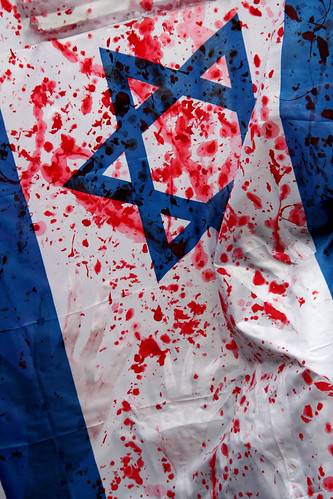
Renaming the Movement to "Religious - Zionist - Humanist"
1. The Phenomenon of "Hyphens" in Modern Religious Movements My high school rabbi in America once asked me the obvious question one can pose to every new movement in the religious community: "If you claim that zionism is an integral part of religion or Torah, then why originate a new slogan ‘religious-zionism’, in place of the age-old title ‘religion’ or ‘Torah’?!" The same question can be asked about other "hyphenating" movements like "Torah Im Derech Eretz" (Modernity or literally "Way of the Land") of R.S.R. Hirsch, "Torah U'Mada" (Knowledge) of R. Y.B. Soloveichik, and ‘Torah VaAvodah’ (Labor) of the HaPoel Mizrachi. There was even once fierce opposition to the Mussar movement of R. Y. Salanter and the Chassidut of the Ba’al Shem Tov for similar reasons - for morals, and serving Hashem through happiness are essentially included in "Torah" and need not be independently stressed. Contrarily, if a movement suspiciously accentuates a particular aspect of the Torah, we should be wary that this may come at the expense of other facets, imbalancing the delicate equilibrium of "Torat Hashem Tmima", "the Torah of Hashem is exactly perfect" (Tehilim 19, 8).
Historically, behind each of these "hyphenating" movements, was a void in Torah life, motivating a certain generation to re-supplement that which was lacking. Only as a response to a current "הוה אמינא", that there is a mistaken thesis of Torah without zionism, mussar, avoda, madah or happiness, we needed a reaction, an antithesis, to explicitly stress that missing aspect, thus enabling the return to the natural balance which had been unfortunately offset.
In truth, the aforementioned voids of the religious community were usually not a result of a calculated decision, but rather happened de-facto out of negligence. No rabbi claims that the Land of Israel, ethics, happiness, etc. are not important. But due to the long exile where "the only thing left for Hashem in His world is the four cubits of Halacha", 1 and pre-occupation in the yeshiva world with the Talmud and practical halachot, Judaism began to be thought of as a religion and not an encompassing way of life. There was little study of the broader and deeper philosophical ideas of the Torah, and even less talk of nationalism and modernism, seen as threats and distractions to "religion". 2
However, when a certain movement attempts to return a neglected idea to the public agenda, the knee-jerk "reaction to the reaction" from much of the religious leadership (who are naturally, and rightfully conservative and cautious of every reform), is to oppose. Often, they may even respond by "a priori" forming a reactionary philosophy, which not only negates the "exaggeration" of the new movement, but actually swings the pendulum back to an even more extreme stand than before. The opposition of much of the conservative charedi leadership to Zionism, Hebrew, labor, the Israeli army, and even to learning Tanach, are clearly a reaction which, ironically and unfortunately " reforms"the broad scope of the original living Torah of the Land of Israel.
A point in case is the revealing admission of Rav Eliyahu Meir Bloch, former Rosh Yeshiva of Telz in Cleveland from the year 5714/1954 about his support and participation in the Yom Ha’atzmaut (Israeli Independence Day) celebrations and his protest to those who oppose: "I have already expressed my view that we have lost greatly by not recognizing correct ideas (simply) because they are supported by the irreligious and their Mizrachi helpers, in order to strengthen their mistaken views. In my opinion, our view has not found a response in the general public not due to our correct position against these mistaken views, rather because of our negation of correct ideas, such as learning Tanach, the holy language, and the Land of Israel" (the emphasis is not in the original, A.S.). 3
2. Advancing G-dly Goals through the Torah, Mitzvot, Nature and Historical ProgressRav Kook stresses that we must not forget, it is the same G-d who revealed the eternal universal values of Torah and morality, who works not only on the level of religious commandments , but who also runs nature and history . These values are not only placed in the G-dly natural conscious inside us, but they are revealed and advanced stage by stage through the mitzvot which elevate mankind to a higher spiritual and moral level, 4 together with new technological or social concepts which evolve in every generation according to its needs and abilities. 5
A classic example, Rav Kook cites the advent of the ideal of vegetarianism, which involves many varied factors, each individually advancing or evolving the desirable and ultimately inevitable ideal of returning man to the pre-flood moral status:
1. The G-dly nature - of mercy sensitivity and conscience.
2. The revelation of this G-dly nature through social and technological development. In contrast to old-fashion medicine, modern doctors and nutritionists recommend eating less meat. Nutritionists constantly labor and succeed in technologically developing various "meat-substitutes" which slowly wean us from the meat in our diet. 6 It is already necessary today to market meat "incognito", testified by our children’s reactions when they first meet the butcher’s shop or see a whole chicken, even without feathers. Modern living conditions, the invention of the deep freeze and swift transportation, together with an increased level of cleanliness and a relative luxury in society, must be added to the fact that we are not used to slaughtering and eating one of our family pets for dinner. Butchers must "dismantle" the form of the chicken to "drumsticks" and "triangles", so that the form, temperature, texture, and packaging all distance the consumer and add even more to our apprehension from the nauseating slaughter, blood, and all traces of former life. Otherwise, modern man wouldn’t eat meat! The movement to prevent cruelty to animals, lobbying and legislation preventing experiments on animals do their share, as well. In short, the growing phenomenon of vegetarianism in the general population all advance this moral and G-dly trend.
Similarly, we thank Hashem for wisely giving us back our Jewish state and army at an age when even wars are directed from afar and at the press of buttons, without having to become defiled in a barbaric way that is likely, even in self-defense, to damage the delicate Jewish soul, so-needed to advance the morality of mankind. 7
3. The revelation of the G-dly nature through the fulfillment of the mitzvot and traditions - we are even commanded to take care of trees (Dvarim 20, 19), and even more so, animals (ibid, 22, 4); against cruelty to animals; against killing an animal and it’s child on the same day; the details of ritual slaughter; the prohibition against eating blood and the mitzvah to cover it in embarrassment; we do not bless "shechechiyanu" nor "tevalaeh ve’titchadesh" on garments made of leather, etc. (Rama, Or. Ch. 223, 6).
4. The revelation of the G-dly nature though Torah learning - an exact reading shows that man was only begrudgingly allowed to eat meat post factum after the flood; the ideal of the Garden of Eden; the negative portrayal of the hunters Nimrod 8 and Eisav; the common denominator of all the kosher animals being that they are herbivores, etc.
We find that Hashem gave the Torah, the mitzvot, our nature and conscious, and reveals the technological, historical and social evolution, orchestrating life and history to slowly but surely progress towards these ideals.
3. The "Necessity" or "Benefit" of the Non-Religious in the Process of RedemptionIn his article "Ha’Dor" as well as in many other places in his writings, Rav Kook brings an innovative explanation to the kabalistic/chassidic concept of a "positive" sin as part of the process of redemption. 9 There is a phenomenon that due to halachic limitations, 10 or the general conservatism inevitably found in the religious community, changes may take place through seemingly destructive or reckless messengers:
"Sometimes when there is a necessity to transgress the words of the Torah, and there is no-one in the generation who can lead the way, the matter comes to an explosion. In any case, it is better for the world that this matter will evolve unintentionally, based upon the ruling, "better they be unintentional sinners rather than intentional". 11 Only when prophecy rests among the Jewish people is it possible to decree about a matter like this in an emergency decree, and then it will be in a permissible way and a clear mitzvah. But if (today) there is no prophecy, this correction is done by a long-term breach which depresses the heart because of it’s externity but gladdens because of its interior (goal)."12
In other words, not only is it possible that there will be a phenomenon in which the agitation for change may come through an external cause 13 from the "dregs of the wine",14 but sometimes it must be so.
We must admit that sometimes our charedi opponents correctly claim that the religious movements are influenced, and sometimes even led by phenomena in the irreligious or non-Jewish communities. It is true that the religious Zionist thinkers R. Y. Alkalay and R. Z.H. Kalischer preceded Herzl and Nordau, but historically the Torah Va’Avodah movement arose as a religious answer to the Avodah (Labor) movement, and the "Ha’Shomer Ha’Dati" (who were more radically socialist) was established as an alternative to "HaShomer HaTza’ir". Morever, it is impossible to disconnect nascent Zionism from the nationalist atmosphere which existed in Europe at the time, and there is nothing wrong with that, for the same G-d who gave the Torah, also "runs the show" of history, as well.
As we have said, this fact, that Hashem did not "choose religious people" (or, more accurately, "the religious people did not choose") to be the first ones to "go up as a wall" and to raise a particular ideological flag, does not disqualify that ideology, rather necessitates more caution to separate the good from the negative byproduct. 15 It should not disturb us, that the process takes a long time, or that it led by secular, historical or social phenomenon. Hashem is the source of all causes, and the goal is one and the same, both if we are talking about progress by means of the Torah, the mitzvot, nature, society, technology or history. Contrarily, if in fact we were to wait for the rabbis to finish debating whether it was time or not to come back to Israel, whether we should wait for the mashiach or not, we’d still be waiting. Hashem "did us a favor’ by having history and the non-religious, resolve the question "without asking", by answering: you have no choice. Through assimilation, the holocaust, and Zionism, it became retroactively clear that we need a Jewish State, and the exile is no longer an alternative!
4. Applying Rav Kook’s Analysis to Today’s Generation - Adding the Final Side of the TriangleWhen we learned Rav Kook’s "Ha’Dor" in the previous generation, our rabbis emphasized the "hyphen", that religion and Zionism, not only can coexist (despite the fact that the latter apparently comes, from outside the beit midrash), but that in fact, this complex is actually a return to the original Judaism as seen in the Tanach. In accordance with what we said above, the need for this emphasis was connected to the general inferiority complex that existed at the time, as if the anti-zionist charedim are the "real" religious people, and, in contrast, the anti-religious zionists are the "serious" and leading nationalists. Ironically, a peculiar coalition was formed between these two extremes around the idea that there is no possibility of a real religious-zionist, who was seen as a weak compromising hybrid, who is neither really religious nor truly zionist. This was the background from which the hyphen of religious-nationalist (dati-le’umi) or religious-zionist was born.
It took several decades, and major turning points such as the Six Day War, the establishment of Gush Emunim, Hesder yeshivot, an increase in the quantity and quality of those who learn Torah in our community, etc., to prove to ourselves, to the charedim and to the irreligious that "religious" and "zionist" no longer contradict. On the contrary, not only is it a legitimate lifestyle, but it is the legitimate and original way espoused in the Tanach and actualized by our forefathers, who all worked the land, served in the army, spoke Hebrew, and actively participated (even led) in the fields of nationalism and politics.
It can be summarized that, thank G-d the "battle" for the unity of religion and nationalism is just about successfully finalized, so much so that today, in Israeli politics and society, the religious and nationalists are virtually identified as one camp.
If so, what factor is still preventing unity?
It seems that the solution is in what Rav Kook writes elsewhere, that there is a third side among the world views, which is also seen today in a widespread coalition between the charedim and the liberals, and even by some of the religious-zionists as a contradiction to both religion and nationalism. We are referring to humanism, moralism, liberalism, secular education, culture et al, all of which Rav Kook includes under the title: "humanitarianism".
"Three forces are grappling today in our camp, and their roots are based firmly within the recognition which permeates the spirit of mankind. We will be truly misfortunate if these three forces - which must really unite, each one to help and perfect the others, that each one will limit the extremism that the others can bring in an exaggerated form, if their way is not limited - will be left scattered, in their rebellion against each other, and in their separation, each one to a special camp, which rivals the others. The sanctity 16 , the nation, humanness - these are the three main demands which from which all of life, both ours and of every person’s, in some way or another, are comprised.
The three most official factions in the life of our nation: first, the orthodox… standing forreligion of Torah and mitzvot, the belief and the holy aspect of Israel; the second is the new nationalism ...; the third is the liberalism ... calling for the general human content of education, culture, morals and more...
It is understood that... we need to constantly aim to come to a healthy situation whereby these three powers rule 17 together in all of their holism (fullness) and goodness, in a proper, harmonic situation in which there is no lacking and no excess, because the holiness, the nation and humanitarianism will cling together in practical and noble love...".18
A fresh look at the article "Ha’Dor" will reveal that even 100 years ago, Rav Kook intended to learn from the youth of the left-wing, not only nationalism, but also their social, humanist and educated outlook. In his praise in Ha’Dor, Rav Kook emphasizes not only their Zionism and nationalism, but also their "feelings for kindness, honesty, justice and compassion...the intellectual and idealistic drive is bursting and improving". 19
It seems that in our generation, the division most waiting for unity is between the third side, the humanist, and her two counterparts, the religious and nationalist. Especially in today’s age of "post-Zionism", the main criticism in Israeli society against nationalism and religion is evolves from the camp of universalism. Similarly to what he wrote about nationalism in his time, it is probable that Rav Kook would write today about humanism as well, that "we will succeed not by purging it from the soul of the generation, rather with energetic efforts to return it to it’s distinguished source, to connect it to the original holiness from which it stems." 20 As we mentioned above, because the main stress in the previous generation was to unite religion and nationalism, Rav Kook’s pupils dealt less with the unification of the third aspect.
The Divine guidance dictates not only the Israeli, but also the universal agenda. In the last several years we have witnessed the genuine danger and havoc which the humanist and universal camp have brought upon nationalism and religion, especially in the State of Israel. Most notably was the Oslo fiasco which, even if Peres and Rabin had good intentions, literally multiplied terrorism and casualties ten-fold from tens to hundreds annually, handing the Palestinians tens of thousands of guns which wound up in the hands of terrorists, and brought the suicide-bombers to the café’s, malls and buses of Tel Aviv and Jerusalem, convinced that the compromising Israeli’s need just "one more push" and they will surrender everything. The "disengagement" from Gush Katif was no less of a fiasco which physically tore almost ten thousand religious-zionists from their homes, brought the Hamas to power in Gaza, raining thousands of rockets and missiles upon Sderot, Be’er Sheva and Ashkelon, and nationally and historically, worst of all, caused mass civil and military disobedience and almost civil war. The Hizballah in Lebanon also identified the weakness and shelled from the north, bringing the Second Lebanese War. Many religious-nationalist youth, the most visibly Zionist camp in Israel, became disillusioned with the State, joining post-zionism, and not a few actually left religion, with some even committing suicide. The electoral, vocal and legal support for these losing gambles came from the anti-religious and anti-nationalist Israeli left-wing, who brought elation only to the enemies of Israel, not only with their successful ousting of Jewish settlers from Gush Katif, and panic and casualties among Israelis in the north, south and cities, but especially with the possibility of Jewish civil war.
The Shinui and humanist parties, the supporters of the Oslo accords, Geneva Agreement, and the other withdrawals from our Holy Land, see nationalism and religion as contradictory to progress, and as preventing Israel’s acceptance into world society. As in all of the nations of the world (including many non-national frameworks, Non-Governmental Organizations or N.G.O.s 21 ), the Israeli left-wing talks about ideals of international peace, love and brotherhood. They stand for and believe in culture, education, globalization and universalism as genuine values, and as the solution to the world’s problems, including those of Israel.
True, the Islamic fundamentalism cools their hopes a little, but they believe that if we will find less-religious, cultured, educated and humane partners amongst the Arabs, then we will succeed, with the aid of other nations, to neutralize and subordinate the religion and nationalism of both sides in order to come to a compromise and peace agreement.
The extreme left-wing groups of anarchists, who march and demonstrate together with the enemies of Israel, throw stones at our soldiers, in addition to the lawyers and politicians who come to defend the murderers of Israeli children calling them "freedom-fighters", together with the pacifists who refuse to serve in the army, demonstrate the dangers of liberalism in its extremity, in the absence of nationalism and religion to prevent it from reaching absurdity. Unfortunately, as Rav Kook foresaw, lacking connection with religion, the left-wing former Zionists have indeed come to "hate the Jewish nation and the Land of Israel" as narrow nationalist or even racist values which contradict universalism. 22
Rav Kook writes elsewhere, regarding exaggerated humanism, that one who claims to love all of mankind with that special love usually reserved for brothers, his love "needs to be examined". 23 One who cares for innocent Arab citizens who side with and often support, or even hide terrorists with blood on their hands, more than he cares about his Jewish brothers, innocent victims of terror, is like a mother who saves her neighbor’s son from a fire before she saves her own. This is not altruism but selective humanism for the sake of convenience. It’s more difficult to love your brother who may be your political adversary, and artificially show affection for the enemy, in fear of his attacks. One who is has no love of family and nationalism, and who is lacking Torah and the Shulchan Aruch to define how much to help one at the expense of another, the foreigner at the expense of your neighbor, at the end of the day, also will lose his morality, and be left withartificial, convenient and selective humanism .
On the other hand, in contrast to Rav Kook, it seems that a large part of the charedi, religious and nationalist community will willingly join this coalition of agreement with the left-wing, that the humanism, culture, and secular education do indeed contradict religion and nationalism, only the opposite, they opt for the latter and reject the former. In these areas, there is no doubt that the religious and nationalist communities are seen as relatively outmoded. As far as religious priorities, "learning Torah is equal to everything". For men, the prohibition of "bitul Torah" will always come at the expense of other humanistic, cultural or secular fields.
The scope of this article cannot relate to the interesting topic of how Rav Kook thought of practically solving this problem, how to elevate, unite and harmonize the general Israeli culture and education with the eternal loftiness of Torah learning and returning to our roots. 24 It is clear that alongside yeshivot in their traditional format, Rav Kook saw a necessity for institutions such as Yeshiva University, where they will train the humanist and universal side of the nation together, and with no contradiction to, the religious side.
In the "Living Torah" of the Land of Israel, it is legitimate to serve Hashem not just in the yeshiva, but also in the army, in the field, or in academics, in a subjective manner according to the needs, leaning and talents of each individual. In Israel, all of the aforementioned are holy and are mitzvot, as are all fields which contribute to society (mitzvat yishuv haAretz, Chatam Sofer, Sukkah 36). It is clear that each Jew has natural instincts in his soul to at least one, if not all, of the three general drives and world views - religion, nationalism, or universalism.
Additionally, we must understand the source of the misconception, as if the left-wing has a monopoly on humanism. The movements for the environment, social justice and world peace, are mainly outside the conscience and scope of activity of most of the religious community, despite the fact that this is neither desirable nor inevitable. 25 Similarly, extremists amongst us who mistakenly think that love of the Jewish people requires opposition to universalism and secular education also add to this trend, just as those who think that nationalism obliges the hate of every Arab, and those who think that humanism and liberalism oblige weakness, retreat and national surrender in the face of threat. Contrarily, Rav Kook stresses, that "the narrow view which causes one to see in everything outside the perimeter of the special Nation (of Israel)… just ugliness and impurity, is one of terrible darkness which causes much general destruction...". 26
Similarly, there is a stereotype in the nonreligious world that the charedim are more primitive and less moral than "modern people". Rav Yisrael Salanter and the Mussar Yeshivot already identified this problem 150 years ago, and strived to improve the situation by specifically studying the ethical aspects of the Torah, even stressing the significance of cleanliness and politeness, previously thought marginal. Yeshiva heads and teachers should directly teach these topics from a young age, through discussions and stories, and afterwards books, appropriate for our generation.
It is true that part of the problem stems from the media’s delight and exaggerated expose’ of the religious criminals and nationalist "extremists", even as they exercise their democratic right of protest. However, we must honestly admit, that were we to educate our children that, just as we would not eat pork in exchange for 1,000,000 shekel, so too we will not lie or steal, even if this will incur a similar loss, the honor and respect for religious people will immediately increase. In short, stealing, lying, slander=pig.
If the moralists would know that every yeshiva student indeed designates time every day to learn mussar, as the Mishna Berurah obligates, 27 we will find that the virtual barrier between humanist universalism and religious nationalism will melt even quicker than we removed the imaginary barrier 28 between religion and nationalism, for unlike nationalism, morality was never off the agenda, even in exile. Just as it is already clear in Israel that the stronghold of nationalism is mainly in the traditional and religious circles (note who builds new settlements and volunteers disproportionately for the elite army units), there is no doubt that by offering morality fortified with religious discipline and concrete halachic definition, we will raise the ethical level of the religious people so much higher that our idealistic left-wing brother will recognize and know "that he will find what he searches for davka within the border of Israel". 29 The new-found brotherhood in Israel will enable the Israeli humanists to identify the hypocrisy and anti-semitism often found among their international counterparts, encouraging them, when need be, to side with their brothers, not with their enemies.
It is also worth noting that part of the stereotype that charedim are less friendly and ill-mannered, comes from a total misunderstanding of the laws of modesty, which are seen as offensive towards women and mistakenly thought to stem from an "inferior" or impure status, instead of the actual ideals of humility, loyalty to family, and respect for womanhood.
Others find it hard to understand how we are in favor of intermarriage between all of mankind, so that all of the world will unite as one family, 30 but that we ourselves are not willing to be "part of the celebration". It will only be possible to correct these mistakes and answer these and similar questions, on a background of mutual respect which will come in the wake of a positive connection between humanism, religion and nationalism. Just as the universalists will then appreciate how monotheism introduced and even obligated the advent of morality into the world, 31 so too they will understand the vital connection between the commandments on the right, to those on the left.
We shouldn’t be surprised nor disappointed that we "need to" learn certain ideas "from outside" the Beit Midrash. We have already seen that Hashem makes the world progress not only through the Torah and mitzvot but also by controlling history and development. We also are well aware that part of our return from exile is to "gather positive sparks" from the outside.
There is no doubt that as the internet, media, economy and transportion advance mankind towards the inevitable globalization, the question of the uniqueness of the Jewish people, both nationally and religiously, will become more and more acute. If everyone (except Islamic fundamentalists!) seems to be marching in the direction of bringing down barriers and folding up flags, our role as "a nation that will dwell alone, and shall not be reckoned by the nations" (Bamidbar 23,9) seems to disturb the party. If the world is uniting around one culture why do we stubbornly insist on continuing to retain our unique Jewish culture, as well? If mankind is progressing towards keeping the seven Noachide laws, why do we need 613? The great Rav Y.M. Charlap, Rosh Yeshiva of Merkaz HaRav and predecessor of R. Sh. Z. Aurbach as rabbi of the Sha’arei Chessed neighborhood, envisioned with unbelievable realism more than 60 years ago, that the war of Gog and Magog will evolve around this very question. 32
The questions are so pressing, that we would be wise to confront them directly and hasten the cure. In contrast to the nationalism and religion of the other nations which led to zealotry and war, Jewish nationalism and religion is completely based on the foundation of our humane desire to unite and bring good to the entire world. To reveal that our national yearning is "to establish a great humane community which will ‘keep the ways of G-d to do charity and justice’’". 33 Abraham’s national commandment to first "Go from your (foreign) land… to the Promised Land… and (then) I will make you into a great nation" is what enabled the blessed universalism: "and all the families of the earth will be blessed through you". In fact, the Jewish idea of nationalism is the defense mechanism to protect the liberal world from the threat of exaggerated and dangerous (e.g. arab) nationalism, showing how to harmonize the east and the west, that nationalism and liberalism can thrive together in coexistense.
Even when we have been attacked and forced to go to war (the ugly face of nationalism), it is a "war against war", against terrorism, against evil. The entire world, including the arabs, admit, that were the arabs to lay down their weapons tomorrow, there would be no war, yet were Israel to do so, there would be no Israel.
Accordingly, our final success depends on removing the final barrier. By emphasizing the study and actualization of morality, we will achieve complete unity without contradictions. We have yet to leave the age of "hyphens", but the way to do so, the way to unite under the "kodesh ha’elyon" (quintessential holiness) is to add the last hyphen, to call ourselves religious-nationalist-humanists. 34
|