Tuesday, January 23, 2024

Rav Kook on Parashat BeShalach: The Assault of Amalek

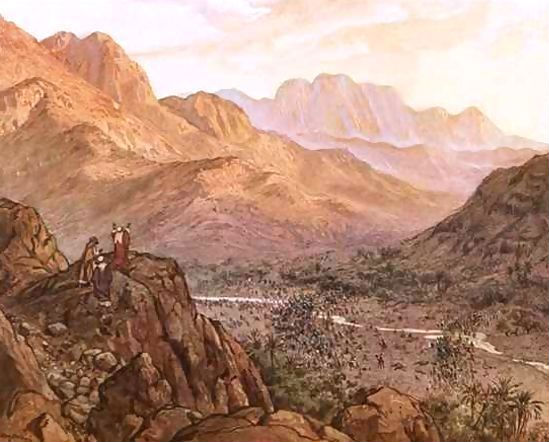
Amalek attacked Am Yisrael at Rephidim, intentionally targeting the weak and those lagging behind. Yehoshua engaged Amalek in battle, successfully defending Am Yisrael against this merciless enemy. Then God instructed Moshe:

“Write this as a reminder in the book, and recite it in Joshua’s ears: I will completely obliterate the memory of Amalek from under the heavens.” (Shemot 17:14)

Why did God command Moshe to write down His promise to obliterate Amalek in the Torah? And why did Yehoshua need to be told verbally? Couldn’t Yehoshua just read what was written in the Torah?

Two Missions
Am Yisrael has two national missions. At Har Sinai, God informed them that they would be a mamlechet kohanim (“kingdom of priests”) as well as a goy kadosh (“holy nation”) (Shemot 19:6). What is the difference between these two goals?

Mamlechet kohanim refers to the aspiration to uplift the entire world, so that all will recognize God. Am Yisrael will fulfill this mission when they function as kohanim for the world, teaching them God’s ways.

But the Jewish people are not just a tool to elevate the rest of the world. They have their own intrinsic value, and they need to perfect themselves on their own special level. The central mission of Am Yisrael is to fulfill its spiritual potential and become a goy kadosh. If Am Yisrael’s sole function was to uplift the rest of the world, they would not have been commanded with mitzvot that isolate them from the other nations, such as the laws of kashrut and circumcision.


Two Torahs
God divided the Torah into two components: the Written Law and the Oral Law. The written Torah was revealed to the entire world; all nations can access these teachings. God commanded that the Torah be written “in a clear script” (Devarim. 27:8) — in seventy languages, so that it would be accessible to all peoples (Sotah 7:5). The Written Torah was meant to enlighten the entire world.

The Oral Law, on the other hand, belongs solely to the Jewish people. Since this part of Torah was not meant to be committed to writing, it is of a more concealed and less universal nature. In truth, the Oral Law is simply the received explanation of the Written Law, transmitted over the generations. Thus even the Written Torah is only fully accessible to Israel through the Oral Torah. But the other nations nevertheless merit a limited understanding of the Written Torah.

God’s Name and Throne
Amalek rejected both missions of Am Yisrael. Amalek cannot accept Am Yisrael as a mamlechet kohanim instructing the world, nor as a goy kadosh, separate from the other nations with its own unique spiritual aspirations. God promised to “completely obliterate” (macho emcheh) Amalek. In Hebrew, the verb is repeated, indicating that God will blot out both aspects of Amalek’s rejection of Israel.

Why did God command that His promise to destroy Amalek be written down and also transmitted orally? Since Amalek rejects Am Yisrael’s mission to elevate humanity, God commanded that His promise to obliterate Amalek be recorded in the Written Torah. The Written Law is, after all, the primary source of Am Yisrael’s moral influence on the world. And since Amalek also denies Am Yisrael’s unique spiritual heritage, God commanded that this promise be transmitted verbally, corresponding to the Oral Law, the exclusive Torah of Israel.

When Amalek has been utterly destroyed, the Jewish nation will be able to fulfill both of its missions. This is the significance of the statement of the Sages:

“God vowed that His Name and His Throne are not complete until Amalek’s name will be totally obliterated.” (Tanchuma Ki Teitzei 11; Rashi on Shemot 17:16)

What are “God’s Name” and “God’s Throne”? They are metaphors for Israel’s two missions: spreading knowledge of God — His Name — and creating a special dwelling place for God’s Presence in the world — His Throne. Amalek and its obstructionist worldview must be eradicated before these two goals can be accomplished.

(Silver from the Land of Israel, pp. 135-137. Adapted from Midbar Shur, pp. 312-316 by Rav Chanan Morrison.)

Monday, January 22, 2024

By the Seaside

by HaRav Zalman Baruch Melamed
Rosh HaYeshiva, Beit El


FOUR LEVELS OF BELIEF
"And God chose not to lead them by the way of the Land of the Plishtim, since it was close..." Our classic Torah commentaries note that the situation should have been just the opposite: since the path through the land of the Plishtim was so short, Hashem should have led the Jews in that direction on their way out of Egypt! To answer this question, the sages explain that God wished to ensure the fulfillment of the oath sworn by Avraham Avinu to Avimelech, King of the Plishtim, in which Avraham pledged that he would not chase the Plishtim out of the land; at the time of the exodus, the Plishtim still had some merit to their credit, and in order for them to be forced to leave the land, they would have had to already have "used up their reserve supply" of merit.

In light of the above, it seems that the Children of Israel can only be fully redeemed and settle in the Land when their enemies "use up" their own merits.

However, elsewhere in the Torah, we learn that there is yet another means by which the Jews will inherit the land. "Not because of your righteousness...but because of the evil of those nations [did you inherit the land]..." we are told. From the negative, we learn the positive - namely, that there are two ways in which one can inherit the land: as a result of the rejection of the non-Jews living there, who lose their grasp on the Land as a result of their wicked behavior - or alternatively, as a result of our own righteousness, our own merits. Our merits may, so to speak, "force" God to return us to our land, and to find another way - other than permitting the non-Jewish nations to live in Israel - to "pay off" any debt He owes, so to speak, to those nations.

The plagues on Egypt were basically lessons on Divine Providence; the message was directed towards the Jews, the Egyptians, and ultimately, to the entire world. The splitting of the Red Sea was really the final class in a series of lessons on the truth of Divine Providence in the world.

On the banks of the Red Sea, the Children of Israel had to finally put into action the newly-deepened belief in God that they were able to cultivate during the plagues. The nation - men, women and children - were now being relentlessly pursued by Pharaoh's entire army. It seemed hopeless: how could a slave nation, and especially its women and children - manage to survive a clash with these soldiers and chariots? This was a dead-end, and the nation of Israel now faced its greatest test of faith to date: Should they give up, or perhaps strive to act out of a deeper understanding of what was happening. Many were likely thinking to themselves: "We could have run away, even tricked Pharaoh, had an escape plan that would have not allowed him to catch up with us...So why in the end, did we go ahead and let him know we wished to go, ask him for his permission to leave his land?" These questions soon made them realize that the entire exodus was Divinely-directed; God wished to have Pharaoh's army reach the banks of the sea, in order to show the world His great hand, a hand that saves Israel from its pursuers - and ultimately avenges those that wish to do the Children of Israel harm.

Our sages teach that at the sea, the Jews were divisible into to four groups. There were those that wished to commit suicide - to jump into the sea; they thought that drowning would be preferable to a harsher, more violent death at the hands of the Egyptians. Regarding this group God says to Moshe: "Stand and see the redemption of Hashem."

There were also those Jews who wished to capitulate to the Egyptians, to retreat to the previous slavery arrangement, hoping that the Egyptians would have mercy on them, It is in regard to this group that God says, "After seeing Egypt today, you won't see them any more, forever."

Yet a third group wished to go to war with Egypt. These people thought that despite the fact that there was no hope of victory, "if we put in our effort, perhaps, with God's help, maybe - just maybe - we can overcome them. Regarding this sector, Moshe says, "God will fight your battle." A fourth element understood the military superiority of Egypt, and preferred to simply pray for God's help. Regarding this group, God said: "...and you will be silent."

Of the four divisions mentioned, the first two cases are basically Jews with religious problems; these are people oriented to resignation, giving up, who feel overwhelmed by difficulties that befall them. The last two groups, in contrast, exhibited two different levels of a more sophisticated belief. The third group believes in Divine aid taking hold once man has exerted his human efforts, in a war, for example. The fourth group represents the highest level of trust in God, in which the power of prayer alone guides the Jew and his service to God.

But the declaration: "Hashem will fight your battle, and you be silent," indicates that the last two groups as well, did not reach a level of belief appropriate to a generation that saw all of the divine signs and wonders that God showed Pharaoh in Egypt. Given what they had witnessed until now, complete faith in God should have been the order of the day - a trust that would have prompted all the Jews to anticipate a certain, God-directed redemption.

SPLITTING THE SEA
Our sages debated the question as to what merit the Jewish people possessed to make the sea split. Rabbi Bannai says that the sea split in the merit of Avraham, regarding whom it is said, "And he split the trees for the burnt offering.’ And here, in this week's portion, the Torah says, "The water split.’"

Others are of the view that the sea split in the merit of Yosef’s bones, which the Children of Israel were carrying with them at the time for burial in Eretz Yisrael. Regarding Yosef, it says: "And he fled [from the wife of Potiphar] and ran outside." In his merit, the Jewish people had the sea split, as it says: "The sea saw and it split."

Aside from the similarity of the words - i.e. the splitting of the trees and the splitting of the sea; the fleeing of Yosef and that of the sea, something deeper is at work here.

There is a lot to learn of Avraham Avinu’s splitting of his wood prior to the Akedah. Avraham could have said to himself: "I will surely find trees on the mountain, why if so, is there a need to hurry? And if I don’t find those trees, I won't be held responsible, but rather someone who was prevented from doing a mitzvah by circumstances beyond his control; in the end, then, I won't be held responsible for failing to sacrifice Yitzchak." Why, then, did Avraham already weigh himself down with the wood at this point in time?

Answer: The splitting of the wood by Avraham Avinu indicates that he had transcended his own nature, that of a father whose conscience cries out against, resists the sacrificing of a beloved son. Avraham Avinu sanctifies himself, to the point that he is able to overcome his most basic human, physical qualities. By doing this, he reveals a characteristic of the Children of Israel, a people which has in it the power to overcome the physical limitations of this world. When this level of kedusha or holiness exists, physical reality cannot stand up against it and prevent if from manifesting itself. Thus, in the merit of "the split the wood" for the binding of Yitzchak, the sea - defying nature - split.

Yosef Hatzaddik stood up daily against the ongoing temptations of the wife of Potiphar. As each day passed, the struggle became more and more intense. The situation was especially acute as Yosef continued to realize that his failure to respond positively to the advances of Potiphar’s wife may very well endanger him, as it eventually did! Perhaps Yosef could have argued to himself that responding would be permissible in order to avert such danger. Despite all this, he withstood the temptations, and in overcoming his natural human inclinations in this respect, he ran away from Potiphar’s wife. Doing this showed that he could transcend his physical human limitations, and allow the unique Jewish quality of holiness to shine through. The sea, too, like Yosef, therefore split, ran away, retreated.

This unique quality of the Jew is not visible to the naked eye. A Divine eye is required. Hashem, who sees into man’s heart, can see it. Even the ministering angels do not merit recognizing this quality. This is why the angels complain to the Creator when they see the fate meted out to the Egyptians: These [the Egyptians[ are idolaters and these [the Jews] are too; if so why do these people deserve to be saved more than these? But God is the one splitting the sea, ushering the Jews through the dry land, and drowning horse and soldier - all in order to illustrate to the entire world, the Jewish quality of enabling the spirit to overcome the physical, the holy, transcend the profane.

Shining Miracles

by Rabbi Dov Berel Wein

If a person lights even a small candle in a dark room, the resultant light is instantaneously recognizable. Even the flickering of the smallest of candle shines brightly in an enclosed space that is dark. However, if one is to light even a large candle in a room filled with brilliant sunlight or an excess of artificial illumination, the light of that candle is hardly noticeable.

One can say the same idea regarding miracles. If one views a world full of ever-present miracles, then one individual miracle, no matter how powerful and supernatural it may be, will, at best, cause only a minor, temporary impression. The very definition of miracles is that these are events that do not often occur and are not predictable or subject to rational, scientific analysis.

However, when there is a plethora of miraculous events, miracles themselves, no matter how wondrous they may be, begin to lose their impact and power. A miracle that happens regularly is no longer a miracle at all, but, rather, is part of what people view as being the natural course of events in the world. Miracles that are repeated often eventually become stale and regular and lose their miraculous status.

Witness today's great wonders of nature, of medicine, of technology, and of all other fields that border on the miraculous. When the first rocket with a human inside was launched, it was considered miraculous. Today, it is a weekly event and nothing special for the spectator. The more an experience becomes regular and expected, the less any special quality is attached to it.

When there is a multiplicity of miracles occurring all at the same time, like the candle lit in a room with floodlights, its brightness is hardly noticeable. The individual miracle has lost its power of influence and is already discounted by human beings.

All of this is a preface to understanding the Jewish people after they experienced the Ten Plagues that delivered them from Egypt. The splitting of the sea that delivered them from the sword of the Pharaoh and his army was followed by the miraculous sweetening of the bitter waters in Marah and then the heavenly bread that was given to them for their sustenance. In that floodlit world of miracles, the flame of an individual miracle and its influence waned greatly.

This helps us understand the behavior of the Jewish people throughout their forty-year sojourn in the desert of Sinai. Everything was so miraculous that nothing was special any longer. What resulted was that the evil instinct of rebellion, arrogance and carnal desires continued to surface over and over throughout the Torah.

In our time, the rejuvenation of the Jewish people, the mass study of Torah, the creation and continued growth of the State of Israel in the land of Israel, are all events that border upon the miraculous and supernatural. Yet they, too, are not treated in that manner, for the recognition of miracles is difficult for human beings to maintain and preserve.

For forty years in the desert, the Lord attempted to protect the Jewish people through heavenly intervention, but they did not understand or appreciate what was happening. They only complained. Our Rabbis teach: "One who is experiencing a miracle does not recognize the miracle that is happening at that moment." And so, it is.

David Mamet on Hollywood, Hamas and Donald Trump (video)

Biden Threatens Netanyahu's Drive to Destroy Hamas

by Con Coughlin
  • The Israeli premier has also reiterated his long-standing opposition to the creation of a Palestinian state, which he insists would become a launching pad for attacks on Israel.
  • Israel's efforts to achieve its goal of destroying Hamas, though, are at serious risk of being undermined by the Biden administration's growing hostility towards Netanyahu's government.
  • There are credible indications, moreover, that the Biden administration's hostility towards Netanyahu has led it to work with senior figures within Israel's security establishment, which is known to have a difficult relationship with the Israeli premier, to remove his government from power.
  • [T]he Palestinian leadership has always been just as deeply and outspokenly committed to the destruction of Israel as Hamas is.
  • Instead of trying to overthrow the Netanyahu government, the Biden administration would be better advised to grasp the vital strategic consideration that defeating Hamas is as much in the interests of the US as it is for Israel.

Israel's efforts to achieve its goal of destroying Hamas, though, are at serious risk of being undermined by the Biden administration's growing hostility towards Benjamin Netanyahu's government. Pictured: US President Joe Biden meets with Netanyahu in Tel Aviv, Israel on October 18, 2023. (Photo by Brendan Smialowski/AFP via Getty Images)

The deepening antipathy of the Biden administration toward Israeli Prime Minister Benjamin Netanyahu is threatening to derail Israel's military offensive to destroy Hamas.

With every day that the Israel Defence Forces (IDF) maintain their military effort to end the threat to Israeli security posed by Hamas's presence in Gaza, more details emerge of the staggering underground terrorist infrastructure the Iranian-backed group has constructed in Gaza.

In the three months since Israel launched its military offensive against Hamas following the deadly October 7 attacks, in which Hamas killed at least 1,200 people and took hundreds more hostage, IDF commanders have been astonished at the extent of the 350-mile tunnel network, with 5,700 entrance shafts, which Hamas has constructed in the Gaza Strip with the specific aim of increasing its ability to launch terrorist attacks against Israel. It has been called "a city under a city" and a "fortress under a city."

Continue Reading Article

The Diplomatic Option toward Iran is Self-Destructive (video)

by Ambassador (ret.) Yoram Ettinger

Synopsis:

*The US diplomatic option induced the transformation of Iran from "the American policeman of the Gulf" to “the largest anti-American venomous octopus in the world.”

*The diplomatic option has deluded itself that a financial and diplomatic bonanza would induce Iran’s Ayatollahs to abandon their 1,400-year-old religious, fanatic, anti-US vision.

*The diplomatic option has suspended most economic (especially oil) sanctions, increasing Iran’s national income by some $100bn (oil exports), mostly dedicated to bolstering its global anti-US terror and drug trafficking network, with a focus on Latin America.

*The diplomatic option has severely eroded the US stature in Latin America and its global posture of deterrence, benefitting Russia, China and anti-US Islamic terrorism.

*The 45-year-failure of the diplomatic option behooves the US to consider the options of regime-change and a credible military threat.

The Path to Victory – Complete Jewish Unity


Even in times of spiritual hardship, when the Jewish people unite as one, God helps us defeat our enemies * However, the more complete our unity based on shared religious and national values, the greater the victory we will merit * There is great reward for those who come early to synagogue prayer and are among the first ten worshippers. Even greater reward comes from praying in a synagogue filled with many worshippers * In the past, before clocks, gathering the prayer quorum was difficult. Those who hurried without knowing how long they’d wait for the quorum, merited great reward. But even today, when the time is known, the merit of coming early before the set prayer time, approaches the merit of being among the first ten

In this week’s Torah portion ‘Bo’ we read about the Pesach holiday, with the Korban Pesach, which expresses our faith in God, and Israel’s segulah (unique virtues) as one. The holiday names reflect this. “Chag Ha-Matzot” (“Festival of Matzot”) – because our forefathers’ dough did not have time to rise before the holy Supreme King of kings revealed Himself to them and redeemed them. “Chag Ha-Pesach” (“Passover Festival”) – God ‘pasach’ (passed over) Jewish homes, saving us. Today, national identity expresses Israel’s unique virtue.

The Korban Pesach also expresses Israel’s unique virtue, and faith in God. Virtue – the Exodus goal was for Israel to enter, conquer, and settle the Land, as mentioned a number of times in the Torah portion. Consequently, an uncircumcised male was not permitted to eat the sacrifice (Shemot 12:48). Faith – Israel offered this sacrifice to God with mesirut nefesh, despite it being an Egyptian idol.

Similarly, the righteous King Yoshiyahu told the Leviim: “See now to the service of the LORD your God, and His people, Israel” (Divrei HaYamim 2 35:3).

Complete Faith Unites Us
When the Jewish nation is united, even amidst spiritual troubles, God helps Israel defeat its enemies. Unity can also exist around national ideas. Due to the peace between the wicked King Ahchav and King Yehoshafat, though Ahchav sinned more in avodah zara (idolatry) than all the other kings before him, together, they waged successful war. As our Sages said: “Great is peace, for even if the idolaters live in peace, the Holy One, as it were, does not “touch” them (with the Satan), as it is written (Hoshea 4:17) “Ephraim (Yisrael) has bound himself (in friendship to serve) idols — Let him be.” Our Sages also said that they did not sin in lashon ha-ra (defamation) in the days of Ahchav, and therefore, were victorious in war (Yerushalmi Pe’ah 1:1).

However, unity lacking faith in God, cannot endure. Thus, Yehuda and Israel eventually separated, and fell before enemies.

Unity Today
Today as well, our unity level correlates to defeating our enemies, and flaws in unity impede victory. In other words, for now, even partial unity around national or religious values helps. But since it is partial unity, for example, only around faith in mitzvot between man and God, or only in Israel’s destiny to settle the Land, it brings partial success.

Thus we find that greatly nationalistic Ahab pursued alliances with neighboring nations through intermarriage and idol worship, gaining partial success. And religious kings like Chizkiyahu, lacking the national aspect, also achieved partial success.

The more we understand religious and national values as one, the more we’ll unite, and gain greater victory.

Viewing the Enemy as Dependent on the Leader
One expression of the concepsia (worldview) that has not properly changed, is analysts viewing the enemy as identical to the organization’s leader – Hamas, or Hezbollah. You’ll hear from all analysts that the question is what Nasrallah will decide, and similarly for Hamas, what Sinwar will decide. And in the past, the PLO, as if it solely depended on its founder, Arafat.

This style expresses the analysts’ fundamental lack of understanding of the enemy’s beliefs and motivations. Strategically, it almost doesn’t matter who leads them – the deep hatred of Jews and the State of Israel, is the deciding factor. As long as analysts, influenced by security and intelligence agencies, place great weight on the leader’s thoughts and considerations, but little weight on the ideological infrastructure driving Hamas and Hezbollah supporters, it is a sign they completely fail to understand the enemy and threat, with disastrous results.

The point is not to claim that understanding the enemy means the chance of Hezbollah initiating an attack soon is greater or smaller, but rather, that the enemy’s considerations are far broader and deeper, primarily, long-term considerations. Unfortunately, I have not heard a single military or political analyst, who does not err in this.

The Significance of Speech and Language
On the surface, it is difficult to understand – God’s plan was to take Israel out of Egypt, and bring them to the Land of Israel, as the Torah says:

“I have remembered you, and what was done to you in Egypt. And I said I will take you out of the misery of Egypt to the land of the Canaanites and the Hittites and the Amorites and the Prizites and the Hivites and the Jebusites, to a land flowing with milk and honey” (Exodus 3:17-18).

If so, why in all his appeals to Paraoh does Moshe Rabbeinu only demand he let Israel go to the desert for three days to worship God? (Exodus 3:18, 5:1-3, 6:6-8, 6:11, 7:2-5, 7:26, 7:16, 7:23, 9:1, 10:3, 10:9-11, 10:24, 10:25-26).

Even in the end, after the plague of the firstborn, there is no mention of leaving to freedom, only:

“And Paraoh got up at night…and he called Moshe and Aharon at night, and he said, get up and leave from among my people, both you and the children of Israel, and go worship the Lord as you have spoken” (Shemot 12:30-31), with nothing said about Israel leaving to freedom, and ascending to the Land of Israel.

Suggested Answer
Perhaps it can be said that Paraoh well knew Moshe’s intention was to take Israel out of Egypt to freedom. But according to diplomatic language, it was improper to propose that a great king like Paraoh, surrender and give up 600,000 slaves. Moreover, if that were the demand, it would essentially mean asking him to give up his kingdom, for after such a humiliating surrender, all of Egypt would rebel against him. Therefore, the departure is described as going to worship God – a religious decree, not directed against Paraoh’s reign. This way he could agree to the demand to release Israel without undergoing severe humiliation, since he could always claim he intended to honor God, and release them for a few days, with the assumption they planned to return to work in Egypt.

According to this, when haraoh agreed to let them go work in the desert without women and children, in diplomatic language he replied that despite all the plagues he suffered, he would not accept their demand, but was willing to slightly ease the servitude, so they could leave from time to time to worship God, but in general, remain enslaved in Egypt.

Also, when he surrendered after the plague of the firstborn, by saying go worship God, even though everyone understood he had agreed to release them, the sophisticated diplomatic language still left him room to reconsider. And indeed, after God hardened his heart, he succeeded in harnessing his soldiers to chase after Israel until the Sea of Reeds claiming betrayal, in order to return them to servitude.

Depicting the Tablets with a Rounded Top
Q: Rabbi, the cover image of your books ‘Peninei Halakha’ is of the Luchot with a rounded top, but I heard one shouldn’t do this, since the Tablets were square, and the rounded image was adopted from Christian illustrations.

A: For many generations it was the custom of Jews in synagogues worldwide to decorate the Holy Aron or parochet with an image of the two Luchot with a rounded top.

It is true that in the last generation, two Rabbis objected to the practice of rounding the Luchot's top – first in 1963 Rabbi Eliyahu Katz (Debrot Eliyahu OC 1:96), and after him, the Lubavitcher Rebbe (in a talk in 1981). They claimed this practice derived from Christian Gentiles, whereas the Tablets in the Aron HaBrit, were rectangular.

However, according to Jewish law, one must not malign the widespread practice of generations, since there is no need to make the Luchot as they were in the Beit Ha-Mikdash, neither in shape, nor size. On the contrary, we find those making vessels modeled after the Mishkan vessels must alter the size from the Temple, as it is forbidden to make outside the Beit Ha-Mikdash, vessels in the form of those within it (see Avoda Zara 43b, Shulchan Aruch YD 141:8).

And in practice, even after hearing the aforementioned Rabbis’ claim, the common practice in tens of thousands of synagogues worldwide did not change, and they continued making the Tablets with a rounded top. This was effectively written by the Chief Rabbi Mordechai Eliyahu (Responsa of the Chief Rabbi 1988-1989, section 198), and was also conveyed in the name of Rabbi Elyashiv (Yisa Yosef OC 3:36). It was also written in Responsa Mishne Halachot (15:169) and Even Yisrael 8:57. They further argued there is doubt whether the Beit Ha-Mikdash Luchot were in fact square, as one can learn from the Zohar (Vol. 2 84:2), that the top was round, since they were formed from two dew drops, as Rabbi Avraham Azulai wrote in his commentary ‘Chessed Le’Avraham’ on the Zohar ‘Or HaChama’, that the Tablets were partially rounded, and partially square.

The Virtue of the First Ten Worshippers
It is a great virtue for those who come early to pray in shul.

“Rabbi Yehoshua ben Levi said: One should always rise early to go to the Beit HaKnesset in order to have the privilege and be counted among the first ten to complete the minyan, as even if one hundred people arrive after him, he receives the reward of them all”(Berachot 47b).

This is because he participated in establishing the minyan, and all those who arrive after him, join the minyan that the first ten established.

Q: In order to qualify to be among the first ten, is it better to pray in small shuls, where the chance of being among the first ten is higher?

A: It is a greater virtue to pray in a shul that has many worshipers, because “b’rov am, hadrat melech” [‘a numerous people, is the glory of a king’] (MB 90:28). Meaning, the glory of Heaven, is greater in a large congregation.

The Virtue of Worshippers Who Come Before Prayer Time
A chiddush can be added, that today, when everyone has watches, and the prayer time is fixed, everyone who comes to the synagogue before prayer time, is not far off from the virtue of being counted in the first ten. In the past, when there were no clocks, it was difficult to gather the minyan, and therefore, those who hurried, without knowing how long they would have to wait until the minyan was gathered, merited a large reward. But even today, when the time is known, the virtue of those who are quick to come before prayer time, is close to the virtue of the first ten.

This article appears in the ‘Besheva’ newspaper, and was translated from Hebrew.

Friday, January 19, 2024

Igrot Hare’aya – Letters of Rav Kook: Dreaming of Deep Ideas with a Like-minded Person – part II

#184 – part II

Date and Place: 7 Shevat 5669 (1909), Yafo

Recipient: Rav Pinchas Hakohen Lintop, the rabbi of a Chassidic community in Lithuania. He had learned Kabbala with Rav Kook when Rav Kook was in Boisk, and the two were very deep and like-minded thinkers.

Body: [In the first installment, Rav Kook expressed pessimism of what could be gained at rabbinical conferences but optimism of what rabbis with the right approach to the depths of Torah could accomplish with their writing, especially when Eretz Yisrael is involved.]

Awaken, dear brother; let the lights of our souls, which we will draw from the source of strength and light, enlighten the world like lightning. The righteous of Eretz Yisrael and the righteous of the Diaspora will unite, in order to bring glory to the Land of the Dear and the grandeur of its strength, and there will no longer be a difference between the hearts [of the brethren in and outside of Eretz Yisrael]. The secrets will become revealed, and the hints will be explained. The deep homiletic ideas will be clarified, and the simple meanings will take on lofty meanings. All of them will fill the face of the world with bounty, which strengthen [the place of Hashem in the world].

The honor of my beloved (Rav Lintop) should speak that which he thinks and believes; your writing, upon which you have worked so much, will, on its own, bring new life to the People of Israel. Your writing is respected and dear to us. It is also one of the important “prophecies” that is becoming revealed to the spirit of the nation. Every idea is a foundation of an area of Torah. Try to spread your thoughts to the fullest extent possible. However, do it without exaggeration (overly spiritually demanding), because that causes weakness and despair within (among those who care to follow), and disbelief and scoffing among the external (those with no motivation to be inspired). Let us unite our lights, so that one light will combine with another, and the path we tread on will becoming increasingly complete with light.

It is not for us to quarrel with those who precede us but rather to add on to the light they spread. As a result, the “wrinkles will smooth out,” and the good and live form that is always submerged from our predecessors’ work, from the root of Israel, will become revealed in its full beauty. If we stray at times from out predecessors’ ways and thoughts, realize that every generation has its leaders and providers (see Avoda Zara 5a), and Hashem plans everything (see Divrei Hayamim I, 28:19). We should always appreciate the good that is accomplished at its time by a good idea that fits the moment well, even if it is not always fulfilled. “Torah that a person learns in this world is of limited value compared to the Torah of the Mashiach” (Kohelet Rabba11).

A little at a time, and with occasional jumps and breakthroughs, we will prepare the hearts for healthy [spiritual] life. Then there will be renewed interest in building the nation with a powerful spirit. We [do not spread these ideas] to be called a rabbi or be famous, nor even to receive reward and a nice situation in the Garden of Eden or have them as a merit to escape purgatory. All such thoughts, although they contain eternal truths, are small matters in comparison with the powerful idea that increases as it is “fed by the healthy diet of the bread of Torah, which is made from fine flour, mixed with oil and honey.” The greater it is, the simpler it is. To do good for the nation and make it grand and robust, to save it from destruction and elevate its honor, that is Eden, and that is the Garden with endless trees, branches, and fruit. There is no measure to the beauty of its vegetables, grasses, and flowers.

We are just preparing the means through which [the right type of] an assembly of Torah scholars can be born (by reading Torah ideas that elevate). Only then, can we speak about a physical assembly with Hashem’s help.

How do we live with the consequences of the mistakes we have made in life?

by Rav Binny Freedman

Wake up an Israeli tank commander in the middle of the night and flash a picture of a BMP-1 APC (Armored Personnel Carrier) at a distance of 5 kilometers, when it appears to be little more than a speck in the distance, and he will instantly recognize it as a Soviet- made troop carrier that fires armor-piercing Sagger anti-tank missiles. He will also be able to rattle off to you their effective range, and threat capacity (the amount of time it takes to aim and fire, as well as which Israeli tanks will effectively pierce). He will also know instantly that this carrier is most likely to be seen in the Syrian theater of war.

The Israeli army takes the topic of enemy weaponry very seriously and has a variety of often-sadistic methods for ensuring that its commanders become extremely proficient in this particular expertise. I remember vividly the oft-repeated ritual of testing on this topic that took place every Friday morning during Tank Officer’s Course, particularly as we were about to leave the base for our eagerly awaited weekend pass.

They would line us up for inspection in our dress uniforms, with our gear packed and the bus waiting to take us back to civilization, sometimes even letting the bus engines rev up so we could practically smell freedom, and then herd us into a side room for the dreaded exam.

Anyone not scoring a near-perfect score would be forced to stay behind to re-take the exam on Sunday morning. It is hard to describe the horrible depression that would descend on any cadet who failed this rigorous exam, as he was forced to watch everyone else board the bus for freedom while he stayed behind for a weekend of guard duty and kitchen detail. But it was hard to argue with the necessity for the perfection that was demanded; if you are in combat and the speck of a helicopter rises above a distant hilltop, you only have seconds to decide whether it is an Israeli Cobra, or a Syrian Gazelle (tank-killer), and mistakes or even hesitation in such a situation is what gets men killed.

A case in point was the terrible story of the tanks and men of Tank Officer’s Course who served together as an armored battalion in the Lebanon war: seeing an approaching column of enemy tanks advancing through the dust clouds of the tank treads, the leading company commander opened fire and a pitched tank battle ensued.

Amidst the screams of the dying, one of the officers realized that both units were actually Israeli, and, unable to contact the unit opposite while ordering his own tanks to cease fire, he watched helplessly as his comrades continued to fire on his own men. Finally, one of the men disconnected his radio helmet, threw down his gun and ran, under fire, to the opposite leading tank.

Jumping up on top of the tank he grabbed the radio- helmet off the head of the startled tank commander and screamed into the other unit’s frequency:

“Chadal! Atem horgim otanu’!” “Cease fire! You’re killing us!”

Years later, I met one of the men from this infamous tank battle, who still carried the scars of that terrible afternoon.


How do we live with the consequences of the mistakes we have made in life? Who among us does not occasionally look back and wish we had another chance to rectify the mistakes we made, and the paths we wish we had not traveled? If only we hadn’t done this or tried that, how different life would be….

And yet, is that really so? If G-d really runs the world, then wasn’t it all just part of the plan? Is there anything that has ever happened that wasn’t just ‘meant to be’?

This week’s portion, Bo, contains a fascinating insight into Judaism’s perspective on this particular issue.

One of the well-known questions that arise from the story of the Exodus from Egypt is the question of G-d’s decision to “harden Paraoh’s heart”. And at the beginning of this week’s portion, the Torah actually seems to share with us the reasoning behind this perplexing plan for securing the Jewish people’s release from Egypt:

“Va’yomer Hashem el Moshe: Bo ‘ el Paroh’; ki ‘ ani hichbadeti ‘ et libo ‘ ve’et lev avadav, le’ma’an shiti ototai eleh’ be’kirbo’.

“U’le’ma’an te’saper be’oznei’ binchah’ u’ven binchah’ et asher hita’lalti’ be’mitzraim, ve’et ototai asher samti’ vam, vi’yeda’atem ki’ ani Hashem.”

“And Hashem said to Moshe: Come to Pharaoh, for I have hardened (made stubborn) his heart and the heart of his servants, so that I can put these, my signs, in his midst.

“And so that you may tell over in the ears of your son, and your son’s son, that which I have done in (made a mockery of) Egypt, and the signs I have placed amongst (on) them, that you may know that I am Hashem.”
(Shemot 10:1-2)

Apparently, there are two reasons as to why G-d hardens Paraoh’s heart, causing him to continue to deny the Jews their freedom, despite the logic of relenting in the face of the ever-worsening plagues:

Firstly, “le’ma’an shiti ototai eleh’ be’kirbo” “so that I can put these, my signs, in his midst,” may mean, as Maimonides suggests in his Hilchot Teshuvah (6:3), that Paroah’s heart was hardened in order to further punish Paraoh and Egypt for the evil they have wrought on the world in general, and the Jewish people in particular. Ultimately this has much to do with the need for consequences in this world, as well as practically destroying Egypt as a world power, which the world can no longer tolerate.

And secondly, “U’le’ma’an te’saper be’oznei’ binchah’ u’ven binchah’ et asher hita’lalti’ be’Mitzraim, ve’et ototai asher samti’ vam,” “And so that you may tell over in the ears of your son, and your son’s son, that which I have done in (made a mockery of) Egypt, and the signs I have placed amongst (on) them,” seems to be focused on Jewish education.

Somehow, causing Paraoh (and the rest of Egypt) to stubbornly refuse to let the Jewish people go, will allow us to one day share with the coming generations all the things G-d did to Egypt, meaning all the plagues that caused the Egyptians to eventually let us go.

What exactly does this mean? Is this the opportunity to teach our children just how powerful G-d really is, as demonstrated by the never-ending display of plagues he visits upon the Egyptians?

Here too, Rambam offers us some insight, suggesting that this is in fact the basis for sippur yetzi’at mitzraim, the mitzvah of telling over the story of the Exodus from Egypt every year at the Passsover Seder. (Hilchot Chametz U’Matzah 7:1)

But we are still left with a few challenging questions: First of all, isn’t this all really one reason? Why do we need to ‘teach the Egyptians a lesson’ and further destroy them (as suggested in the first reasoning) if not so that we can teach our children the consequences of evil and the might of G-d? And how is teaching our children that which Hashem has done (hita’lalti) to the Egyptians, different from teaching them about the signs placed amongst them?

One also wonders why G-d is telling Moshe to come to Paraoh “because” He has hardened Paraoh’s heart. If indeed haraoh’s heart is not allowing him to let the Jewish people go, then what is the point of Moshe going to see him?

Further, if indeed the point is to teach the coming generations the greatness of Hashem’s power, why is that only accomplished if Paraoh continues to refuse to allow the Jewish people to leave Egypt? Aren’t the seven plagues already visited upon Egypt enough? Especially when bearing in mind that while G-d is ‘playing games’ with Egypt, the Jewish people are still enslaved there!

Even if we accept the opinion of the Midrash that at this point the Jews were no longer experiencing hard labor, as the Egyptians were far too distracted with their own pain to inflict any more upon the Jews, Hashem is still delaying the Geulah and thus the eventual giving of the Torah to the Jewish people and the world.

Why is our knowing how mighty G-d is worth delaying such a noble moment in history?

Additionally, it is worth noting that the result or point of this entire exercise seems to be:

“Vi’yeda’atem ki’ ani Hashem.”
“That you may know that I am Hashem.”
(Shemot 10: 2)

What does this mean? Now we are meant to know that this is G-d? Until now, through seven plagues, the Jewish people did not know that the source of all the plagues was and is Hashem? Are these final plagues the vehicle for us knowing that Hashem exists? In which case one would have to wonder why this had not been achieved until now?

All of which begs the larger question: what exactly is this entire ‘game’ all about? Why does G-d even need to orchestrate this entire ‘Geulah show’? Why is there a need for any plagues at all? Why can’t G-d just take the Jews out of Egypt and deposit them wherever He wants them to be? And in the same instant He could destroy the Egyptians, saving all of this time and effort with the same results? Wouldn’t the entire Jewish people – all three million of them- waking up in Israel have been miracle enough?

There is an idea that stems from Rashi‘s comments on this verse that may help us to arrive at a better understanding of this entire question.

In the verse:
“U’le’ma’an te’saper be’oznei binchah u’ven binchah et asher hita’lalti be’Mitzraim,”
“And so that you may tell over in the ears of your son, and your son’s son, that which I have done in Egypt,”

Rashi seems to be struggling with the meaning of the word hita’lalti’. Normally, we might assume this word to mean actions, such as the actions of G-d described by Yishayahu (Yishayahu 12:4) in the Tehilim we say every Friday night:

“Hodiu ba’amim alilotav,” “Make known amongst the nations His actions.”

In which case, hita’lalti in our verse might refer to teaching our children all of the great miracles G-d did when visiting the plagues upon Paraoh and the Egyptian people.

The only problem with this is that the verse (12:2) continues:

“Ve’et ototai asher samti vam,”
“And the signs I have placed amongst (on) them.”


So if the second half of the verse clearly refers to G-d’s miracles (Plagues), what are these ‘things G-d has done‘ in the first half of the verse?

Perhaps this is why Rashi shares a completely different understanding of the word hita’lalti, explaining that its meaning in our verse is:

“Sichakti’, k’mo: “Hitalalta bi” (Bamidbar 22:29)… Ve’eino lashon poal u’me’olelim…” “I played with or mocked, as in the verse “You have mocked me” (which Bilaam says to his donkey in Bamidbar 22:29)… and it (the word hita’lalti in our verse) is not a language of action or actions…” (Rashi, Shemot 12:2 on the word “Hitalalti“)[In the verse Rashi quotes, regarding Bilaam’s reaction to his donkey’s talking, Rashi is clearly suggesting that the donkey (or G-d) is mocking Bilaam.]

Based on this Rashi, Rav Avigdor Nebenzahl, in his Sichot LeSefer Shemot, suggests that the word means laughter, but of a very specific nature. There are really two types of laughter: the laughter of joy (such as when Avraham laughs at the news that he will have a son: Yitzchak), and the laughter of doubt or even ridicule (such as when Sarah laughs in the same story, seemingly considering the idea of giving birth at the age of ninety ridiculous).

Obviously, in our context, G-d cannot be laughing with joy at the demise of the Egyptians, His own creations. In fact, the Talmud points out that G-d silences the angels from singing at the destruction of the Egyptians in the Red Sea with the statement: “My creations are drowning in the Sea, and you are singing?” (Megillah 10b)

So Hashem’s laughter is actually an expression of ridicule or dismissal, as if to say that the act of punishing the Egyptians into submission was nothing to G-d, a joke really. In fact, it was the Ten Plagues that demonstrated Hashem’s power against the mightiest empire of the day; they were like toys before Him.

But in truth, this suggests some sort of contest or battle between G-d and Egypt, which is absurd; G-d has no ‘opponents’ because G-d is ultimately the source of all reality. Egypt only exists as an extension of G-d, who created them! So why does G-d have to ‘brag’ about His ‘great victory’? That would be akin to a person breaking his own finger and bragging about how ‘defeating’ the finger was no effort at all!

Unless of course, the purpose of this ‘ridicule’ or ‘dismissal’ by G-d is precisely to prevent the illusion that there ever was a battle between Egypt and G-d in the first place.

And, since the very description of the Ten Plagues seems to imply such a struggle, it is important, suggests Rav Avigdor, we transmit to our children just how ridiculous that perception is. Indeed, this is the essence of what Egypt’s and for that matter pagan idolatry’s mistake was all about. Within the context of many gods who all do battle with each other, and who are worshipped based on what mankind receives in return, it is easy to fall into the illusion that if we can control our own destiny, as it were, we can also ‘best’ G-d.

What indeed is reality? Often, reality is a relative term. When our youngest son, Yair, was three years old, someone gave him a magnificent toy: an eighteen- wheeler truck large enough for him to lie on top of; he used to spend hours riding it all over the house. So, imagine he goes to sleep and dreams that he is driving his truck across the world; in a three-year-old’s dream reality, highways can go anywhere such as Italy and Mexico and even South Africa. In his dream, he is really there, and that is his reality, and in fact that dream is part of his reality; scientists now know that brain cells are activated during our dreams, and he is really on a journey, though in reality it is a dream journey and not quite the reality he thinks he is experiencing.

Then, in the morning he wakes up and finds he is still in his bed, in his room, and perhaps he realizes that going to Mexico was a dream, but he may still think that the truck is very real. As adults, however, we know that the truck is just a toy, and very different from a real truck one might see on the highway. So, the adult’s version of a toy may well be the child’s perception of reality.

But in truth, even the truck on the highway is itself a toy, because we assume that trucks go places because we drive them, but if G-d really runs the world, then Hashem is really driving that truck, which may itself be an illusion.

Who really runs the world? Obviously, if G-d, who is endless and unlimited, created the world, then we get places because we are meant to be there and not because the truck takes us there. The truck is just the particular version of reality we are given to experience in this illusion.

And this is the true message of the Exodus from Egypt. In ‘mocking’ Egypt by virtue of the Ten Plagues, G-d is reminding us that the entire ‘battle’ is really an illusion. In reality, Hashem runs the world, and it is Hashem who is ‘hardening’ Paraoh’s heart, because for whatever reason, we are not yet meant to leave Egypt.

Ever wonder why so much energy in Judaism is devoted to remembering the Geulah from Egypt? Three times a day we say the Shema and remember that:

“Ani Hashem Elokeichem, aAsher hotzeiti eEtchem me’eretz Mitzraim, le’hiyot lachem le’Elokim…”
“I am the Lord your G-d, who took you out of Egypt to be for you a G-d…”

And every Friday night and Shabbat morning we make Kiddush and again remember that we were taken out of Egypt. And every morning we don our tefillin, and again are required to recall the Geulah from Egypt. Why is this an important event that we need to be reminded of it on such a regular basis?

Perhaps it is because this is the seminal experience that taught us that G-d really runs the world. Indeed, the Ten Plagues themselves are in fact a demonstration of the fact that all of nature is an illusion and that G-d is the only true reality: Blood turns to water, light becomes darkness, and water mixes with fire, because if Hashem runs the world, then all of nature is miraculous, and miracles are only natural.

And this is an extremely critical concept, because it changes the way we look at the world. So many people in this world are consumed with guilt for the mistakes they have made or the opportunities they have missed; a person having just gone through a difficult divorce struggles with the perception that he or she has somehow ‘failed,’ either because he or she has married the wrong person or because he or she didn’t succeed in ‘making it work.’ But think about it: If G-d really runs the world, then if a person gets divorced, that must mean it was meant to happen. And while it is certainly true that we are meant to look into the future and imagine it is all dependent on us, it would be difficult to suggest that, in a world created by an omnipotent G-d, anything could ever have happened that was not part of G-d’s plan.

This is why there is actually a mitzvah to get divorced with a Get, a Jewish divorce document. It may be a mitzvah many of us hope to never fulfill, but the fact that such a mitzvah exists means that sometimes (and in fact every time there is a divorce) it was just meant to be. Indeed, the couple that divorced were meant to meet, meant to marry, and meant to experience each other and then to get a divorce.

Maybe they needed to learn from that first marriage who they were meant to be in order to become better spouses in the marriages they subsequently discover, or maybe they met so that a child could come into the world; we may never know the answer to that question, but it was never a ‘mistake.’

Imagine you are speeding, and someone crosses the street and you can’t stop in time, and your car ploughs into the person and kills him; you live with the guilt of that terrible moment forever, right? Because if only you hadn’t been speeding, that person would still be alive, right? But consider how ridiculous that is; we think a person dies only because our car hit him? Could a person be killed if G-d didn’t want him to die? That person was meant to die, and our only question is why we ended up being the vehicle for that death.

Consider the sin of the Golden calf: biggest mistake in Jewish history, right? An event whose consequences we are still struggling with three thousand years later, right?

The Torah tells us that the reason for this catastrophe was:

“Va ya’ar ha’am ki’ boshesh Moshe”
“And the people saw that Moshe tarried.”
(Shemot 32:1)

Rashi explains that the people miscalculated as to when the fortieth day was over and thought Moshe wasn’t coming. In other words, the worst catastrophe in Jewish history happened because Moshe was late?! And while the Jewish people were building the Golden calf, Moshe was up on top of Sinai receiving the Torah from G-d, so why couldn’t they just yell down the mountain that Moshe would be there tomorrow? The next day G-d tells Moshe to get down off the mountain “because the people have become destructive….” (32:7), so G-d couldn’t tell him this a day early? And why did it take G-d forty days to transmit the Torah in the first place? Couldn’t G-d have just given it all to Moshe via Palm-tablets in one afternoon?

For that matter, why were the Jewish people at Sinai in the first place? Why didn’t they go straight up the Egyptian Coast North toward Israel? They would have been in Israel inside of a week! The Torah tells us that G-d did not take the Jewish people via the territory of the Pelishtim “lest they see war and want to return to Egypt” (13:17), so instead, He takes them all the way around via the desert, where they arrive at the Red Sea, and see… the entire Egyptian Army chasing them! And indeed they want to… return to Egypt! In point of fact, if they had gone up the coast, the Egyptians would never have caught them! So what is the game?

The truth is, the Golden calf was meant to happen, just like the Jewish people (and the Egyptians) were meant to experience the splitting of the Sea, because the generation that left Egypt was not ready and was never meant to enter the land of Israel; they were meant to die in the desert so that a second generation, born in freedom and free of the slave mentality of their parents’ generation, could conquer the land.

So if the sin of the Golden calf was always meant to happen, what did the Jewish people do that was so wrong? What is it that we are atoning for through thousands of years of exile?

There is a statement in the Talmud that presents us with a fascinating perspective on this entire issue: “Resh Lakish says: Teshuvah (repentance) done in love transforms our zedonot, our purposeful transgressions, into zechuyot, or merits.” (Yoma 86b)

How can this be? Because the real mistakes we make are not in what we do, but rather in what we want to do. It was the fact that we wanted to worship a Golden calf, wherein lay our undoing. Ultimately, the only true choice we have in this world is how we choose to view the world, which is wrapped up in what we really want to do.

And if our mistakes are about what we want, then when we change what we want, we change who we are, transforming our iniquities into merits.

Ultimately, our ability to recognize that Hashem really runs the world is the determining factor in whether we succeed in achieving our purpose, which is really about tapping into what we could and really should want in this world. If G-d runs the world, then all we really need to want is to fulfill whatever we decide Hashem really wants of us.

And this was the lesson we needed to learn, as we left the world of Egypt behind. The reality of Egypt is governed by the illusion that the laws of nature rule the world and control our destiny. The result of that illusion is that the very things that are really pre- determined vehicles for us to achieve our purpose (such as money, power or any of the many gifts we are given in life) instead become the purpose and the goals by which we govern our lives.

Three thousand years later, we still live in a world very much immersed in the illusion of ancient Egypt. It is only when we succeed in connecting to the reality of a world created by G-d that we can move beyond the question of what will happen, and move on to the true challenge of figuring out why; why indeed are the events we experience given to us, and how do they help us to achieve our purpose? This, indeed, is the true challenge for which the Jewish people came into the world.

Thus, G-d tells Moshe to come to Paraoh “because” He has hardened Paraoh’s heart: The fact that it is G- d who decides when Paraoh will let the Jewish people go is a demonstration that it is G-d who really runs the world, and this is the essence of Moshe’s mission: to help the Jewish people leave behind the illusion of the pagan world of Egypt.

Before the Jewish people leave Egypt, they must see the illusion of the Egyptian way of life completely destroyed. And today, every person who still believes that life is about making money, instead of seeing money as a vehicle to give life, is still living in Egypt.

This is also why the verses we originally quoted conclude with the statement “Vi’yeda’atem ki’ ani Hashem.” Now we will know G-d, because we will rediscover Him as the source of all reality, which is the pre-requisite for our leaving Egypt.

As we go through life, striving to make the world a better place, and struggling with all the harsh realities around us, the constant reminder of the Egyptian Geulah helps us to recall that all the experiences that come our way need not overwhelm us so much as present us with opportunities to act as partners in creating a world with more room for G-d.

Perhaps some day soon we will all merit to arrive at a new reality, where the illusion of a random, G-dless world will give way to the reality of a world where every human being has a purpose, and every event is recognized as being part of one great symphony of love, brotherhood and understanding.

In the meantime, perhaps this Shabbat we will merit one more taste of what that world could truly be like.

Shabbat Shalom.

Rabbi Ari Kahn on Parashat Bo: It's about the children (video)

A Light in Dark Times

by HaRav Dov Begon
Rosh HaYeshiva, Machon Meir

In this Week's Parsha, Bo, we read: “There was an opaque darkness in all Egypt, lasting three days. People could not see one another. No one left his place for three days. The Children of Israel, however, had light in their dwelling-places” (Shemot 10:22-23).

Rashi explains that there were different levels of darkness. For three days, people could not see one another. Then, for three days it was even darker and “no one left his place.” Someone sitting could not stand and someone standing could not sit.

This idea bears an allusion to the spiritual and emotional state of human beings. When people are withdrawn into themselves and cut off from their environment, it is as though “people cannot see one another.” Sometimes a person can be so depressed and so cut off from the world that it is as though he cannot move. He cannot change positions. If he is sitting he cannot stand, and if he is standing he cannot sit.

Conversely, if someone wishes to illuminate his soul and life - and furthermore, to spread light to those around him - he must “see” his brothers. He must notice them and love them. Such is the meaning of “The Children of Israel had light in their dwelling-places.” When someone is on a level such that he sees and notices every Jew, is connected to his surroundings, and loves G-d’s people and world, he merits to have light in his heart and to spread light to others.

In these challenging times, we must do all that we can to increase love and faith, to see and notice and love one another. We must follow in the path of Aharon, the Kohen Gadol, who loved peace and pursued it, who loved his fellow men and brought them near to the Torah. If we do this, then “all of Israel will have light in their dwelling-places.”

BeSorot Tovot.
Looking forward to complete salvation,
With the Love of Am Yisrael and Eretz Yisrael,
Shabbat Shalom.

Yeshivat Machon Meir: The Results of Not Giving Up (video)

Thursday, January 18, 2024

“Bo” means Come

BS”D
Parashat Bo 5784
by HaRav Nachman Kahana


The phrase “Good things (can also) come in small packages” refers to the idea that small things can be as or even more impressive than larger ones.

The following is my “small package “ response to those who ask my opinion regarding the exemption from military service of young, healthy full-time Torah learners during this time of war.

1- The halachic principle states that one should concentrate on the mitzvot which is now “biz’mano” – relevant, appropriate, and pertinent. When the Jewish nation is being attacked by vicious Amalek terrorists who seek the annihilation of the Jewish people, the relevant, appropriate, and pertinent mitzva is for every able-bodied man to fight until the enemy is dead. The present mitzva is to close the books with a heavy heart, and with vigor and courage put on your boots.

The older people learn and beg HaShem for salvation, and the younger men go out to dirty their hands in our quest for life.

2- For those who disagree, I say: You are exempt from active military service in order to prove to HaShem that we are worthy of your intervention on our behalf.

However, the conditions of your service have to resemble those of your contemporaries who are wiping the mud and blood from their faces.

Your learning day is from daylight to the darkness of night. You don’t go home for a good supper and sleep in a comfortable bed between two clean sheets, and then show up at the bet midrash at 9:30 after taking your child to gan (preschool).

You are drafted to sleep, eat, and learn in the bet medrash (Torah study hall) and visit your home for a few hours at a time once every ten days, at best.

Anything less is to lie to yourself, and your learning and prayers fall short from reaching the heights of the Shamayim (heaven).

We have three sons and 18 grandchildren in Tzahal’s most meaningful units, they are kohanim who know their historic role in defending Am Yisrael.

So be true to yourself. Don’t make a mockery of your Torah, and don’t lie to HaShem – it doesn’t work.

What I have written refers also to bnei Torah in chutz la’aretz. Your living in galut does not exempt you from participating in a mitzva of this scale.


Shabbat Shalom
Nachman Kahana
Copyright © 5784/2023 Nachman Kahana

Biden Administration's 'Pathway' to a Palestinian Terror State

by Bassam Tawil 
  • By continuing to obsessively stick to the creation of a Palestinian state, the Biden administration is actually sending a message to Iran and its terror proxies that terrorism pays - that if they inflict more pain and casualties on Israel, the Americans will reward them with a state of their own next to Israel to facilitate their mission of continuing their Jihadist murder spree against Jews and finally obliterate Israel.
  • The poll further showed that if presidential elections were held today, Hamas leader Ismail Haniyeh would receive 78% of the vote, as opposed to only 16% for Abbas.
  • The poll found that 64% of the Palestinians oppose the idea of a two-state solution, while 53% support a return to the "armed struggle" against Israel.
  • All polls conducted by the same center have consistently shown that a majority of the Palestinians believe that Hamas is more deserving of representing them than the PA. This means that if and when a Palestinian state is established, as the Biden administration is hoping, it will be ruled by Hamas and its masters in Iran... overlooking the few miles from Jerusalem to Tel Aviv and Israel's Ben Gurion International Airport.
  • The idea that creating another Arab state alongside Israel would "isolate" or "marginalize" Iran and its proxies is as wrong as it is dangerous. In reality, the establishment of a Palestinian state on any part of the West Bank or Gaza Strip would incentivize Iran and its clients to escalate their Jihad against Israel: it would send them the message that the more Jews you murder, the more land you get.
  • [T]his conflict is not about a settlement or a checkpoint or Jerusalem, but about Israel's right to exist in any form in the Middle East. What Blinken and the Biden administration seem unable to grasp is that there are still too many people among the Palestinians, and many other Arabs and Muslims, who have yet to come to terms with the right of a nation that is not Islamic to remain in its home in the Middle East.
  • Blinken is suggesting not a pathway to peace, but a prize to Hamas and the Palestinians for committing genocide.

By continuing to obsessively stick to the creation of a Palestinian state, the Biden administration is actually sending a message to Iran and its terror proxies that terrorism pays - that if they inflict more pain and casualties on Israel, the Americans will reward them with a state of their own next to Israel to facilitate their mission of continuing their Jihadist murder spree against Jews and finally obliterate Israel. Pictured: US Secretary of State Antony Blinken meets with Palestinian Authority President Mahmoud Abbas in Amman, Jordan on October 13, 2023. (Photo by Jacquelyn Martin/Pool/AFP via Getty Images)

As Iran and its proxies in the Middle East are continuing the jihad (holy war) to murder Jews and eliminate Israel, the Biden administration has not abandoned their dream of creating a Palestinian terror state on Israel's doorstep. The last thing the Middle East needs is another Iran-dominated terror state that would destabilize security and stability and pose an existential threat to Israel.

In the past few years, everyone has seen how Iran has been working non-stop to export its Islamic Revolution. With the help of Iran's proxies in the Gaza Strip (Hamas and Palestinian Islamic Jihad), Lebanon (Hezbollah), Yemen (Houthis) and Iraq and Syria (multiple militias operating under various names), Iran's mullahs have consistently targeted not only Israel and the US, but Arab states such as Saudi Arabia, Bahrain, and the United Arab Emirates (UAE).

Continue Reading Article

Wednesday, January 17, 2024

190 years

by Rabbi Pinchas Winston

This week’s Perceptions is dedicated in loving memory of my father, Moshe Leib ben Dovid, z”l. Born on the second day of Pesach in 1921, the chag that celebrates our redemption from Egypt, he was appropriately named Moshe, and was kind and caring like his namesake. May his Neshamah have illuy after illuy. Chana Kedar & Family

Friday Night
THE VERSE SAYS, “It happened at the end of 430 years…that all the legions of God went out of the land of Egypt” (Shemos 12:40), which is interesting because God only spoke to Avraham about 400 years during the Bris Ben HaBesarim. Was it because of inflation? Besides, everyone knows that the Jewish people didn’t even stay in Egypt for the full 400 years, but left 190 years earlier after only 210 years.

And it wasn’t even because of good behavior. Quite the contrary. The Jewish people had been teetering on the edge of spiritual annihilation, so God stepped into history 190 years earlier than prophesied to reverse the trend starting with the first plague. After that got the Jewish people’s attention, the rest of the plagues educated the Jewish people more and more about God until, by the death of the firstborn, the Jewish people had completely left the 40 Gates of Spiritual Impurity and were ready to leave Mitzrayim.

Parenthetically, the Ben Ish Chai points out that the gematria of keitz, as in Keitz HaYomim, the End of Days, equals 190. This is because when it finally happens, probably some time over the next couple of days, it will also be the payback for the 190 years we have “owed” history ever since we left early. That’s why it says regarding the final redemption that we will leave exile, “like in the days of leaving Egypt” (Michah 7:15). Literally.

In any case, the 210 years we were in Egypt seem more incidental than planned. It’s a nice round number, but it only became the time to leave Egypt because of the Jewish people’s free fall into spiritual oblivion. At least that is the way it is made to sound…on the level of Pshat. Sod, however and once again, turns Pshat on its head:

“The reason for the exile of the Jewish people in Egypt has already been explained on the verse, “A new king rose up” (Shemos 1:8), that the entire generation was sparks of the destroyed seed of Adam which flowed through the brain of the Da’as literally, and were very elevated souls. Since they came from there, they needed to be in exile for 210 years, which is ten times the name of the Eheyeh in the Da’as from the side of Imma, as mentioned…The exile was only supposed to last for 210 years, the number of 10 [Eheyehs], because that was the basis of the blemish [they needed to rectify]. Therefore, it says, ‘You will say [to the Children of Israel], ‘Eheyeh has sent me to you’ (Shemos 3:14). Since they rectified the level of the name Eheyeh, their redemption came from there.” (Sha’ar HaPesukim, Parashas Shemos, q.v. Vaya’ar Malach Hashem)

I suppose this requires some explanation.

Shabbos Day
IN ONE OF the few instances the Gemara is (overtly) kabbalistic, it says:

“Rebi Yirmeya ben Elazar said: ‘All those years during which Adam [did teshuvah for his sin], he bore spirits, demons, and female demons’.” (Eiruvin 18b)

It’s a long story, and it requires some background information to be properly understood. The gist is that Adam, as part of his self-imposed purification process, created spiritually damaging creatures, kind of like the pollution that results from making soap. He may have fixed himself up, but these damaged souls required rectification, and that came over the course of several reincarnations and the suffering in Egypt.

The Arizal explains that the part of the souls that remained unrectified eventually returned as the Erev Rav in Egypt. The part that was mostly rectified were born to the Jewish people, and the slavery that followed was to complete that rectification process.

But though the events of rectification may take place down here through human lives, the impact of the rectification is meant to fix up damaged sefiros. They are the spiritual entities through which God causes His light to flow downward in order to create or maintain Creation. When they are damaged, then their ability to give us light is hampered. When they are rectified, so is Creation.

If you think the world today is in serious need of some “repair” work, it is an indication the light is not flowing through the sefiros to us as it should. Torah and mitzvos fix that, but Egypt was before we had received them. That meant the third option by default, which is suffering. Hence, “The exile was only supposed to last for 210 years, the number of 10 [Eheyehs], because that was the basis of the blemish [they needed to rectify].”

But that doesn’t answer the original question which was, why does the Torah say that the exodus took place after 430 years, and not 400 years, or 210 years? Yetzias Mitzrayim occurred in 2448 from Creation, so 430 years back was 2018, the year of the Bris Ben HaBesarim itself. At that point, God only told Avraham Avinu about what was coming down the line.

Shalosh Seudot
JUST BECAUSE SOMEONE says he is going to do something doesn’t mean that he will. He can want to do something with all of his heart, and even make all the necessary preparations for success. But not being prophets or invincible, humans are vulnerable to the unknown and the unpredictable. “The best-laid plans of mice and men, etc.”

Not God, though. Nothing stands in His way, ever. In fact, since He controls everything, the moment He promises something, it is as if it has already occurred. Furthermore, since God is above time and our future is the present for Him, what has yet to occur for us has already occurred for Him.

Hence, when God gave Avraham the prophecy of the Bris Ben HaBesarim and mentioned the future exile among a stranger nation, it was as if it had already begun as far as God was concerned, even though it had yet to happen as far as we were concerned.

And not just the exile, but the redemption as well. The question is, why tell us that, and now? To teach future generations like ours that, even though redemption seems so far and even impossible from our perspective, it is as if it has already occurred from God’s perspective, since the time He first talked about it thousands of years ago.

To us, redemption may seem like a too-distant reality, but that’s only because we can’t see what waits around the corner, only what is in front of us. But God is already there and has been for the longest time, waiting to finish off this exile and usher in the final redemption. Believe it or not, the darker it seems to get, the truer this becomes. It is always darkest before the dawn.

Acharis K’Reishis, Part 2
CONTINUING ON WITH the translation of the sefer and the discussion of pekidah, the initial stage of any redemption, it says:

In truth, like the GR”A, they (the Chachamim) explicitly parallel the leaving of the oppression of nations of the final redemption to the pekidah in the time of Koresh in Shir HaShirim Rabbah (Ch. 2:10), [where it says regarding the verse]: “‘My beloved answered me and said to me’ (Shir HaShirim 2:10): ‘answered me’ through Daniel, ‘and said to me’ through Ezra [that is, “through Daniel,” as it says, “since the destruction of Jerusalem seventy years” (Daniel 9:2), “and said to me through Ezra,” who fulfilled the prophecy].”

“What did He (God) say to me? ‘Arise, my beloved, my fair one’ (Shir HaShirim 2:10), ‘For behold, the winter has passed’ (Shir HaShirim 2:11), i.e., the 70 years the Jewish people spent in [Babylonian] exile. ‘The rain is over and gone’ refers to the 52 years from the time of the destruction of the Temple until the kingdom of Kasdim was overthrown [the 52 years from the exile of Tzidkiyahu until the pekidah of Koresh, mentioned above in Ch. 3, based on the Gemora on 145b].

The continuation of the midrash is: “Another [explanation] is, ‘My beloved answered me and said to me’: ‘answered me’ through Eliyahu, ‘and said to me’ through the Melech HaMoshiach. What did he say to me, ‘Arise, my beloved, my fair one and come away.’ Rebi Azariah said, ‘For behold, the winter has passed’ refers to the kingdom (of Kusim) [of Rome] that mislead the world [to sin], etc. ‘The rain is over and gone’ refers to the oppression.”

Thus, the Chachamim paralleled the elucidation regarding the days of Koresh, which refers to the “rain” that ended prior to the completion of the redemption, to the leaving of the oppression of nations, the pekidah of the final redemption. They further elucidate this verse in the Midrash there (Os 11) regarding the redemption from Egypt. “‘For behold, the winter has passed’ refers to the 210 years [they were in Egypt, and] ‘the rain is over and gone’ refers to the oppression. Is not the rain the winter? Rebi Tanchuma said, ‘The main difficulty is the rain, and likewise the main oppression of the Jewish people in Egypt was the 86 years from the time Miriam was born’.” [This is also in Pesikta, (Piska 15, Os 11)].

While the Biden Admin Was Out of the Office, Iran Took Over the Red Sea

by Daniel Greenfield

On New Year’s Eve, Houthi Jihadists opened fire on US Navy choppers who were coming to the rescue of a container ship that the Iran-backed terrorists operating out of Yemen were hijacking.

Navy personnel were not allowed to preemptively attack the terrorists, only to issue warnings to them, until they were personally in danger. Only then were they finally allowed to fight back.

U.S. Central Command proposed targeting Houthi bases to end the wave of attacks on commercial shipping in the Red Sea. The proposal went to the Pentagon where Secretary of Defense Lloyd Austin had undergone surgery to remove his prostate and had been released a week earlier. On Jan 1, Austin began experiencing severe pain and was taken to the hospital.

Deputy Defense Secretary Kathleen Hicks, a Pentagon bureaucrat with no meaningful military experience, was vacationing in Puerto Rico when she was told that she needed to take over for Austin who was in the ICU where he would stay for four days. She proposed cutting short her vacation and coming back in two days, rather than right away, but then she decided to stay on the beach and handle the responsibility for the national defense over Zoom.

Kelly Magsamen, Austin’s Chief of Staff, a former vice president of the left-wing Center for American Progress, was out sick with the flu, and did not know what was happening.

Central Command’s request to take out Houthi targets finally made its way to Biden who had left on the 27th for his own vacation in the Caribbean, but he rejected any attack.

Biden and Hicks had both decided to go on vacation even though the Houthis had stepped up their attacks on Dec 23rd. Austin had undergone his prostatectomy on that same day.

On Christmas Day, Iran’s terrorist allies in Iraq had launched a drone attack that wounded three service members including Chief Warrant Officer Garrett Illerbrunn who suffered a brain injury when shrapnel struck his head. Still senior administration officials did not change their plans.

As Iran took over the region, no one was in the office at the Biden administration.

Deprived of the ability to fight back, the US Navy and the Red Sea Coalition could do nothing more than play defense. The Red Sea carries 21% of the world’s container ship traffic and shipping companies got the message that the United States would not take action and that the best they could expect was to have the Navy rescue them once they were already under attack.


Some major companies pulled out of the Red Sea entirely, slowing down the transport of goods around the world, raising prices and wrecking economies, while others agreed to meet the Houthi’s terms by certifying that they had nothing to do with Israel and likely making payments to the Islamic terrorist group under the table. That means that Iran is now in control of global trade.

A White House official claimed that on Jan 3rd, the “President convened his national security team on the morning of New Year’s Day to talk about, again, the entire situation in the Red Sea”.

In reality, Biden was flying back from St. Croix on the 3rd, Secretary of Defense Austin was in the ICU in Walter Reed Hospital, his Chief of Staff was home with the flu, and the Deputy Defense Secretary was on vacation in Puerto Rico. There was no national security team.

The only outcome of whatever meeting they had was to warn “the Houthis that they will bear full consequences and responsibility for any further attacks against commercial vessels in the Red Sea.” When asked “would there be another warning”, the unnamed White House official responded, “I would not anticipate another warning”. Since then the warnings keep coming.

A week later the Houthis launched the largest attack yet with 21 drones and missiles aimed at ships in the Red Sea that were shot down by US and British Navy ships at the cost of tens of millions of dollars.

Secretary of State Blinken, apparently the only high-ranking administrational national security figure who wasn’t either in the hospital or on vacation, responded by warning, yet again, “If these attacks continue, as they did yesterday, there will be consequences.

This follows weeks and weeks of warnings to the Houthis and their sponsors in Iran.

The problem, as the unnamed White House officially unintentionally admitted, is that “we have acted defensively.”

US Navy ships can have as little as 30 seconds in which to shoot down incoming Houthi missiles.

That’s what acting “defensively” means.

The lives of our sailors and those on the container ships are measured in those 30 seconds. Until now, the US Navy and its allies have managed to stop every single attack. But whether it’s 9/11 or Oct 7, eventually the day comes when the terrorists get lucky and their attack succeeds.

That’s why shipping companies are either cutting a deal with the Houthis or leaving the Red Sea. Despite the presence of the USS Eisenhower, an aircraft carrier, and multiple destroyers, Iran remains in control of the Red Sea because it acts offensively while Biden acts defensively.


When Biden launched attacks on the Houthis, the administration finally appeared to be going on the offense, but in reality the raids only struck about a fifth of the Houthi capabilities to send a message.


The message was sent and it was that Biden had no willpower. And the Houthis quickly responded by using the capabilities that Biden had spared with further attacks on shipping.


More companies, including Shell, are pulling out as a result.

Besides giving Iran control of the Red Sea, the impact on the global economy will be massive. Oil prices will rise sharply and with shipping container capacity falling by a quarter, less goods will be moved around the world. Americans will see higher gas prices, less exports and some slower imports, further breaking our supply chain and depressing our economy.

Playing defense also means that we’re using $2 million missiles to stop $2,000 Houthi drones, draining our wealth and the weapons stockpiles we would need to fight Iran or China. We have the bigger defense industry, but in a contest between who can make more drones or ship missiles, the Houthis will eventually win because theirs are cheaper and faster to make.

They have a plan to win. Do we?

Much as Iran timed the Hamas attack of Oct 7 on Israel for the conclusion of the High Holy Days after initially planning it for the first night of Passover, it timed the Houthi attacks for the Christmas break. Tehran understood that much of the Washington D.C. establishment was going to be on vacation, taking care of personal business or otherwise out of the office.

And so while United States military forces were fighting Iranian proxies in Iraq and Yemen,the elected and appointed officials overseeing our national defense, including the commander-in- chief of the armed forces, were on vacation, in bed or in the hospital, but not on the job.

That’s how in a matter of weeks, Iran took control of one of the world’s major shipping channels and now holds the world economy hostage. All it had to do was wait for winter break.

Biden’s problem isn’t just his age or any speculation about his mental condition.

When he came into office, he made the decision to break off support for the Saudi campaign against the Houthis and to remove the Jihadist group whose motto includes “Death to America” from the terror list because Iran and its leftist allies had stirred up claims that the war had caused a famine in Yemen. In reality, the Houthis, much like Hamas, were stealing food.

After being confirmed on a Tuesday, Blinken rushed through “an expeditious review” of the Houthis and it was announced on that Friday that he “intends to revoke” its terrorist status.

The Houthis however decided to remain terrorists.

The Biden administration claimed that it had to end the campaign against the Houthis because of “humanitarian consequences”. What is the humanitarian impact of shutting down the shipments of food, including humanitarian aid, that were passing through the Red Sea?

Biden’s betrayal allowed the Houthis to consolidate their position in Yemen and they, rather than ending the campaign, escalated to seizing control over shipping in the Red Sea. Biden and administration officials had been warned that this might happen and they chose to dismiss it.

Every element of this preventable disaster is due to the Biden administration which sidelined sanctions on Iran, glutting the terror state with billions that it invested in Islamic terrorists from Yemen to Gaza, allowed the Houthis to seize control of a country and even the water, and which couldn’t even be bothered to delay its winter vacations to watch the disaster play out.

American soldiers and sailors battled Iran’s terrorists while their leaders lay on the beach.

When Iran took an embassy hostage, Biden was in the Senate. Now that he’s in the White House, Iran has taken the world hostage.

Tuesday, January 16, 2024

Vote of confidence in Israel’s economy in the face of war

by Ambassador (ret.) Yoram Ettinger

*Irrespective of Israel’s wars against Hamas and Hezbollah, Intel, the semiconductor giant, confirmed a $25 billion investment in Israel, leveraging Israel’s brain power, which has enhanced Intel’s competitiveness in the global market. Over the last 50 years, Intel has invested over $50 billion in Israel, establishing 4 research and development centers, despite the potential for wars and actual wars and terrorism. Intel will expand its Israeli chip factory, in order to diversify its manufacturing potential amid a chip arms race (New York Times, December 27, 2023).

*Challenged by a unique environment – top heavy on terrorism and war, but low on natural resources and rainfall - Israel has bolstered its do-or-die state of mind, with defiance of odds, risk-taking, frontier, pioneering, optimism, patriotism, can-do and out-of-the-box mentality. This has yielded a robust flow of game-changing commercial, defense and dual-use technologies.

*Israel entered the current wars with positive economic indicators, such as debt-to-GDP ratio in the low ‘60% (compared with 123% in the US) and an all-time high foreign exchange reserves of $200 billion.

*Intel’s $25 billion investment in Israel is driven by the Israel’s unique competitive edge, as detailed in the following October 23, 2023 report by the St. Louis-based Stifel Investment Bank ($390BN asset management):

“We believe that there are several key factors supporting the resilience of the Israeli market in the face of conflict, and the confidence of large multinational companies making large acquisitions in Israel, including during wars.

“Some of those key factors include:

<The strongest military in the region….
<Key strategic assets in Israel held by leading U.S. and other global ‘Blue Chip’ corporates with billions of dollars of investment respectively…
<A source of key cutting-edge technologies for US and global high-tech giants [e.g., Intel, HP, IBM, Google, Cisco, Microsoft, Apple] ….
<Chevron with billions of dollars in Israeli offshore gas interests, is a strategic alternative source of gas to the European Union particularly considering issues with Russia] ….
<A 75-year-old partnership with the US, built on mutual interests and shared values….
<Military cooperation [with the US], joint development of military technology [and battle tactics], and regular joint military exercises involving the U.S. military….
<A manufacturer of key military equipment for the U.S. military….
<Israel has a history of numerous brilliant military victories throughout its history, when it had a far weaker military and far worse odds….
<Israeli companies, management teams and people have demonstrated strong operational flexibility, adaptation, and resilience in times of conflict, and experience in dealing with reserve duty absenteeism and remote working….

*”We [Stifel Investment Bank] have analyzed the impact of 4 previous Israeli conflicts with a range of both duration and gravity including the 2014 Gaza War - Operation Protective Edge, the 2008 Gaza War - Operation Cast Lead, the 2006 Lebanon War, and the 2nd Intifada (2000).

“Our analysis examines the impact on the Tel Aviv Stock Exchange (TASE) as well as strategic transactional activity during and following the respective conflicts.

*“The analysis reveals very strong resilience in the face of such Israeli market shocks, and with the exception of the 2nd Intifada (2000) - which was highly correlated to the dot-com bubble - the impact of historical conflicts on TASE have been minimal with the TASE experiencing single digit or negligible conflict related impacts, and an almost immediate rebound and strong short and long term performance post conflict….

*”It is also noteworthy that throughout historical periods of conflict, there continued to be strategic M&A [Merger and Acquisition] activity with multinational strategic companies making material acquisitions in Israel during and immediately post conflict….”

*According to Intel’s CEO, Patrick Gelsinger: “The Israeli people are the most resilient people on earth” (FOX Business, December 13, 2023).