Friday, April 21, 2023

Saudi policy toward Iran - the US and Israel factors

by Ambassador (ret.) Yoram Ettinger

Saudi-Iranian diplomatic relations
*Riyadh does not allow the resumption of the Saudi-Iranian diplomatic ties to befog the reality of the tenuous and shifty Middle East regimes, policies and agreements, and the inherently subversive, terroristic, anti-Sunni and imperialistic track record of Iran's Ayatollahs.

*Saudi Arabia is cognizant of the 1,400-year-old fanatic, religious vision of the Ayatollahs, including their most critical strategic goal – since their February 1979 violent ascension to power - of exporting the Shiite Revolution and toppling all "apostate" Sunni Arab regimes, especially the House of Saud. They are aware that neither diplomatic, nor financial, short term benefits transcend the deeply-rooted, long term Ayatollahs' anti-Sunni vision.

*Irrespective of its recent agreement with Iran – and the accompanying moderate diplomatic rhetoric - Saudi Arabia does not subscribe to the "New Middle East" and "end of interstate wars" Pollyannaish state of mind. The Saudis adhere to the 1,400-year-old reality of the unpredictably intolerant and violent inter-Arab/Muslim reality (as well as the Russia-Ukraine reality).

*This is not the first resumption of Saudi-Iranian diplomatic ties, which were previously severed in 1988 and 2016 and followed by the Ayatollahs-induced domestic and regional violence.

*The China-brokered March 2023 resumption of diplomatic ties is a derivative of Saudi Arabia's national security interests, and its growing frustration with the US' eroded posture as a reliable diplomatic and military protector against lethal threats.

*The resumption of Saudi-Iranian diplomatic relations constitute a major geo-strategic gain for China and a major setback for the US in a region which, until recently, was perceived as a US domain.

*The US posture of deterrence has been severely undermined by the 2015 nuclear accord (the JCPOA), the 2021 withdrawal/flight from Afghanistan, the systematic courting of three real, clear and lethal threats to the Saudi regime - Iran's Ayatollahs, the "Muslim Brotherhood" and Yemen's Houthi terrorists –- while exerting diplomatic and military pressure on the pro-US Saudi Arabia, the UAE and Egypt.

*US policy has driven Saudi Arabia (as well as the UAE and Egypt) closer to China and Russia, commercially and militarily, including the potential Chinese construction of civilian nuclear power plants and a hard rock uranium mill in Saudi Arabia, which would advance Crown Prince Mohammed bin Salman's "Vision 2030."

Saudi "Vision 2030"
*Effective Israel-Saudi Arabia cooperation is a derivative of Saudi Arabia's national security and economic interests, most notably "Vision 2030."

*The unprecedented Saudi-Israeli security, technological and commercial cooperation, and the central role played by Saudi Arabia in inducing the UAE, Bahrain, Morocco and the Sudan to conclude peace treaties with Israel, are driven by the Saudi assessment that Israel is an essential ally in the face of real, clear, lethal security threats, as well as a vital partner in the pursuit of economic, technological and diplomatic goals.

*The Saudi-Israel cooperation constitutes a win-win proposition.
*The Saudi-Israel cooperation is driven by Crown Prince Muhammad bin Salman' (MBS') "Vision 2030." He aspires to catapult the kingdom to a regional and global powerhouse of trade and investment, leveraging its geo-strategic position along crucial naval routes between the Far East and Europe (the Persian Gulf, Indian Ocean, Arab Sea and the Red Sea).

*"Vision 2030" has introduced ground-breaking cultural, social, economic, diplomatic and national security reforms and upgrades, leveraging the unique added-value of Israel's technological and military capabilities.

*Saudi Arabia, just like the United Arab Emirates and Bahrain, are preoccupied with the challenge of economic diversification, realizing that they are overly-reliant on oil and natural gas, which are exposed to price-volatility, depletion and could be replaced by emerging cleaner and more cost-effective energy. They consider Israel's ground-breaking technologies as a most effective vehicle to diversify their economy, create more jobs in non-energy sectors, and establish a base for alternative sources of national income, while bolstering homeland and national security.

*"Vision 2030" defies traditional Saudi religious, cultural and social norms. Its future, as well as the future of Saudi-Israel cooperation, depend on Saudi domestic stability and the legitimacy of MBS. The latter is determined to overcome and de-sanctify the fundamentalist Wahhabis in central and southwestern Saudi Arabia, who were perceived until recently as the Islamic authority in Saudi Arabia, and an essential ally of the House of Saud since 1744.

"Vision 2030", the Middle East and Israel's added-value
*MBS' ambitious strategy is preconditioned upon reducing regional instability and minimizing domestic and regional threats. These threats include the Ayatollahs regime of Iran, "Muslim Brotherhood" terrorists, Iran-supported domestic Shiite subversion (in the oil-rich Eastern Province), Iran-based Al Qaeda, Iran-supported Houthis in Yemen, Iran-supported Hezbollah, the proposed Palestinian state (which features a rogue intra-Arab track record), and Erdogan' aspirations to resurrect the Ottoman Empire, which controlled large parts of the Arabian Peninsula. Currently, Erdogan maintains close security and political ties with the "Muslim Brotherhood" and the pro-Iran and pro-"Muslim Brotherhood" Qatar, while confronting Saudi Arabia in Libya, where they are both involved in a series of civil wars.

*Notwithstanding the March 2023 resumption of diplomatic ties with Iran, Saudi Arabia is aware that the Middle East resembles a volcano, which frequently releases explosive lava – domestically and regionally – in an unpredictable manner, as evidenced by the Arab Tsunami, which erupted in 2010 and is still raging on the Arab Street.

*The survival of the Saudi regime, and the implementation of "Vision 2030," depend upon Riyadh's ability to form an effective coalition against rogue regimes. However, Saudi Arabia is frustrated by the recent erosion of the US' posture of deterrence, as demonstrated by the 43-year-old US addiction to the diplomatic option toward Iran's Ayatollahs; the US' limited reaction to Iranian aggression against US and Saudi targets; the US' embrace of the Muslim Brotherhood; and the US' appeasement of the Ayatollahs-backed Houthi terrorists. In addition, the Saudis are alarmed by the ineffectiveness of NATO (No Action Talk Only?), European vacillation in the face of Islamic terrorism, and the vulnerability of the Arab regimes. This geo-strategic reality has driven the Saudis (reluctantly) closer to China and Russia, militarily and commercially.

*Against this regional and global backdrop, Israel stands out as the most reliable "life insurance agent" and an essential strategic ally, irrespective of past conflicts and the Palestinian issue. The latter is considered by the Saudi Crown Prince as a secondary or tertiary issue.

*In addition, the Saudis face economic and diplomatic challenges – which could benefit from Israel's cooperation and can-do mentality - such as economic diversification, innovative technology, agriculture, irrigation and enhanced access to advanced US military systems, which may be advanced via Israel's stature on Capitol Hill.

*The Saudi interest in expanding military, training, intelligence, counter-terrorism and commercial cooperation with Israel has been a byproduct of its high regard for Israel's posture of deterrence and muscle-flexing in the face of Iran's Ayatollahs (in Lebanon, Syria, Iraq and Iran itself); and Israel's systematic war on Palestinian and Islamic terrorism. Furthermore, the Saudis respect Israel's occasional defiance of US pressure, including Israel's high-profiled opposition to the 2015 JCPOA and Israel's 1981 and 2007 bombing of Iraq's and Syria's nuclear reactors, which spared the Saudis (and the US) the devastating wrath of a nuclear Saddam Hussein and a nuclear Assad.

*A deterring and defiant Israel is a cardinal force-multiplier for Saudi Arabia (as it is for the US). On the other hand, an appeasing and retreating Israel would be irrelevant to Saudi Arabia's national security (as it would be for the US).

*On a rainy day, MBS (just like the US) prefers a deterring and defiant Israel on his side.

Saudi interests and the Palestinian issue
*As documented by the aforementioned data, Saudi Arabia's top national security priorities transcend – and are independent of - the Palestinian issue.

*The expanding Saudi-Israel cooperation, and the key role played by Riyadh in accomplishing the Abraham Accords, have contradicted the Western conventional wisdom. The latter assumes that the Palestinian issue is central to Arab policy makers, and that the resolution of the Arab-Israeli conflict is preconditioned upon substantial Israeli concessions to the Palestinians, including the establishment of a Palestinian state.

*Contrary to Western conventional wisdom, MBS is aware that the Palestinian issue is not the crux of the Arab-Israeli conflict, neither a crown-jewel of Arab policy-making, nor a core cause of regional turbulence.

*Independent of the pro-Palestinian Saudi talk, Riyadh (just like the Arabs in general) has demonstrated an indifferent-to-negative walk toward the Palestinians. Arabs know that – in the Middle East – one does not pay custom on words. Therefore, the Arabs have never flexed a military (and barely financial and diplomatic) muscle on behalf of the Palestinians. They have acted in accordance with their own – not Palestinian – interests, and certainly not in accordance with Western misperceptions of the Middle East.

*Unlike the Western establishment, MBS accords critical weight to the Palestinian intra-Arab track record, which is top heavy on subversion, terrorism, treachery and ingratitude. For instance, the Saudis don't forget and don't forgive the Palestinian collaboration with Saddam Hussein's 1990 invasion of Kuwait, which was the most generous Arab host for Palestinians. The Saudis are also cognizant of the deeply-rooted Palestinian collaboration with Islamic, Asian, African, European and Latin American terror organizations, including "Muslim Brotherhood" terrorists and Iran's Ayatollahs (whose machetes are at the throat of the House of Saud), North Korea, Cuba and Venezuela. The Saudis are convinced that the proposed Palestinian state cannot be different than the Palestinian rogue track record, which would add fuel to the Middle East fire, threatening the relatively-moderate Arab regimes.

Saudi Arabia and the Abraham Accords
*Saudi Arabia has served as the primary engine behind Israel's peace treaties with the United Arab Emirates, Bahrain, Morocco and the Sudan, and has forged unprecedented defense and commercial cooperation with Israel, consistent with the Saudi order of national priorities.

*Contrary to Western conventional wisdom, the Saudis do not sacrifice Middle East reality and their national security interests on the altar of the Palestinian issue.

*The success of the Saudi-supported Abraham Accords was a result of avoiding the systematic mistakes committed by Western policy makers, which produced a litany of failed Israeli-Arab peace proposals, centered on the Palestinian issue. Learning from prior mistakes, the Abraham accords focused on Arab interests, bypassing the Palestinian issue, avoiding a Palestinian veto.

*Therefore, the durability of the Abraham Accords depends on the interests of the respective Arab countries, and not on the Palestinian issue, which is not a top priority for any Arab country.

*The durability of the Abraham Accords depends on the stability of Saudi Arabia and the Arab countries which signed the Abraham Accords. Their stability is threatened by the volcanic nature of the unstable, highly-fragmented, unpredictable, violently intolerant, non-democratic and tenuous Middle East.

*The tenuous nature of most Arab/Muslim regimes in the Middle East yields tenuous policies and tenuous accords. For example, in addition to the Arab Tsunami of 2010 (which is still raging on the Arab Street), non-ballot regime-change occurred (with a dramatic change of policy) in Egypt (2013, 2012, 1952), Iran (1979, 1953), Iraq (2003, 1968, 1963-twice, 1958), Libya (2011, 1969) and Yemen (a civil war since the '90s, 1990, 1962), etc.

*Bearing in mind the intra-Arab Palestinian track record, regional instability, the national security of Saudi Arabia, the Abraham Accords and US interests would be severely undermined by the proposed Palestinian state west of the Jordan River. It would topple the pro-US Hashemite regime east of the River; transform Jordan into a chaotic state in the vein of the uncontrollable Libya, Syria, Iraq and Yemen; and produce another platform of regional and global Islamic terrorism, which would be leveraged by Iran's Ayatollahs, in order to tighten their encirclement of Saudi Arabia. This would trigger a domino scenario, which would threaten every pro-US Arab oil-producing country in the Arabian Peninsula, jeopardizing the supply of Persian Gulf oil; threaten global trade; and yield a robust tailwind to Iran's Ayatollahs, Russia and China and a major headwind to the US and its Arab Sunni allies, headed by Saudi Arabia.

*Why would Saudi Arabia and the Arab regimes of the Abraham Accords precondition their critical ties with Israel upon Israeli concessions to the Palestinians, which they view as a rogue element? Why would they sacrifice their national security and economic interests on the altar of the Palestinian issue? Why would they cut off their noses to spite their faces?
The well-documented fact that Arabs have never flexed a military muscle (and hardly a significant financial and diplomatic muscles) on behalf of the Palestinians, provides a resounding answer!

Israel-Saudi cooperation and Israel's national security interests
*Notwithstanding the importance of Israel's cooperation with Saudi Arabia, it takes a back seat to Israel's critical need to safeguard/control the geographic cradle of its history, religion and culture, which coincides with its minimal security requirements in the volcanic Middle East: the mountain ridges of Judea and Samaria (West Bank), which dominate the 8-15-mile-sliver of pre-1967 Israel.

*The tenuously unpredictable Middle East reality defines peace accords as variable components of national security, unlike topography and geography (e.g., the mountain ridges of Judea and Samaria and the Golan Heights) which are fixed components of Israel's minimal security requirements in the non-Western-like Middle East. Israel's fixed components of national security have dramatically enhanced its posture of deterrence. They transformed the Jewish State into a unique force and dollar multiplier for the US.

*An Israel-Saudi Arabia peace treaty would be rendered impractical if it required Israel to concede the mountain ridges of Judea and Samaria, which would relegate Israel from a terror and war-deterring force multiplier for the US to a terror and war-inducing burden upon the US.

*Contrary to the Western (mis)perception of Israel-Arab peace treaties as pillars of national security, the unpredictably-violent Middle East features a 1,400-year-old reality of transient (non-democratic, one-bullet, not one-ballot) Arab regimes, policies and accords. Thus, as desirable as Israel-Arab peace treaties are, they must not entail the sacrifice of Israel's most critical national security feature: the permanent topography of the mountain ridges of Judea and Samaria, which dominate 80% of Israel's population and infrastructure.

*In June and December of 1981, Israel bombed Iraq's nuclear reactor and applied its law to the Golan Heights, in defiance of the Western foreign policy establishment. The latter warned that such actions would force Egypt to abandon its 1979 peace treaty with Israel. However, Egypt adhered to its national security priorities, sustaining the peace treaty. Routinely, Western policy makers warn that construction in Jerusalem (beyond the "Green Line") and in Judea and Samaria would trigger a terroristic volcano and push the Arabs away from their peace treaties with Israel.

*None of the warnings materialized, since Arabs act in accordance with their own interests; not in accordance with Western misperceptions and the rogue Palestinian agenda.

Igrot Hare’aya – Letters of Rav Kook: Do We Need New Paths? – #146 (part V)

#146 (part V, conclusion)

Date and Place: 17 Sivan 5668 (1908), Yafo

Recipient: This time we complete the letter to Rav Yitzchak Isaac Halevi, author of Dorot HaRishomin, whose letters we have featured several times.

Body: You wrote: “We must be very careful to avoid new paths.” I say with confidence, that you will agree that the historical sefarim you wrote greatly helped the situation of Judaism more than the works of several other authors, who wrote classical Talmudic analysis in the old style, even though, compared to classical Torah scholars, you went on new paths. We see the destruction increasing, and there is no escape, not in the Diaspora and not in Eretz Yisrael. The yeshivotthat are full of Torah with sharp analysis and breadth of knowledge in Russia will not be able to withstand the flow of destruction, and all of the toil of the small corrections will prove futile.

Rather we need to provide new paths, which are in truth the oldest paths, which our mentors, the Rishonim, followed, especially those who were active in the periods of Jewish history that were more difficult from the spiritual and material perspective. They lit up the path of the nation with the light of their Torah, based on both their brilliance and their righteousness. If these paths were mainly forgotten, we must reestablish them. The first foundation must be in the Holy Land, in the New Yishuv, as Hashem has planned that it should be increasingly built. We can be sure that whoever helps, will be one of the first of those who will be called to from the tops of the mountains in the ideal future (see Yerushalmi Shabbat 6:9).

You write of agreeing to “practical information and a general approach to the world and its ways.” This is insufficient for the yeshivot, which need to ensure their survival and for providing Israel with light and salvation. Even the elements you refer to cannot be introduced to the existing institutions of the Old Yishuv. It can only happen after they have seen the success of the new approach. However, it will not be enough, even though such knowledge is already crucial for an important Torah scholar of our times, so that he not cause a desecration of Hashem’s Name. However, the main thing is the deep broadening of the mindset in Torah study itself in many aspects, just as there is a need, in these dangerous spiritual times, to build walls and fences [to protect the Torah].

Certainly, the lower divisions [of the proposed new yeshiva in Yafo] can serve the same functions as the school for teachers. However, it too must be “wet with the dew of life” of the different aspects of Torah. This must include new elements that are very necessary at this time in a manner that complements traditional Torah knowledge, without leaving out anything. The higher level is the yeshiva itself. That will include only Torah study; however, it will be Torah studied with all of its richness and glory.

I am just doing what I need to do, as Hashem has sent me to the Holy Land “to provide sustenance” (a take-off on Yosef’s depiction of his arrival in Egypt – Bereisheet 45:5). I find it to be a holy obligation to speak according to my inner spirit, on behalf of His great name and on behalf of His nation.

The Yishai Fleisher Israel Podcast: Hammer Time

SEASON 2023 EPISODE 15:  Rabbi Yishai is on the road for Hebron and Israel and pops into the Armamant Museum at Eglin Airforce base to think about the power of bombs (or lack thereof) and Yom Hashoa - Israel Holocaust Remembrance Day. Then, Josh Hammer, Opinion Editor of Newsweek, joins Yishai to unpack the mystery of the Progressive-Jihad alliance and the danger it bring to the US-Israel alliance.

Rabbi Ari Kahn on Parashat Tazria: Welcome to an Imperfect World (video)

Why are there no Jews regularly experiencing this ‘Negah Tza’ra’at’?

by Rav Binny Freedman

The Klausenberger Rebbe is quoted as suggesting: ‘When you are in a place of darkness, you do not chase away the darkness with a broom. You light a candle.’

May this Torah serve as one more candle to help illuminate the darkness.


Any serious student of history will recognize that there are moments, all too rare, when a door stands open, waiting for a person, a people, or even the entire world to walk through, and change life as we know it, forever. Such a moment came and went in 1967, when the paratroopers, on the wings of eagles, stormed the walls of the Old City of Jerusalem.

There was a magic in the air that day, an indescribable feeling. It was as if anything was possible, and dreams could really come true. After two thousand years of dreaming and crying, longing, and waiting, a people who had never let go of a dream, were finally coming home.

A friend of mine, who was one of the paratroopers who liberated the Old City on that magical day, told me an incredible story.

Most of the paratroopers had broken into the Old City through the Lion’s Gate, but an elite company had come in from the south, storming the Zion Gate and gaining a foothold in the Jewish Quarter. Lechimah Be’Shetach Banui, (urban warfare), is one of the most difficult types of combat. In addition to the normal pressures of fighting an enemy who is entrenched in his positions, one has the additional tension of worrying about many civilians in the area, as well as the challenge of ensuring, as different units converge on any given objective, that units do not end up accidentally firing at each other. As such, much of the time is spent waiting between taking one position and moving on to the next, to be sure that friendly forces are all aware of each other and not in conflicting positions.

During one such period, with Jordanian mortar shells and sniper’s bullets still taking their toll, Yossi’s unit was taking cover along one of the narrow alleyways of the Old City. Safe for the moment, they were leaning against the wall taking stock of the day, still in awe at the fact that they were actually inside the walls of the Old City of Jerusalem. With the words of the prophets ringing in their ears, and the dream, never lost, of two thousand years, beating in their hearts, there was a sense that anything could happen; redemption was at hand.

At that moment, the sounds of footsteps echoed down the cobblestones of the alleyway behind them, and the soldiers, ever on guard, turned to cover their rear, only to watch in amazement at the sight that greeted their eyes.

A little old man, with a long white beard and black coat and hat, oblivious to the sounds and sights of war all around, with a huge smile on his face and a twinkle in his eyes, was hurrying down the street heading for the Kotel, the Western Wall. The paratroopers rose and simply followed this man towards the Kotel. Though most of them described themselves as completely irreligious, (if such a thing could ever be true of an Israeli soldier in uniform.,..) they were all absolutely convinced that this was the Meshiach, come at last to lead the Jewish people home.

In fact, it transpired that this was the sainted Rabbi Aryeh Levine (The Tzaddik of Jerusalem), who, upon hearing that the Old City was in Jewish hands, could not wait any longer and simply walked into the middle of a war zone to get to the Kotel….

This story speaks volumes of what the sense was amongst the Jewish people on that day…

One wonders whether the Meshiach and the redemption he is meant to bring still have not come because we are still waiting for him, or because he is still waiting for us….

Indeed, there is a fascinating story (which Meshiach not be taken literally, but rather seeks to convey a message) concerning the coming of the Messiah that has always puzzled me, in a manner which relates to this week’s double portion, Tazriah-Metzorah.

The Gemara (Sanhedrin 98a) relates that one day, Rabbi Yehoshuah Ben Levi was walking and ‘ran into’ Eliahu HaNavi. After exchanging greetings, Rabbi Yehoshuah begs to ask Eliahu HaNavi one question: “Eimatai Ka’Ati Mar?” ‘When will the Master (the Meshiach) come?’ A logical question, to be sure, as the prophets tell that one day, Eliahu HaNavi will be the predecessor of the Meshiach, heralding his coming and ushering in a new age of redemption.

And the story continues that Eliahu HaNavi responds by saying ‘ask him yourself!’ To which Rabbi Yehoshuah asks: ‘But where can I find him?’

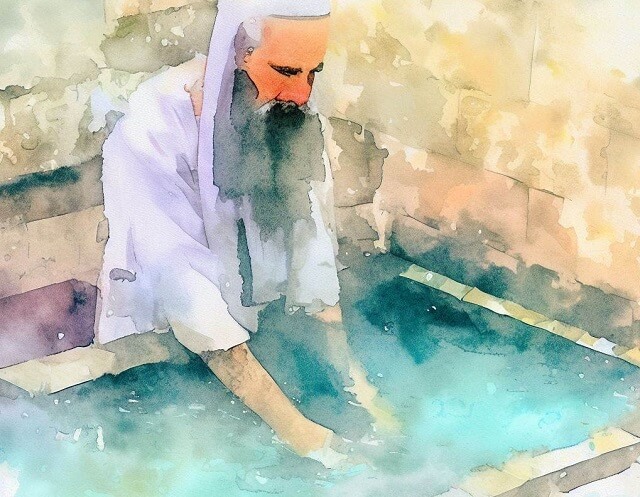
And Eliahu HaNavi explains: ‘If you will go to the entrance to the market-place, you will see that all the lepers sit at the entrance to the market, with their bandages removed so that the warmth of the sun can heal their wounds. However, says Eliahu HaNavi, pay attention and you will notice that there is one beggar who only allows himself to remove one bandage at a time, so as to be ready to move at a moment’s notice, in the event that he is called. This, says, Eliahu HaNavi, is the Meshiach.

So Rabbi Yehoshuah goes to the market place, and indeed finds such a person sitting amongst the lepers. And of course, he asks him the question, “Eimatai Ka’Ati Mar?” ‘When will the Master (the Meshiach) come?’

To which the leper responds with one simple, yet powerful word: “HaYom”.“Today”.

Can you imagine? Rabbi Yehoshuah, in that moment, has the answer to the question the entire world is asking: when will peace finally come? When will we at last sit together, all of us, as brothers? When will the guns and the bombs, the horror and the hatred, finally stop?

Now the Gemara doesn’t describe what Rabbi Yehoshua’s reaction is to this incredible news, but if you were one of the greatest Rabbis in Jewish history, and you actually ran into Eliahu HaNavi, and he actually described to you where you could find the Meshiach, and you actually found him, and then this person who you now know to be the Meshiach actually tells you he is coming today, well, what would you do?

You would immediately get on the phone and call all the news agencies and start spreading the news! And then you would take out an ad in The New York Times, telling everyone to immediately book tickets on EL AL, (and definitely not send in your Tax form!) … And of course, you would end up being terribly disappointed, because eighteen hundred years later, we are still waiting….

But the story doesn’t end there: The next day, Rabbi Yehoshuah Ben Levi again ‘ran into’ Eliahu HaNavi. And this time, Eliahu asks Rabbi Yehoshuah: “Nu, did you find him?”

And Rabbi Yehoshuah responds: “Ken, Ve’Kah Shiker Li”. ‘Yes, I found him, but he lied to me. He told me he was coming ‘today’, but ‘today’ came and went, and the Meshiach never came.’

One can hear the pain and despair, echoing from Rabbi Yehoshua’s words; the same pain of the lonely Jew, caught in the throes of the harsh reality of the blood libels, pogroms, and the inquisition.

And one can almost see the sad smile on Eliahu Hanavi’s face, the tears in his eyes, as he explains: ‘No, he didn’t say “HaYom”’ ‘today’, rather he was referring to the verse which says: “HaYom, Im Bekolo Tishma’u”, ‘Today, if you will but listen to His voice…

When will the Meshiach come? The decision is not his; it is ours. Hashem is just waiting for us to listen.

Such a powerful story, with such powerful imagery. Redemption and world peace will come through the vestige of a leper, sitting as a beggar in the marketplace. What a beautiful message about how we have to learn to see our fellow human beings.

But I have always been bothered by one detail: Why did the Talmud need to portray the Meshiach as a leper? Why not just have him be a beggar? What secret message relating to redemption is hidden in the concept of leprosy?


This week’s double portion introduces the concept of a “negah”, an ‘affliction’, which affects people and property, taking the form of something similar to leprosy on a human being’s person.

Interestingly, the Torah tells us, when a person (or his property) was afflicted by such a “negah”, one didn’t go to the doctor. Rather, one called the Kohen. And if indeed the symptoms showed that this was ‘Tza’ra’at’ (similar to leprosy), a person stayed in his home for seven days, until it cleared up.

In fact, Jewish tradition teaches that this affliction was the consequence of a very specific mistake: the transgression of Lashon HaRah, or slander. No other transgression receives as much attention as the terrible blunder of evil gossip and slander. There are over forty commandments one can violate with a single sentence, and the great Chafetz Chaim, considered the undisputed leader of an entire generation of Jewry, devoted his life to combating the spread of this behavior, believing it to be the single greatest cause for the Jewish people still being in exile.

A person who erred in this particular area was responsible for the breakdown of the Jewish community, causing strife and division to take hold, where love and harmony were meant to be. As such, he needed to separate himself from the community, spending time alone, in introspection, with no one to talk to, in an effort to overcome this terrible habit…

And of course, if the painfully divisive phenomenon of slander is single-handedly responsible for the strife and disunity we find our community afflicted with, then it is appropriate that the Messiah allegorically is afflicted with this same Tza’ra’at, representing the idea that it is precisely this social malady, which is the root of the exile we find ourselves in.

So, one wonders, why do we no longer suffer from this affliction today? Why are there no Jews regularly experiencing this ‘Negah Tza’ra’at’? It certainly isn’t due to our success in overcoming this unfortunate transgression…. One imagines what the back of some synagogues would look and smell like if everyone engaging in idle or slanderous conversation was immediately smitten with an affliction resembling leprosy!

In fact, the Torah, deep in the midst of the descriptions of different forms of Tza’ra’at, does make an interesting point.

Ki Tavo’u’ El Eretz Ke’Na’an Asher Ani Noten Lachem Achuzah, Ve’natati Negah Tza’ra’at Be’Beit Eretz Achuzatchem.”

“When you will come into the land of Canaan, which I will give to you as an inheritance, I will give an affliction of Tzara’at in the homes of the land you have acquired.” (Vayikra 14:34)

In other words, the affliction of Tzara’at (or at least as it affects a person’s home…) will only take place in the land of Israel. Why? One would expect that if anything, such an affliction, coming as it does in response to slander and evil talk, would be more prevalent in the exile. After all, for two thousand years we have lost the gift of prophecy, and the prophets, who acted as the moral conscience of the nation along with it. We no longer have a functioning priesthood, whose mission was to spread peace by example amongst the people, nor do we have a Beit HaMikdash, where three times a year the entire Jewish people could come together and put aside their differences, in a familial celebration of unity. So why are we not experiencing this negah even more regularly than before?

The Ramban, nearly a thousand years ago, suggested an idea that we would do well to consider, even and perhaps especially, today.

Our perception of an affliction like Tzara’at, is that it is almost a curse; a terrible punishment for improper, perhaps even evil behavior. But the truth is, suggests the Ramban, Tzara’at was really a blessing. It was, after all, a sign that something was terribly wrong. “Siman Ki Hashem Sar Me’Alav”, ‘a sign that Hashem had become distant from a person.’

A few years ago, someone very close to my heart, we’ll call him Doctor Sam, was walking up a hill in Jerusalem on his way home, when he experienced a tightening in his chest accompanied by some discomfort. Although he owns a car, Sam regularly took the bus to work in the hospital where he worked, preferring the exercise of walking up and down the Jerusalem hills from the bus stop as a form of daily exercise.

Despite being in his sixties, Sam was in excellent shape, with almost no extra fat on his body, the result of years of healthy living. Sensing something was not quite right, and being a doctor attuned to such things, he checked himself in to the hospital for some tests, something most people would probably have put off for years. This foresight most probably saved his life. He was diagnosed to be in need of a quadruple bypass, which he underwent almost immediately.

His recovery, due to the excellent physical shape he was in, was equally fast, and the experience, despite all the pain, proved to be a gift, not only in terms of the obvious, but also as it caused him to become even more conscious of a healthy diet, as well as the need for a regimen of exercise which has become almost a ritual for him ever since.

Imagine what a gift it would be if every time we did something wrong, we received a direct message from heaven that we had strayed from the straight and narrow path. We would immediately attend to correcting the, in this case, ethical dysfunction, and would be so much the better for it. What a wonderful world it would be if every time someone slandered another human being, his or her tongue hurt!

Of course, if one were lying in hospital in agony from a dozen different maladies, one probably wouldn’t even notice the slight pain in the tongue….

And this, suggests the Ramban, is why there is no point to Tzara’at outside Israel. We are so far from the spiritual sensitivity and ethical level we once had as a people, we would not even appreciate the message. Only when we are home, with a Temple and priesthood, and prophets along with a righteous King who represents the pinnacle of ethical excellence, does such a system make sense. Indeed, adds the Ramban, the Jewish people can never achieve their goal to be a light unto the nations, and create a system of ethics the world can learn from, unless we have our own identity as a Nation, something which can only happen (as with all peoples) in our own land. A nation is not a Nation unless it has its own land.

After two thousand years of living in exile, scattered amongst the nations and so deeply affected by our environment, we are not on the level of spiritual sensitivity that would render such a system valuable.

How far we have fallen from the days when a single sentence disparaging another human being, would result in a week of introspection and soul searching, in an attempt to once again attain the level of ethical behavior that would make such an action incomprehensible.

Indeed, this may well be why the allegory of the Gemara has the Meshiach suffering from this same Tzara’at, even in the exile. The definition of the Meshiach in Judaism is very different from the mythical figure who can walk on water, as depicted by the church.

The Jewish Meshiach is quite simply a person who is such a living, walking ethic, that he becomes the impetus for the entire world finally striving for an achieving that same level of ethical excellence.

Indeed, this is the hidden dream of the Torah’s description of Tzara’at: that we should all, as a people and as a world, become so ethically sensitive, so aware of where we need to better ourselves, that we succeed in achieving the peace we so long for, simply by becoming vehicles for peace on our own, each and every one of us.

Indeed, while the transgression of slander is so severe because of its tendency to separate us from each other and create disharmony, the definition of a Tzaddik, a righteous person, which is what the Jewish Meshiach is meant to be, is exactly the opposite.

A Tzaddik is someone who cares so much for every other human being, that their pain is his pain. Hence, he suffers from Tza’ra’at, because the Jewish people is living in Tzara’at; they just don’t know that.

One might suggest that this is the challenge of our day. What to some was an absolute miracle, the birth of the State of Israel, against all the odds, out of the shadows of the chimneys of Auschwitz, to others is just a war story. We have become so deafened by the terrible noise of two thousand years of screaming; we have almost lost the ability to hear when Hashem, G-d, is calling our name.

For these past years, we have been afflicted with a terrible affliction, a Negah of sorts. Perhaps there is a message in all this. Not that we are meant or even able to comprehend much less understand these events in this world. But at the very least, do we hear the alarm bells? Are we sensitive to the tears flowing in the streets of Jerusalem? Or have we become so desensitized to it all that the daily accounting of more and more families who will have to learn to live with an empty chair at the Shabbat table, have become just numbers on the daily news scroll ….

In the long two thousand years of our journey through the exile, there has never been a Jewish community with so much influence and affluence, in a country with so much power and influence in the world. This is the time when Jews everywhere need to stand up and be counted.

We are living in incredible and yet challenging times. Are we ready this time, to sense the winds of change that are buffeting us, and spread our sails to catch the breeze?

May Hashem bless us with the strength and the wisdom to meet the challenges that clearly lie ahead, and may we rediscover the sensitivity necessary so that one Jew’s pain anywhere, is all Jews’ pain, everywhere.

Shabbat Shalom.

Thursday, April 20, 2023

The Land of Israel: The Foundation of G-d’s Throne on Earth

by HaRav Dov Begon
Rosh HaYeshiva, Machon Meir

A hundred years ago, Rav Avraham Yitzchak Kook, zt”l wrote about the difference between the Land of Israel (which at the time was still just a vision) and the rest of the nations of the world:

“A normal country is like a large insurance company. It is not the source of its citizen’s supreme joy. Ideals, which are the crowning glory of mankind, hover above a country and do not touch it. Not so a country founded on ideals and inherently based on the most lofty message. Such countries truly constitute their citizen’s greatest joy. Therefore, the Land of Israel is truly the most supreme on the scale of joy, and it constitutes the foundation of G-d’s throne on earth. Its entire purpose is that G-d should be one and His name one, truly the greatest source of joy.” (see Orot 160)

Indeed, we daily conclude our prayers with the words, “The L-rd shall be King over all the earth. On that day shall the L-rd be One and His name one” (Zechariah 14:9). In the future, people will be so happy that even in response to strict divine justice (i.e., bad tidings), for which we presently recite, “Blessed is the Judge of Truth” – they will recite, “Blessed is He who is good and benevolent” (presently recited in response to good tidings). (See Pesachim 50a). And all this will be when the State of Israel appears and is revealed in all its greatness and glory.

Today, Rav Kook’s vision of the Land of Israel which has to serve as a light to the nations, and in which a person has to find his supreme joy, is seemingly crumbling before our eyes, as we witness the spiritual and moral deterioration occurring amongst the governmental authorities and some of its leaders. True, we rejoice on the seventy-fifth birthday of our beloved country, and we rejoice over the millions of Jews who are being gathered in from the world over to the land of our life’s blood. We rejoice over the enormous economic development. Yet we ask ourselves, seeing the nadir to which we have fallen: Shall we ever emerge from the moral and spiritual crisis visiting our country, and if so, how? We know with full certainty that all this is a descent for the sake of ascent, as Rav Kook said:

“All those building up the nation will arrive at the depths of this truth, that our nation will be build and consolidated, and will be restored to its strength, to all the foundations of its life by way of its faith and its fear of G-d, its hallowed noble content spreading and becoming stronger and more developed. Then, with a voice full of valor and might they will proclaim with a loud cry, ‘Come, let us return to G-d!’” (Orot HaTeshuva 15:11)

Quite the contrary, the present crisis will lead to a great movement of return to ourselves, our Torah, our roots, our Father in Heaven. Through this, we will merit to see not only the physical building of our country, but also the revealed benevolent soul of our nation which will shine on the entire world. As Rav Kook said, “The Land of Israel is the foundation of G-d’s throne on earth.” And as the prophets of Israel said, “For out of Zion shall go forth the Torah, and the word of G-d from Jerusalem” (Yishayahu 2:4). Speedily in our day, Amen!

Looking forward to complete salvation,
With the Love of the Land of Israel,
Shabbat Shalom.

Yeshivat Machon Meir: Parshat Tazria #1 - The shoes of the kohanim (video)

How Some Americans Support Terrorism Against Israel

by Bassam Tawil
  • [F]ourteen Democratic members of the US Congress have joined the Jihad (holy war) against Israelis by urging the Biden administration to reconsider US military aid to Israel.
  • The Congressmen's letter ignores the dramatic increase in terror attacks against Israelis and makes no reference to the scores of innocent civilians murdered over the past year by Palestinian terrorists. The letter further ignores that Israel's counterterrorism measures, which aim to save the lives of Israelis and Palestinians alike, are a legitimate act of self-defense.
  • The Israeli measures, including raids on the homes of terrorists and confiscation of weapons and ammunition, are the direct result of a 300% increase in terror attacks over the past year... When there is no terrorism, there is no need for Israel to launch counterterrorism operations.
  • By stating that the US should halt military aid to Israel, the signatories of the letter signatories of the letter are in fact saying that Israel has no right to defend itself against those who are openly calling for the elimination of Israel and engaged in daily attempts to murder Jews.
  • When Israel uses weapons, it is with the purpose of combating terrorism and protecting the lives of its people. When Palestinians use weapons, it is always with the aim of murdering Jews.
  • As far as the Palestinians are concerned, all Israeli Jews are "settlers" living in one big illegitimate settlement, Israel, which needs to be replaced by a 57th Muslim state...
  • They outspokenly consider construction everywhere in Israel a "settlement project" and all Israeli Jews "settlers."
  • Hamas and its patrons in Iran are openly opposed to Jews building homes not only in the West Bank and Jerusalem, but anywhere in Israel. The reason? The mullahs in Tehran -- and their proxies in Hamas, PIJ and Hezbollah -- believe that the entire country of Israel has no right to exist and state that Israel should be eradicated, primarily through Jihad (holy war).
  • The Iranian regime and its friends want to see no country supporting Israel -- not politically, not financially, not militarily. They want to see a weak Israel that they can then rip to shreds, as they have done, and are still doing, to Iraq, Syria, Yemen, Lebanon and the Gaza Strip.
  • "The U.S. State Department reports that Iran provides some $100 million a year to Palestinian armed groups, including Hamas and Islamic Jihad," multiple news outlets reported last week.
  • Iran and its proxy terror groups are already encircling Israel. They are sitting on its southern border, in the Gaza Strip, from where Hamas and PIJ continue to fire rockets regularly at Israel. They are sitting on Israel's northern border, in Lebanon and Syria, from where Hezbollah also has a strong political and military presence.
  • The Congressmen's letter, however, does not make any reference to these existential threats that Israel continues to face from Iran and Palestinian and Lebanese terror groups.
  • The Congressmen who signed the letter claim that US aid to Israel is being used to fund abuses of Palestinians' rights is, bluntly, nothing but libels and lies. Israel's counterterrorism operations are directed solely against the terrorists and their enablers, not against the Palestinian people, most of whom are not involved in the latest spate of terror attacks.
  • That is why most of the Palestinians killed in these operations were not civilians but armed terrorists.
  • These antics [using "human shields" -- innocent people deliberately placed in harm's way during incoming fire] are part of shopworn plan to try to make Israel, when it engages in a counterterrorism operation, look bad. As the schoolyard bully put it, "It all started when he hit me back."
  • If the members of Congress want to find out about human rights violations, they are invited to take a look at the repressive measures taken by the Palestinian Authority in the West Bank and Hamas in the Gaza Strip against their own people.
  • Where were these members of Congress when the Palestinian Authority security forces beat to death human rights activist Nizar Banat? Where were these members of Congress when Hamas recently arrested Salem al-Sabah, head of the University of Palestine?
  • Do the members of Congress who signed the letter have anything to say about the abuses committed by Palestinians against Palestinians? Will these Congressmen call on the US administration to halt funding to the Palestinian leaders who are abusing their own citizens?
  • On the same day the letter was published, the chief of staff of the Iranian armed forces said... "With divine grace, soon there will be nothing called the Zionist regime. The countdown for the disintegration of Zionism has begun."
  • Israel's ruthless enemies must be rejoicing each time they see Americans calling for punishing and imposing sanctions on the small state.
  • Israel and the Jews living in the land, for more than 100 years, have been under attack – since long before there ever were such political pretensions as "1948 borders" or "1967 borders."
  • Now, as Israelis are once again burying their dead, a group of US Congressmen, instead of standing with Israel and condemning the terrorists, have chosen to call for weakening Israel and preventing it from carrying out even its basic duty of defending itself against terrorists who murder people for the "crime" of being Jews.
  • The Congressional letter awards a gold medal to the terrorists: it sends the message that if you are a terrorist, the US has your back.

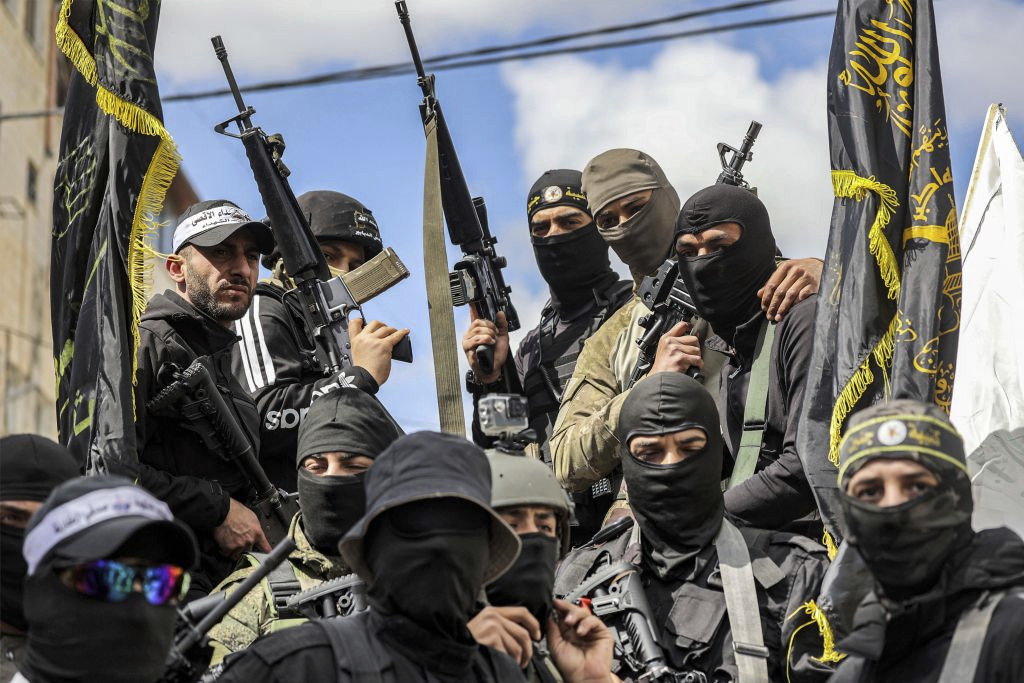
Pictured: Palestinian terrorists in Jenin on March 8, 2023, at the funeral of fellow terrorists who were killed the previous day when they attacked Israeli soldiers. (Photo by Jaafar Ashtiyeh/AFP via Getty Images)

As Israel continues to face daily threats and terror attacks from Iran and its militia proxies, fourteen Democratic members of the US Congress have joined the Jihad (holy war) against Israelis by urging the Biden administration to reconsider US military aid to Israel.

The appeal, included in a letter signed by Rep. Jamaal Bowman and Sen. Bernie Sanders, was made public shortly after Palestinian terrorists shot dead a Jewish mother, Lucy Dee, 48, and her two daughters, Maia, 20, and Rina, 15, as they were driving to the north of Israel to celebrate the Jewish holiday of Passover.

Continue Reading Article

Wednesday, April 19, 2023

The Number Eight

by Rabbi Pinchas Winston

Friday Night
THE TORAH TELLS us to wait seven days after the birth of a boy performing Bris Milah. Similarly, it also teaches us to wait seven days from the birth of a potential sacrifice before offering it up on its eighth day. The Kli Yakar asks (Parashas Emor, Vayikra 22:27) why the Torah thinks we might have offered the animal earlier than its eighth day, since it would still be quite young and vulnerable. He answers, because even such a young animal already looks like an adult animal from birth, just much smaller.

Then he asks, why the eighth day? Is it just the first day after the seventh day, or is it specific? The Kli Yakar explains that the number eight always represents a more spiritual, supernatural level of existence. Since God made the world in seven days, seven represents the natural world. Eight therefore is a step beyond the natural realm, and therefore it is the eighth day that spiritually transforms the animal making it fitting to be a sacrifice.

Perhaps this is also why Bris Milah is only possible from the eighth day of birth, and not a second earlier. Physically, there is no difference between a baby that is eight days old, or just seven days and 23 hours old. But spiritually there is a world of difference, one that transforms the baby to make it fitting for a covenant with the Master of the Universe.

So why then is Pesach not a Torah-sanctioned eight-day holiday? Succos is. Shemini Atzeres may be considered a holiday of its own, but it comes as the eighth day after seven days of Succos. And even though the Midrash says that it is only the “eighth day” because God didn't want to make the Jewish people have to travel back to Jerusalem 50 days later for another holiday, we would not be able to access its light if the eighth day of Succos was only one of convenience, and not a specific portal to the supernatural light of Shemini Atzeres.

This is also why Chanukah is eight days long. True, it is eight days long because it was a miracle that we found even one jar of undefiled oil for the Menorah at all, and that it took seven additional days to produce new undefiled oil. But God could have arranged for two or more jars of oil to be spared, lessening the miracle of finding them and the days of supernatural burning. Besides, we were even allowed to use defiled oil until the new oil was ready.

It’s like matzah. People think we eat matzah during Pesach because there wasn’t enough time to bake bread. The real truth is that we didn’t have enough time to bake bread in order that we should eat matzah during Pesach. Matzah is not incidental to the redemption process, it is the redemption process, but that’s a different essay.

Likewise, Chanukah is not an eight-day holiday because we miraculously found one jar of undefiled oil that miraculously burned for seven extra days. We miraculously found one jar of undefiled oil that miraculously burned for seven extra days so that Chanukah would be an eight-day holiday. It reminds us of the spiritual transformation at that time that allowed the Chashmonaim to rise to the occasion and supernaturally overcome their enemies.

Shabbos Day
WHAT ABOUT PESACH? No holiday is more supernaturally based than Pesach! As the Leshem explains, one plague would have been enough to free the Jewish people, and with a lot less fanfare too. Furthermore, splitting the sea to save them was extra since they had already gone past it, and had to circle back to become stranded on its shore before the Egyptian army.

But God was making a point. He was telling the Jewish people that He was prepared to change the laws of Creation for them if they completely placed their faith in Him. He was teaching them that the physical world would not be an obstacle for them if they placed their trust in His salvation and only His salvation. God went out of His way, so to speak, to specifically make Pesach a supernatural time, so why isn’t it also an eight-day chag?

There are three gemoros that can help with this. The first is about a particular student of the great Hillel:

Hillel HaZaken had eighty students. Thirty of them were sufficiently worthy that the Divine Presence should rest upon them as it did upon Moshe Rabbeinu, and thirty of them were sufficiently worthy that the sun should stand still for them as it did for Yehoshua bin Nun, and twenty were on an intermediate level between the other two. The greatest of all the students was Yonason ben Uzziel, and the youngest of them was Rabban Yochanan ben Zakkai…It was said of Yonason ben Uzziel, the greatest of Hillel’s students, that when he sat and learned Torah, any bird that flew over him was immediately burned up. (Succah 28a)

That was how intense the learning of Rebi Yonason ben Uzziel was, enough to burn up any bird that flew over him at the time, quite the spectacle. But if that is what happened to birds flying over Rebi Yochanan when he learned, what happened to a bird when it flew over Hillel while he learned? It didn’t burn up.

Which is the greater miracle? Which is the greater spectacle? It depends on how you look at the world and the way God runs it, as Rebi Chanina ben Dosa told his daughter one Erev Shabbos:

One Friday night he noticed that his daughter was sad and asked her, “My daughter, why are you sad?”

She answered, “My oil container got mixed up with my vinegar container and I lit Shabbos candles with it.”

He told her, “My daughter, Why should this trouble you? He Who had commanded the oil to burn will also command the vinegar to burn!” (Ta’anis 25a)

What’s the greater miracle, that vinegar burned once, or that shemen zayis burns each time? What’s the greater spectacle, that something not known to be combustible combusts, or that something can even be considered to be consistently combustible? That the sun stood still for Yehoshua bin Nun in the Valley of Ayalon, or that God makes it rise the same way each day, day after day, year after year, millennium after millennium?

If Creation is on auto-pilot, then the first one. If everything that happens every moment is a new act of Divine will, then clearly the latter, making nature just consistent, and therefore a deceptive miracle. Every birth is its own spectacular miracle, no matter how many times it occurs in a single day, or any other aspect of life for that matter, awesomely large or awesomely small.

This leads to the third gemora:

Rebi Yosi said: “May my portion be among those who complete Hallel every day.” Is that so? Didn’t the Master say: One who recites Hallel every day is one who curses and blasphemes God? It refers to the verses of Pesukei Dezimra. (Shabbos 118b)

Shalosh Seudot
THOUGH ONE QUESTION was answered, the bigger one was not: What’s wrong with saying Hallel every day? What could be better than praising God each day, as we say in Shemonah Esrai:

Blessed are You God, Beneficent is Your Name, and to You it is fitting to offer thanks.

It’s what we’re here to do, whether in speech or deed, and Hallel is one of the ultimate prayers of thanks. Blasphemy? Just the opposite should be true and would be if not for the fact that Hallel basically praises God for the large and more obvious miracles that God has performed for the Jewish people. It doesn’t focus at all on the smaller and far less obvious miracles that happen quite naturally every day and as a matter of fact, referred to here in the prayer Modim:

We thankfully acknowledge that You are God, our God and God of our fathers forever. You are the strength of our life, the shield of our salvation in every generation. We will give thanks to You and recount Your praise, evening, morning and noon, for our lives which are committed into Your hand, for our souls which are entrusted to You, for Your miracles which are with us daily, and for Your continual wonders and beneficences. You are the Beneficent One, for Your mercies never cease; the Merciful One, for Your kindnesses never end; for we always place our hope in You.

There are two spiritual levels a person can live on. There is one on which a person takes the miracles of life for granted and is only impressed when something obviously supernatural occurs. Then there is the one on which a person is as impressed with the everyday, hidden miracles of life as others are with the spectacular ones. While others trudge through what they perceive to be a mundane world, they are euphoric from everything they experience. Witnessing the supernatural is a gift but discovering it within the natural as a function of personal will and struggle is greatness.

This is why Pesach could only be a seven-day holiday, and not eight days. Yes, God performed spectacular miracles to free the Jewish people from the Egyptian nature-bound way of thinking. But that was just to show us on the outside what actually exists on the inside, Ohr Ain Sof, the infinite light of God. But once we learned about it, it was up to us to “mine” it in everything we experienced from that point onward. As Rebi Chanina told his daughter, the miracle is not new, but always there if you know to look for it.

This idea can help with the following disagreement regarding a midrash about the nature of miracles:

Rebi Yochanan said: “The Holy One, Blessed is He, made a condition with the sea to split before the Jewish people, etc.” Rebi Yirmiyah ben Elazar said, “Not only with the sea, but with everything He made during the six days of Creation, etc. (Bereishis Rabbah, Ch. 5, Siman 8)

The question is, if all miracles were set up in Creation from the beginning, how can they be considered changes in nature, which is what a miracle is? Technically, what we would call miracles would just be “natural” events that had yet to occur until they were needed by the Jewish people. The miracle would be when they happened, not how they happened.

But that’s not what we believe, or what it says:

All that God wished, He did. (Tehillim 135:6)

which is taken to mean that a miracle is not the result of a pre-ordained condition going back to Creation itself, but the result of God willing it anew at that moment. Is it a contradiction, or a hint to a deeper and more profound understanding of what Creation is and how it works?

Ain Od Milvado, Part 47
THE STARTING POINT is understanding what the Ohr Ain Sof is, or more accurately, what it isn’t. It is unlimited. It is unbound. It is beyond measurement, beyond time, just pure will of God that makes everything and anything possible. And incomprehensible, it is the basis of all that exists and occurs within the realm of measurement and time, without ever losing its infinite integrity. This is the deeper meaning of Ain Od Milvado, there is nothing other than God, as Rebi Chanina told his daughter.

This is what makes the natural world so miraculous, that it cannot exhibit properties of finiteness while existing because of the infinite light of God. The most concrete realities are really just the opposite because of what they have at their core, Ohr Ain Sof. Miracles are built into them, incredible wonders that most people completely overlook just because they happen consistently and so often.

Since Chanukah alludes to the Messianic Era and the miracles of that time, it is eight days long. But Pesach alludes to the miracles of history until that time, which exist within Creation just as our miraculous and hidden souls live within and give life to our bodies. Therefore, it is only seven days long to teach and celebrate this awesome and liberating reality.

For to know this is to gain access to this inner, hidden light, and ultimately to live supernaturally even while part of an otherwise natural world. This is how an individual can reach levels of personal freedom while the rest of the world remains enslaved to the se’or sh’b’issa.

Tuesday, April 18, 2023

Why Don't Americans Trust the Biden Administration on Iran?

by Majid Rafizadeh 
  • An overwhelming majority of American people reportedly do not trust President Joe Biden on Iran's nuclear deal.
  • "The Biden administration remains obsessed with reentering a nuclear deal with the Iranian regime." — Senator Ted Cruz, The Washington Free Beacon, February 3, 2023.
  • "[I]n a timely question in the McLaughlin & Associates survey, 63% of Americans believe that providing Iran a path to building the weapons is a bigger threat to the United States than Russia's invasion of Ukraine (at 21%)." — Washington Examiner, March 4, 2022.
  • One reason behind this mistrust is likely related to the notion that the Biden Administration has been caught so often misleading the Congress and the American public.
  • "We are deeply concerned about multiple provisions that reportedly may be contained in the final language of any agreement with the world's leading state sponsor of terrorism." — US House Representatives, mostly Democrats, to the Biden Administration, September 1, 2022.
  • The major problem is that any nuclear deal would most likely include the previous sunset clauses, which set a firm expiration date for restricting Iran's nuclear program, after which the country's leaders would be free to spin centrifuges and enrich uranium at any level they wished.
  • Finally, with all the inconsistencies, lies and concessions, it is no wonder why majority of Americans do not trust Biden on Iran. The US Congress and the American public have the right to be informed about this regime that has been killing Americans and taking hostages for almost four decades, not to mention how brutally it treats its own people, or uses its proxies in the Middle East to try to obliterate its perceived enemies. Is the Biden Administration actually about to let a regime such as this acquire nuclear weapons?

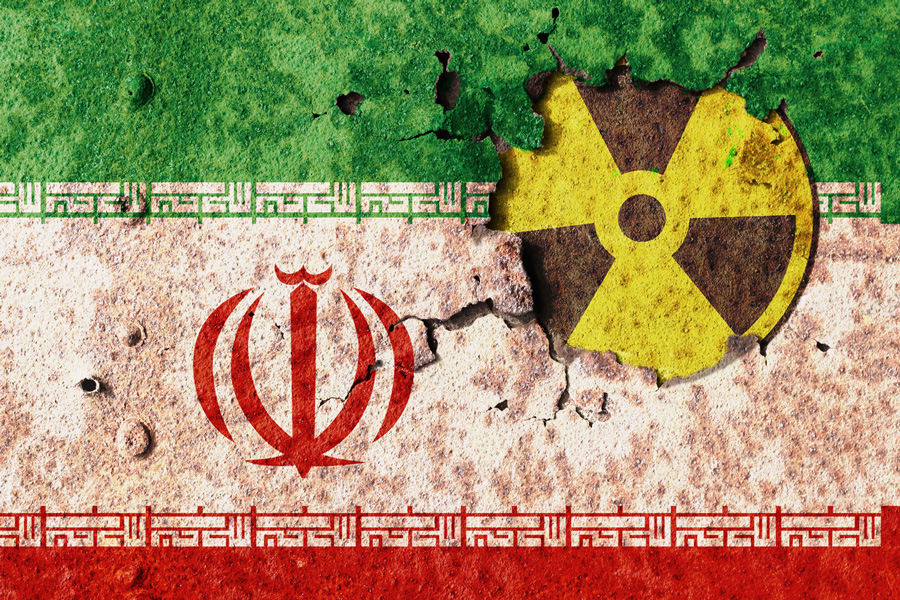
The US Congress and the American public have the right to be informed about the Iranian regime, which has been killing Americans and taking hostages for almost four decades, not to mention how brutally it treats its own people, or uses its proxies in the Middle East to try to obliterate its perceived enemies. Is the Biden Administration actually about to let a regime such as this acquire nuclear weapons? (Image source: iStock)

An overwhelming majority of American people reportedly do not trust President Joe Biden on Iran's nuclear deal. After the Biden administration recently issued sanctions waivers allowing Iran and Russia to build nuclear infrastructure, Senator Ted Cruz pointed out, correctly, that "the Biden administration remains obsessed with reentering a nuclear deal with the Iranian regime."

According to the Washington Examiner:

"America does not trust President Joe Biden's effort to negotiate a secret new Iran nuclear deal, fears it more than Russia's invasion of Ukraine, and would support a military strike on the enemy nation's facilities, according to an expansive new survey provided to Secrets.

"On the issue of having confidence in Biden's talks, including with Russian President Vladimir Putin, 52% said they don't "trust" the administration to cut a deal that will prevent Iran from getting nuclear weapons. Just 32% do.

Continue Reading Article

Sunday, April 16, 2023

Rav Kook on Parashot Tazria/Metzora: Purifying Time and Soul

The Torah discusses various types of tum'ah, the most prominent being tzara’at. Purification from these forms of impurity includes immersion in a mikveh or natural spring. Immersion alone, however, is not sufficient; even after immersing, the individual remains impure until the start of the evening.

“The sun sets and then he is ritually clean. He may then eat the sacred offerings that are his portion.” (Vayikra 22:7)

Waiting until the Day is ‘Clean'
Curiously, the Gemara (Berachot 2a) interprets this verse in a forced fashion: “The sun sets and then it” — the day — “is clean” (i.e., finished). The Sages explained that the day must be completely over before the individual may partake of his offering.

Why not understand the verse literally: when the sun sets, the person is ritually clean? Why emphasize that the day must be ‘clean’?

According to Rambam in his Moreh Nevuchim (III: 47), different forms of tum'ah correspond to various flawed character traits, erroneous beliefs, and impure acts. The Sages wrote that tzara’at, for example, is the result of slander and haughtiness. It is logical, then, that the various stages of purification — immersion in a spring or mikveh, waiting until nighttime, and bringing an offering — will be connected to the correction of these faults. 


Two Aspects to Repair
The Gemara refers to two levels of purification: purifying the day — tehar yoma — and purifying the individual — tehar gavra. What is the difference between the two?

Our goal in life should be to grow spiritually and become closer to our Creator. When we sin, we stray from our overall objective. We have also misused time that could have been utilized for spiritual growth. A full life is one in which all of the days have been employed towards one’s principal objective. Abraham, the Torah tells us, was ba bayamim, “well advanced in days” (Bereisheet 24:1). His days and years were full and complete, wholly occupied with spiritual pursuits.

When we stray from our spiritual aspirations, we need to make two distinct efforts in order to return to our original path. If I were to upset a friend, I would first need to correct my hurtful behavior. However, that alone would be insufficient to restore the friendship to its former state. The relationship will remain fragile until I have made an additional effort to rebuild the ties of friendship and affection.

The first stage — correcting the faulty behavior or flawed character trait – is analogous to the cleansing action of immersion in water. We immerse ourselves in the mikveh, leaving behind negative traits and flawed deeds. As we immerse ourselves in spiritual repair, we restore to the dimension of time its original purity. The day has not been lost to sin. With the setting of the sun, we begin a new day and a new start. This is the first level of purification, what the Sages called tehar yoma. The day has been purified; we have rectified the dimension of time.

Yet, we have not completely regained our previous state of purity. We still need to restore our former closeness to God. This is achieved through the final stage of purification: “he may then eat the sacred offerings.” With renewed desire to be close to God, we bring an offering. The offering (in Hebrew, korban, from the root karav, to draw near) enables us to draw closer to our Maker with awe and love.

At this point, we repair our relationship with God. Not only has the element of time been rectified, we too have become cleansed and renewed. This is the level of tehar gavra, when the individual is fully purified, and his errors are transformed into merits.

(Gold from the Land of Israel, pp. 195-197. Adapted from Ein Eyah vol. I, pp. 2-3, by Rav Chanan Morrison.)

In its Time I will Hasten It

by HaRav Mordechai Greenberg
Nasi HaYeshiva, Kerem B'Yavneh

"When a woman produces seed and gives birth to a male." (Vayikra 12:2) Chazal comment: "If the man produces seed first, [the woman] gives birth to a female; if the woman produces seed first, she gives birth to a male." (Brachot 60a)

Many divergent explanations are offered as to the simple meaning of this statement. However, in the realm of drash, Chazal's words are associated to the notion of teshuva and geulah. The prophets compare the relationship between G-d and Israel to the relationship between a man and his beloved. There is an argument between them who should take initiative and appease the other. G-d requests, "Return to Me and I will return to you," whereas Knesset Yisrael requests, "Bring us back to you and we will return."

This argument has ramifications as to the nature of the redemption: "I, Hashem, in its time will hasten it." (Yeshaya 60:22) Chazal comment: "If they are worthy – I will hasten it; it they are not worthy – in its time." (Sanhedrin 99a) If Israel are worthy, the redemption will come quickly; when they are not worthy – it will come in its due time. Chazal further comment that there are two types of redemption. The redemption can come in a quick and miraculous manner, "Behold! With the clouds of heaven" (Daniel 7:13), and it can come in its own slow pace, "A humble man riding on a donkey." (Zechariah 9:9) The question is whether the redemption will come be'itaruta dele'eila, initiated by G-d, or with itaruta deletata, that we will initiate and we will arouse the redemption through our actions.

Chazal explain in this manner additional contradictions in the verses. In one place it says, "raglei mevasser" (the feet of the herald), in masculine form, while in another place it says, "mevasseret Yerushalayim" (herald of Yerushalayim) in feminine form. Chazal apply to this the pasuk, "How long will you slip away, O wayward daughter?" (Yirmiya 31:21) Rashi explains: How long will you hide and not return to me, you rebellious daughter, "For Hashem has created something new in the world – that the woman will court the man," that the woman will seek after the man. When the woman seeks the man, and Knesset Yisrael seeks G-d, then the redemption will be like a man; it will come quickly and with ease. When they are not worthy, the strength of the redemption will be weak like a woman and will come slowly and lazily.

The Mechilta in Parshat Beshalach states that when the redemption is compared to a man, there is no more subjugation afterwards. However, when it is compared to a woman, they are subjugated once again, just as a woman gives birth with pain, and when the infant is born she is redeemed from her suffering, yet she repeats this and suffers again. Therefore they compare the complete redemption to a man, and the slow redemption to a woman. This matter depends on the willingness of Israel to take initiative for the first step, or whether they sit passively and expect G-d to do the work. The Midrash Kohelet Rabbah (1:1) relates that R. Chanina b. Dosa sought to bring a large stone up to Yerushalayim to the Beit Hamikdash. He came upon five laborers, but didn't have the sum that they requested, so they left him and went away. G-d arranged for him angels in the form of laborers, and they said to him: "Give us five selaim and we will bring your stone up to Yerushalayim, provided that you put your hand and finger to it." He put his hand and finger in with them, and they found themselves in Yerushalayim. He wanted to give them their wages, but didn't find them. He entered the lishkat hagazit (where the Sanhedrin sat) and inquired about them, and they said to him: "It appears that angels brought your stone to Yerushalayim."

This is just like the Aron, which actually bore those that carried it (Sotah 35a), and yet, "they carried on the shoulder." (Bamidbar 7:9) Without the help from below, G-d does not do anything from above. However, when we help with even our small finger, G-d completes everything from above.

Thus, the Chozeh of Lublin explains Chazal's comment: When G-d, who is called "man" initiates from above, the redemption will appear in the form of a female. However, when the woman provides the seed first, and Knesset Yisrael initiates, then the redemption will come in the masculine form, with force and speed, and there will be no sadness afterwards.

Rav Kook's Ein Ayah: The Elusive Inheritance of Personality Traits

(based on Ein Ayah, Berachot 1:144)

Gemara: Rebbi Yochanan said in the name of Rebbi Yossi ben Zimra: Whoever attributes merit to himself, will have the successful outcome attributed to the merit of another. Whoever attributes the merit to others, will have the successful outcome attributed to his merit. Moshe attributed the merit to others, as it says: “Remember Avraham, Yitzchak, and Yisrael, your servants” (Shemot 32:13). The success of his prayers was attributed to him: “[Hashem] said that they would be destroyed, if it were not for Moshe, his chosen, who stood in the breech to deflect His anger from destroying” (Tehillim 106:23). Chizkiya attributed the merit to himself, as it says: “Please remember that I walked before You” (Yeshaya 38:3). The success was attributed to others, as it says: “I will defend this city to save it for My sake and for the sake of My servant, David” (Melachim II, 19:34).

Ein Ayah: There are people who are naturally blessed with good qualities and who do not have to work hard to follow good paths. A person like that will not attribute his shleimut (completeness) to himself but will attribute it to his forefathers, who passed on these traits to him. Someone whose qualities are not naturally the finest but who worked hard to acquire good attributes will normally attribute the traits to himself, for he toiled until he arrived at his proper state. However, the truth is that one who was born with less than ideal characteristics still must have inborn strength, hidden from earlier generations, which enable him to overcome his bad traits. This is along the lines of the Kuzari, who says that a special quality can disappear in a rasha’s (a wicked person’s) personality and reappear in the rasha’s righteous son’s personality. Therefore, in that case, one can still attribute his success to others. In contrast, someone who was born with precious qualities still will usually apply himself to follow the ways of Hashem by doing good deeds beyond those for which he was naturally prepared.

Chizkiya attributed the merit to himself because he was the son of a rasha and, therefore, he did not think he could attribute his acquisition of shleimut to inheritance from his forefathers. In truth, the success could be attributed to others, as Chizkiya was told that he had a lot of help in overcome shortcomings from the hidden special qualities that could be traced back all the way to David. These positive qualities remained inactive in his father, Achaz, but reappeared in Chizkiya. This idea finds expression in the gemara’s previous statement that Chizkiya saw in the Divine Spirit that bad offspring would come from him. This is because he was concerned with bad attributes that he was born with and saw how these attributes were actually going to play out.

Moshe attributed the merit to others because he was born with good and holy qualities from holy, pious parents in an unbroken chain from the “fathers of the world.” His success was attributed to him because he exceeded drastically the expectations from the attributes with which he was born. That which people say that he was born with exceptional qualities is contradicted by Chazal and the simple reading of the pasuk, “She saw that he was good,” and from straight logic. Certainly the greatest person ever created had very fine natural attributes, but he still added on a tremendous amount of shleimut above and beyond what he naturally received.

The Kedusha Within

by Rav Meir Goldvicht

Our parasha opens with the laws of a yoledet (a woman who gives birth). As we go through the section discussing these laws, we find a passuk that commands us to perform the mitzvah of brit milah on the eighth day, from which Chazal learn that the brit milah must be performed by day, not by night, and that it is performed even if the eighth day falls on Shabbat. This raises the following question, asked by both the Chizkuni and the Ohr HaChaim: Why does the Torah interrupt the halachot of yoledet with a passuk discussing brit milah? This passuk seemingly belongs in parashat Lech Lecha with the rest of the halachot of brit milah, not here in the middle of the halachot of yoledet!

The Chizkuni and Ohr HaChaim suggest that we might have mistakenly thought that brit milah was performed on Shabbat only before kabbalat haTorah, but now that we have the mitzvah of Shabbat, the brit milah would be pushed to Sunday if the eighth day was Shabbat. This passuk therefore teaches us that even after kabbalat haTorah, brit milah on the eighth day trumps Shabbat. Although the answer of the Chizkuni and the Ohr HaChaim explains the necessity of this passuk, it doesn't seem to explain its seemingly incongruous placement in the middle of the section discussing yoledet! This, then, is our first question: What is the passuk of brit milah doing here in the middle of the parasha of yoledet?

The Torah goes on to obligate the yoledet to bring a korban chatat (a sin-offering). What exactly was the sin of the yoledet? The gemara in Niddah (31b) explains that the chatat is brought in order to atone for the woman's oath during childbirth never to give birth again because of the intense pain involved. The gemara's explanation is difficult to understand, however, because certainly not every yoledet, even with the great pain of childbirth, takes an oath to never again give birth! Yet the Torah obligates every yoledet to bring a korban chatat, not just those who take this oath. Our second question is: What sin did the yoledet commit that obligates her to bring a korban chatat?

To answer these questions we turn to the Ramban on sefer Bereisheet. When HaKadosh Baruch Hu created the world, He regarded every aspect of the Creation as "ki tov, That it was good." The Ramban explains that ki tov means that Hashem desired that His handiwork last forever. The only thing HaKadosh Baruch Hu does not regard as ki tov at the time of its creation was Man. When HaKadosh Baruch Hu created Adam HaRishon, the Torah says, "vayyitzer, And He created," with two yuds. Rashi explains that one yud represents a yetzirah for this world and one yud represents a yetzirah for olam haba. In other words, when a person is born, it is unclear whether his creation was a good thing. As Iyov puts it, Man is born a wild animal" (11:12). Man is born a wild animal but must ripen into an Adam. If a person works on himself to be spiritually reborn, then he can be described as ki tov, for at that point HaKadosh Baruch Hu certainly desires that His handiwork last forever.

How does one achieve spiritual rebirth? The only way to accomplish this is to bring oneself to live a life of kedushah and taharah. Tumah comes into being wherever there is a termination of life or of the potential to create life. One who touches a live animal does not become tamei, but one who touches a dead animal does. Similarly, one who touches a live person does not become tamei, but one who comes into contact with a dead person does. This is also one of the explanations for tumat niddah—since potential for new life existed within the niddah, when this potential is terminated, tumah is created. In contrast, a pregnant woman does not have tumat niddah since she is actively involved in the creation of life.

In general, tumah arrives after a state of taharah or vice versa. Only at one time do tumah and taharah appear simultaneously—at the moment of birth. On the one hand, the baby represents taharah and new life. On the other hand, at that very moment the yoledet becomes t'meiah. The reason for this is that the baby has already begun to die, as it is one moment closer to its predestined time. (This is why Chazal refer to the womb as "קבר, grave" since it is not only the source of life, but the source of death as well.) The Ba'al HaTurim explains that this is in fact the reason the brit milah is on the eighth day of the child's life, since we must wait for the seven days of aveilut for the child to pass, as it were.

All of this is because of the sin of our great-grandmother, Chava, who ate from the eitz hada'at. This, then, is the reason why the yoledet brings a korban chatat—together all of the chata'ot will atone for the sin that brought death to the world and bring us back to eternal life. The way to fix the sin of our great-grandparents Adam and Chava is to strive for lives of kedushah and taharah.

This also explains why the mitzvah of brit milah appears in the middle of the parasha of yoledet—the brit milah reminds one of the kedushah within, through which we merit the ability to transform every nega (plague) into oneg (delight) and every tzara’at  to atzeret (holiday). This ability comes about through the middah of anavah. The gemara in Erchin (16a) says that tzara'at afflicts a person because of ga'avah, lashon hara, and tzarut ayin (stinginess), all of which reflect the opposite of humility. The more we work on achieving anavah, the more we bring kedushah and taharah into our lives, and the closer we come to the fulfillment of the words of the navi, "And I will sprinkle pure waters upon you and purify you from all of your impurities..." (Yechezkel 36:25).

This Shabbat, which is both Shabbat HaChodesh and Shabbat Mevorchim for the month of Iyar, is a unique opportunity to begin our spiritual lives anew, imbuing our lives with kedushah and taharah, and preparing ourselves to receive the light of the Geulah.

The Mysteriousness of Parashot Tazria – Metzora

by Rabbi Dov Berel Wein

This week’s double parsha presents to us a difficult set of rituals regarding a type of physical disease that evinced physical manifestations. The rabbis associated this disease with the sin of improper speech and personal slander. We no longer have any true knowledge of the disease, its true appearances and effects, its quarantine period and the healing process that restored the person to one’s community and society. The ritual laws of purity and impurity are no longer applicable in our post-Temple society and since there is no comments on these laws in a specific manner in the Babylonian Talmud these ritual laws are not subject to the usual intensive scholarship and study that pertain for instance to the laws of money and torts in the Talmud. In the nineteenth century a great Chasidic rebbe and scholar composed a "Talmud" regarding the laws of purity and impurity. This feat of scholarship however met with criticism from other scholars and has remained controversial and relatively ignored in the modern yeshiva and scholarly world. So in effect the entire topic of this week’s double parsha remains mysterious and unclear to us. After all of the attempted explanations and reasons for these ritual laws of purity and impurity, they nevertheless remain mysterious and relatively inexplicable to us. Especially when these two parshiyot occur, as they do this year and in most years, in tandem together, the question of their relevance becomes even more acute and perplexing. The Torah which always challenges us to understand it here retains its inscrutability.

Perhaps this is the message of the Torah itself to us. There is a world that is beyond our earthly eyes and rational vision. Modern man always dreams about space aliens and different universes than the one we inhabit. There is an almost innate sense that pervades us that there is more to creation than what we sense and feel. It fuels our individual drive to immortality, our dreams and imaginations, and it allows us to imagine and invent. There is a popular belief that necessity is the mother of invention. But in reality I do not feel that this is accurate. Imagination is the mother of invention. There was no real necessity for the unbelievable advances in technology that our past century has witnessed. But people lived in a world beyond our present real world and imagined the computer the wireless phone and the internet. This capacity of human imagination and of being able to deal with an unseen world that nevertheless truly exists is one of the great traits of the human mind. The Torah indicates to us the existence of such another world, a world of purity and impurity, a special world of holiness and of the human quest for attachment to the Creator of all worlds. Therefore even though we do not quite relate to that world with our finite mentality, the Torah wishes us to realize that such a world does exist beyond our limited human vision. And that is a very important and essential lesson in life.

Intelligence Leaks and the Consequences of Israel's Resistance Coup

by Jonathan S. Tobin

  • What the demonstrators are attempting is — despite their virtue-signaling about their devotion to democracy, and venting their fears about Netanyahu and his allies installing a dictatorship — nothing less than an anti-democratic coup of their own.
  • President Joe Biden is supporting their efforts for reasons of his own, which have to do with Washington's desire for a weaker Israeli government that won't make trouble about appeasing Iran.
  • The truth is that those... who are cheerleading for the protests, are not primarily interested in preserving the unchecked power of the judicial establishment that is essentially anti-democratic. What they want is to overturn the results of the last election, and somehow ensure that the nationalist and religious voters who gave Netanyahu a clear Knesset majority are essentially disenfranchised.
  • Israel's liberal establishment fears that the leftist parties that represent its interests can never win another election, and so they have done everything they can to undermine Netanyahu with protests akin to the color revolutions that sought regime change in the former Soviet Union.
  • Having succeeded in creating chaos, they now have the chutzpah to blame Netanyahu for the dangers they have brought about that are undoubtedly harming Israel's security as well as sowing dissension with its allies.
  • Having convinced themselves that the lies about Netanyahu threatening democracy are true, the Israeli left and its foreign enablers may have rendered themselves insensible to the potentially catastrophic repercussions of their efforts.

Having convinced themselves that the lies about Netanyahu threatening democracy are true, the Israeli left and its foreign enablers may have rendered themselves insensible to the potentially catastrophic repercussions of their efforts. Pictured: Anti-government protesters burn pictures of Prime Minister Benjamin Netanyahu on March 27, 2023 in Tel Aviv, Israel. (Photo by Amir Levy/Getty Images)

Israel's government was doing damage control this past weekend and, for a change, it wasn't about its losing battle to pass judicial reform, dissension over the surge in Palestinian terrorism or the threat from Iran. Or at least, not directly. Instead, it was put in the unenviable position of having to deny a report published in The New York Times and widely reported elsewhere about leaks from secret Pentagon documents detailing the U.S. intelligence activity.

Continue Reading Article